
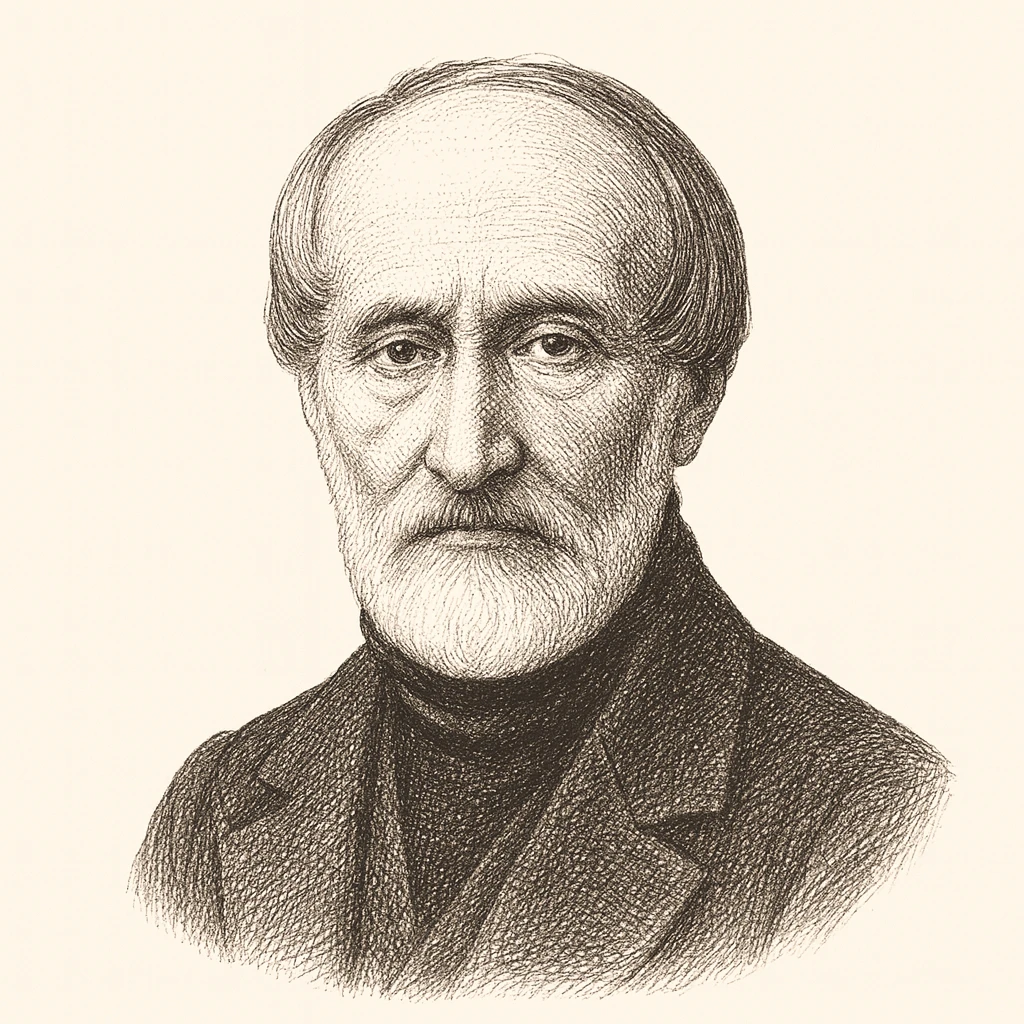
Giuseppe Mazzini stands as the foremost theorist of nineteenth-century democratic nationalism, the thinker who most fully argued that a free nation was the natural vehicle for popular sovereignty and human progress. Founder of the movement Young Italy, he devoted his life to the cause of a unified, republican Italian nation, and his propaganda, organizing, and repeated conspiracies made him one of the guiding spirits of the Risorgimento. Much of his life was spent in exile, and he was frequently at odds with the more monarchist and diplomatic path to unification pursued by figures like Cavour, insisting that the nation should be built from below by the people rather than handed down by dynasties.
At the center of Mazzini's political thought was the idea that nationality and humanity were complementary rather than opposed. He held that each people had a distinctive mission to fulfill, and that self-governing nations, each contributing its part, would form the building blocks of a peaceful and cooperative Europe—an aspiration expressed in his vision of a wider association of free peoples. Against the individualism he saw in liberal thought and the materialism he saw in emerging socialism, he grounded politics in duty rather than rights alone, arguing that the individual finds meaning through service to family, nation, and humanity, animated by a broadly religious and moral sense of progress.
This blend gave Mazzini a distinctive place between liberalism, republicanism, and the early socialist movement. He championed democratic republics, universal education, and the emancipation of workers, yet he rejected class struggle and the doctrine of class conflict, clashing with Marx and the socialist current within the international workers' movement. His faith in the nation as a moral community, combined with a commitment to civic equality and popular sovereignty, made him a touchstone for later democratic and anti-colonial nationalists.
Mazzini's legacy is genuinely double-edged. Admirers cast him as the respectable ancestor of national self-determination, a civic and liberal nationalist whose emphasis on rights, duties, and fraternity distinguished him from later ethnic chauvinism. Critics note that his exaltation of national mission and his willingness to endorse insurrectionary conspiracy could shade into a more romantic and sometimes intolerant creed, and that the celebration of each nation's calling has been read in less benign directions by successors he would not have recognized.
Giuseppe Mazzini is associated with Left Nationalist. See the archetype