
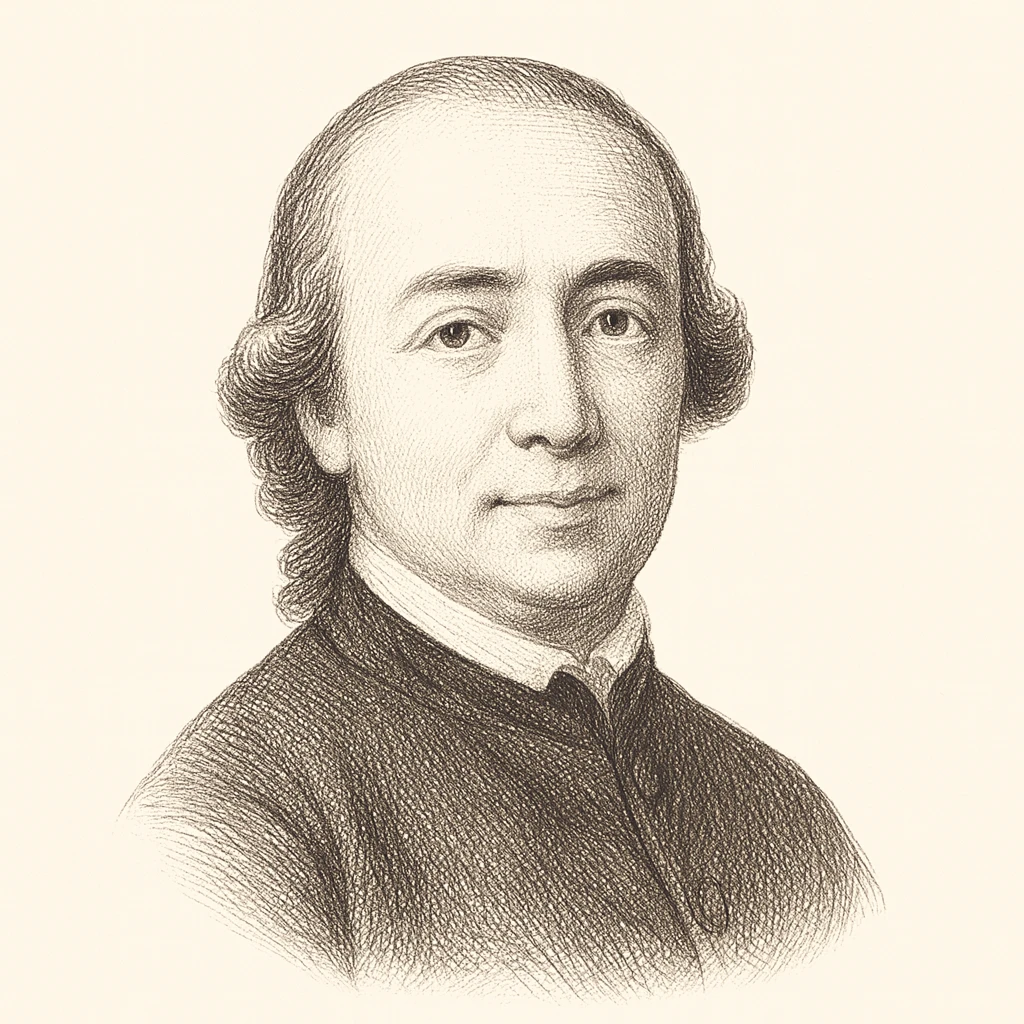
Johann Gottfried Herder studied under Kant at Königsberg, was pushed toward literature by Hamann, and spent most of his life as a court preacher at Weimar, where Goethe had secured him the post and where the two quarrelled steadily.
His central claim is that humanity does not exist in the singular. Each people — Volk — has its own language, poetry, religion and law, forming a coherent way of living that grew from a particular climate, history and set of circumstances, and that can be understood only from inside. There is no universal standard against which cultures can be graded, because the standards themselves are internal to the cultures that produced them. Every nation has its center of gravity within itself, he wrote, and the Enlightenment habit of measuring all peoples against contemporary Paris struck him as both arrogant and blind. His Yet Another Philosophy of History is a sustained attack on precisely that habit, and on the complacency of an age that mistook its own preferences for the destination of history.
Language carries the argument. Herder held that thought is inseparable from language, that language is neither divine gift nor arbitrary convention but grew from the human situation, and that since each language segments the world differently, each people thinks differently in a way translation cannot fully bridge. It follows that a people's poetry, especially its oldest and least literary poetry, is the deposit of its collective soul. He collected folk songs across Europe, and the whole nineteenth-century enterprise of gathering national ballads, epics and tales — the Grimms and their many imitators — proceeds from him.
The political consequences ran two ways and he is responsible for both. He was a genuine pluralist who despised conquest, thought empire an offense against the peoples it absorbed, condemned colonialism in strong terms, and expected nations to flourish alongside one another without hierarchy. He also supplied cultural nationalism with its entire vocabulary: the nation as an organism with a soul, authenticity as fidelity to one's own inheritance, and the foreign as a contamination. What he intended as a defense of small peoples against large ones was available within two generations to peoples who wished to become large.
Berlin made him, with Vico, the founder of the counter-Enlightenment and of value pluralism.
Wondering where you land? Take the 4-minute assessment