
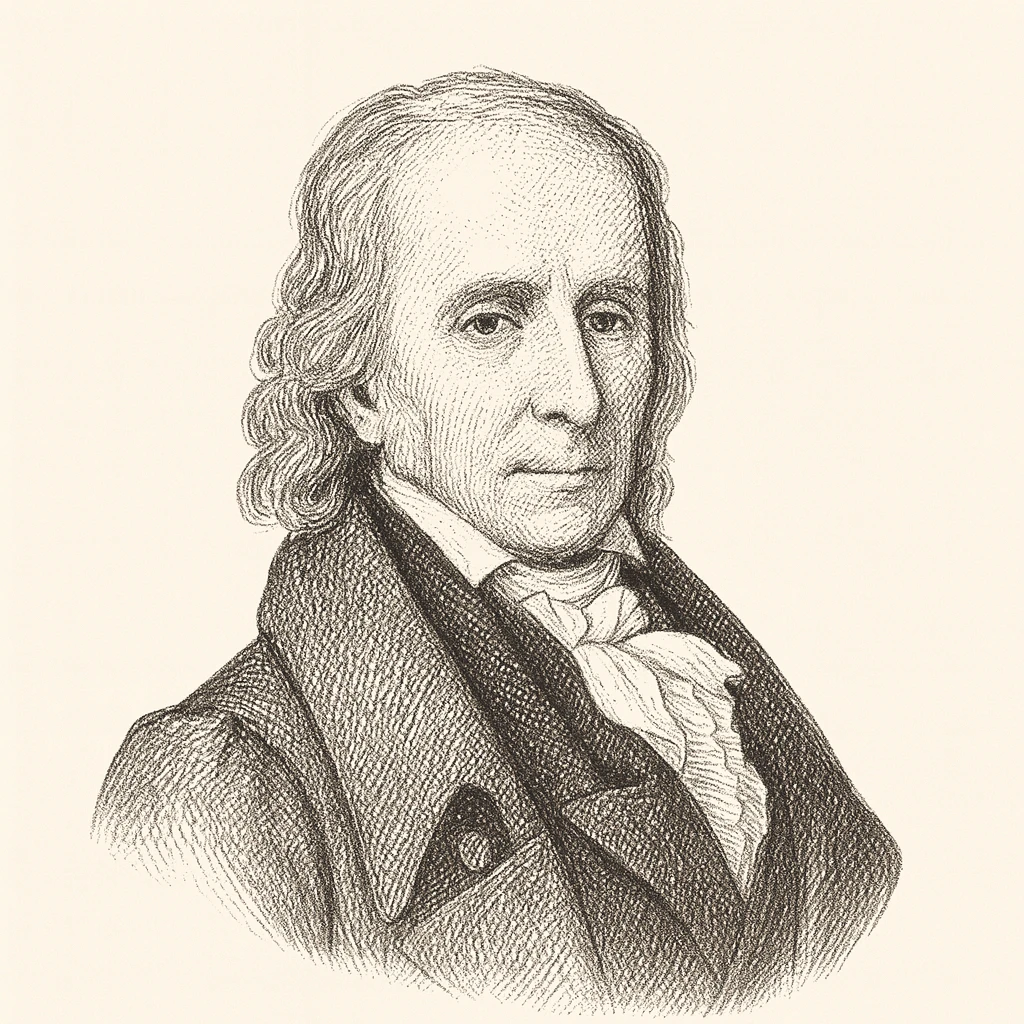
Benjamin Constant served the Revolution, then Napoleon during the Hundred Days after having attacked him in print days earlier, then the liberal opposition under the Restoration, which gave his enemies material for two centuries. He was also, with Germaine de Staël, the architect of French liberalism.
His famous lecture of 1819 states the argument that carries his name. The liberty of the ancients was collective and political: a direct and continuous share in sovereignty, exercised in the assembly, in small states where citizens had slaves to do the work and where the individual was wholly subject to the community's authority in private life. The liberty of the moderns is individual and private: security, property, freedom of movement, conscience, expression and association, in large commercial states where representation replaces assembly because nobody has time to govern. Both are real. The danger is confusion — and Rousseau and the Jacobins, by taking the ancient ideal as the model for a modern nation, sacrificed the liberty people actually needed to a participation they could not exercise. The individual, Constant wrote, must not be swallowed by the collective merely because the collective now calls itself the people.
He does not conclude that participation should be abandoned. Political rights are the guarantee of private ones, and a people that surrenders public life to a government in exchange for enjoyment will lose the enjoyment too. What he wants is a constitution that secures both: representative government with a genuine electorate, ministerial responsibility, judicial independence, jury trial, freedom of the press as the first among rights, and a neutral power — he proposed the crown — able to arbitrate between the branches rather than command them.
Principles of Politics works this out at length, and its most durable claim is about sovereignty as such. No sovereign is unlimited, whether king, assembly or people; there is a domain of individual existence that no authority acquires the right to enter merely by being properly constituted. Arbitrary power is not made legitimate by its source.
Isaiah Berlin's two concepts of liberty is a restatement, and says so.
Wondering where you land? Take the 4-minute assessment