
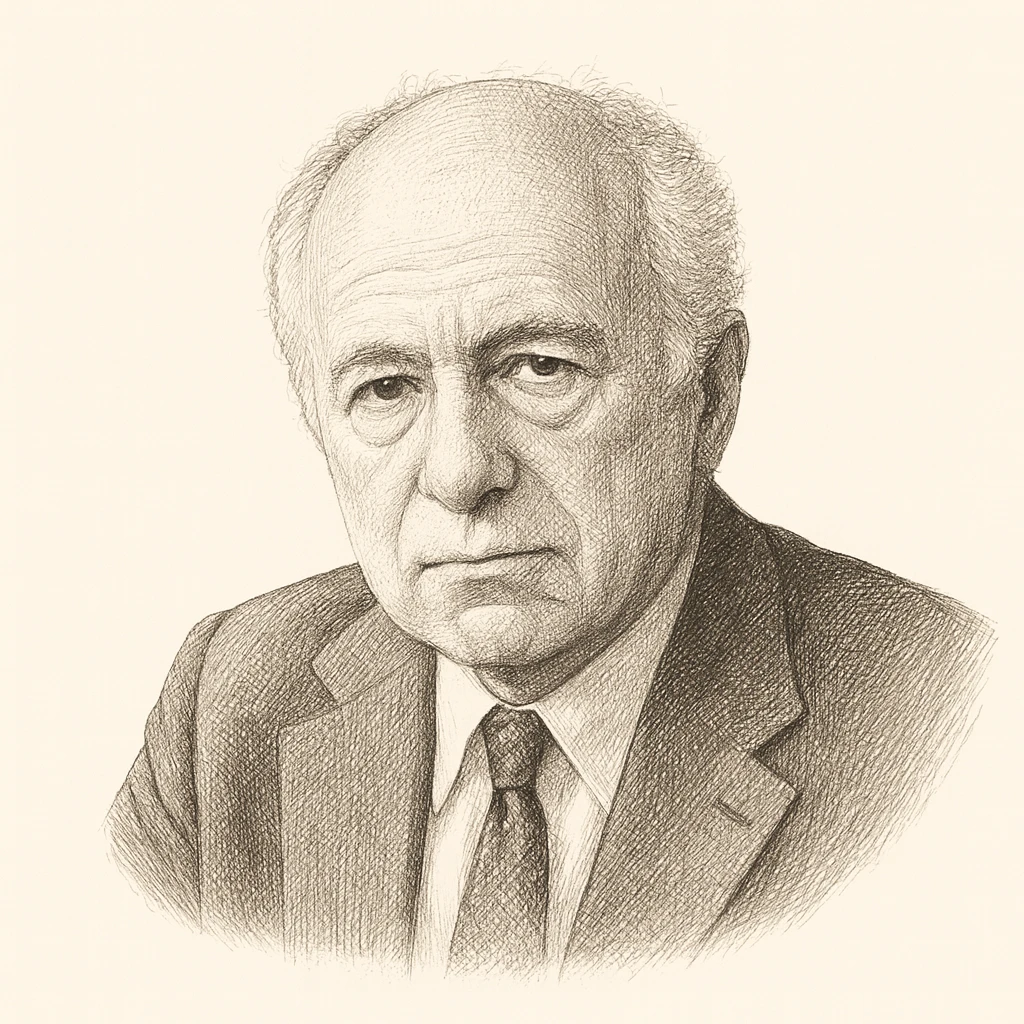
Norman Podhoretz, born in Brooklyn in 1930, was among the most influential American public intellectuals associated with the rise of neoconservatism. As editor of Commentary, the magazine of the American Jewish Committee, he presided for decades over a publication that served as a central forum for debates about liberalism, radicalism, Israel, and America's role in the world. Trained as a literary critic, he came of age within the milieu of the New York intellectuals, but his career is best remembered for a dramatic political trajectory that mirrored the larger migration of a cohort of thinkers from the anti-Communist left toward the conservative movement.
Podhoretz began as a figure of the intellectual left and was initially sympathetic to aspects of the radicalism and cultural experimentation of the 1960s. Over that decade and into the 1970s, however, he grew increasingly critical of the New Left, the counterculture, and what he saw as the excesses of adversarial liberalism. This turn placed him among the writers who redefined themselves as neoconservatives initially a label for former liberals who retained a reformist sensibility but recoiled from radical politics and welfare-state overreach. Under his editorship, Commentary became a vehicle for this reorientation, publishing arguments that shaped debates on both domestic policy and foreign affairs.
In foreign policy Podhoretz was a forceful hawk, arguing for a muscular, morally confident anti-Communism during the Cold War and, later, for assertive American power abroad. He was a persistent critic of détente and of what he regarded as national self-doubt, and he treated the security of Israel and the defense of Western civilization as central political commitments. His writing linked cultural questions to geopolitical ones, insisting that a society's willingness to defend itself depended on its moral and intellectual confidence.
Podhoretz's significance lies less in a systematic body of theory than in his role as an agenda-setting editor and polemicist who helped institutionalize neoconservatism as an intellectual tendency within American conservatism. Through Commentary and his own essays and memoirs, he influenced how a generation debated the relationship between liberalism and radicalism, the responsibilities of intellectuals, and the case for American engagement in the world, leaving a contested but durable mark on the country's political discourse.
Norman Podhoretz is associated with Neoconservative. See the archetype