
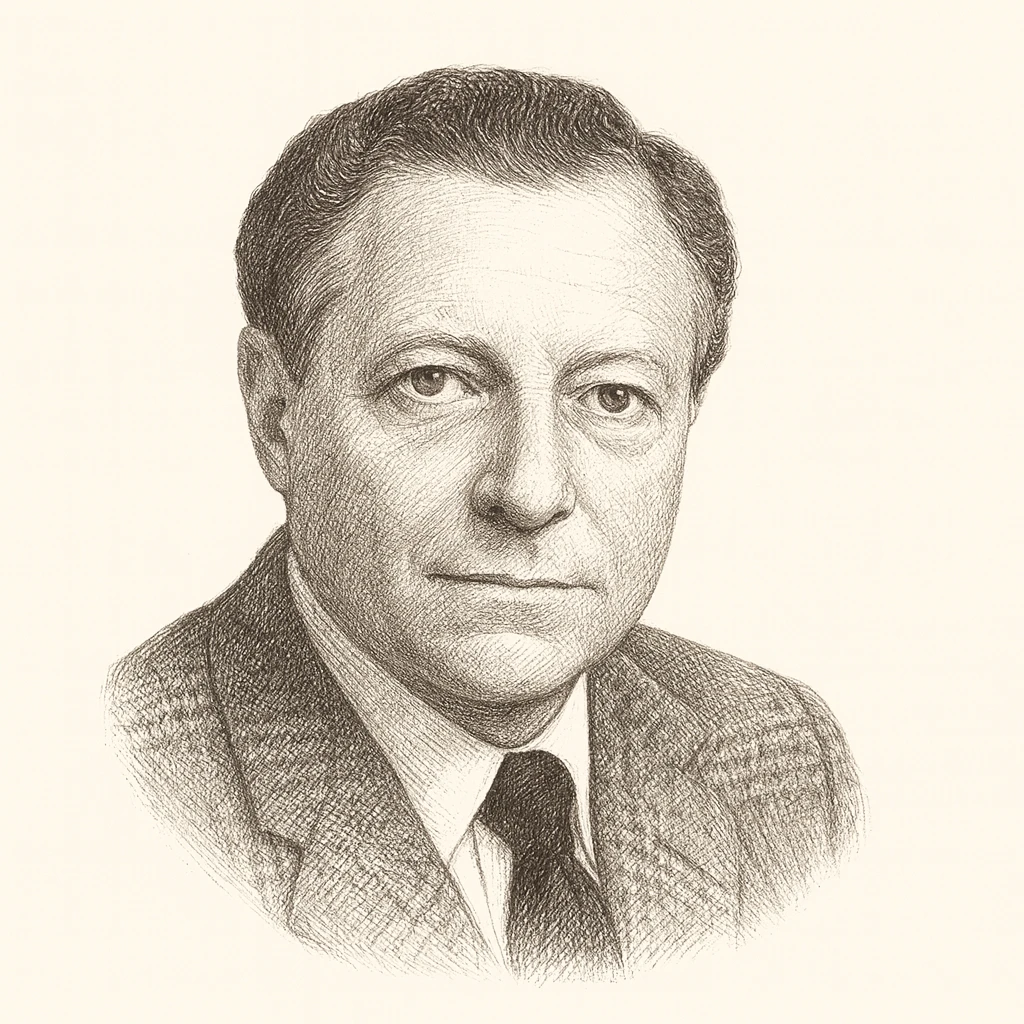
Irving Kristol grew up in Brooklyn in the 1920s and 1930s, the son of Eastern European Jewish immigrants, in a milieu where radical politics was as natural as breathing. The Jewish working class of New York in that period was saturated with socialist argument — Bundists and Communists and Socialists debating in the streets and the union halls — and the young men who would later define American neoconservatism came out of this world already equipped with a kind of intellectual seriousness about political questions that their more comfortable contemporaries rarely developed. When Kristol entered City College of New York in 1936, he was drawn immediately to Alcove 1 in the cafeteria, the gathering place for the anti-Stalinist left — Trotskyists, Social Democrats, and various shades of democratic socialist who were united primarily by their conviction that the Stalinist Communist Party was not merely wrong but actively evil in its subordination of socialist principles to Soviet state interest. In Alcove 2 across the room were the Stalinists. The division between the two alcoves would define the intellectual careers of everyone who sat in either one.
He was drafted during the war, served in Europe, and returned to find the intellectual landscape transformed by the Cold War's hardening. He worked briefly as an editor at Commentary magazine, then went to England on a Fulbright scholarship and helped found Encounter, a London-based cultural magazine that was later revealed to be funded in part by the CIA as part of the cultural Cold War — a revelation that complicated his reputation but that he claimed, plausibly, not to have known about at the time. The Encounter years deepened his engagement with British intellectual culture and gave him a comparative perspective on American liberalism that would prove useful when he turned his critical attention back to his own country.
By the late 1950s and early 1960s he had settled into a role as a cultural and political commentator whose primary target was not the right but the complacencies of the liberal center. His essay "On the Democratic Idea in America" (1972) was representative: it was not an attack on democracy but a critique of democracy's cultural preconditions — the argument that liberal democracy required a moral seriousness and civic culture that liberalism's own cultural commitments were eroding. This was the theme that would organize his subsequent work: not that the left's goals were wrong but that its understanding of human nature and social causation was naive, that its programs regularly produced effects opposite to their intentions, and that the intellectual class that designed those programs was systematically blind to the ways actual communities worked.
What crystallized the neoconservative position for Kristol was the Great Society. The War on Poverty, Model Cities, the expansion of welfare — these were programs designed by intelligent people whose intentions were good, and they produced results that those people had not anticipated and often refused to acknowledge. Crime rates rose. Family dissolution accelerated in the communities that received the most assistance. Dependency increased. Kristol's response was not the libertarian argument that government intervention was wrong in principle but the empirical argument that these particular interventions had failed, and that understanding why they had failed required an honest account of human nature and social dynamics that liberal social science was constitutionally reluctant to provide. He called the recognition of systematic unintended consequences "the law of unintended consequences" and applied it relentlessly, not as a conservative talking point but as an analytical observation.
Two Cheers for Capitalism (1978) was his most revealing title. He was not a pure libertarian — capitalism got two cheers, not three, because the third cheer was withheld on cultural grounds. Capitalism produced a dynamism and creativity that corroded the bourgeois virtues — hard work, thrift, deferred gratification, religious seriousness, civic responsibility — that capitalism itself required to function. A society of pure consumers, oriented entirely toward personal fulfillment, lacked the moral seriousness that democratic self-government required. This tension — between the economic case for capitalism and the cultural critique of capitalism from the right — was the central unresolved problem of Kristol's mature thought, and he was honest enough to say so directly rather than papering over it.
He founded The Public Interest with Daniel Bell in 1965 — a journal devoted to empirical analysis of social policy — and The National Interest in 1985, as neoconservative foreign policy thinking developed a distinct institutional identity. His son William Kristol continued the institutional project at The Weekly Standard. Irving Kristol accepted the title "godfather of neoconservatism" with characteristic irony — he understood that labels were inevitable and that this one was approximately accurate — and spent his later years watching the movement he had founded be used to justify a foreign policy interventionism that went considerably beyond what his domestic social criticism had implied. He died in 2009, by which point "neoconservative" had become a term of abuse on both the left and the libertarian right. He found this predictable, and took it as evidence that he had identified something real.
Irving Kristol is associated with Neoconservative. See the archetype