
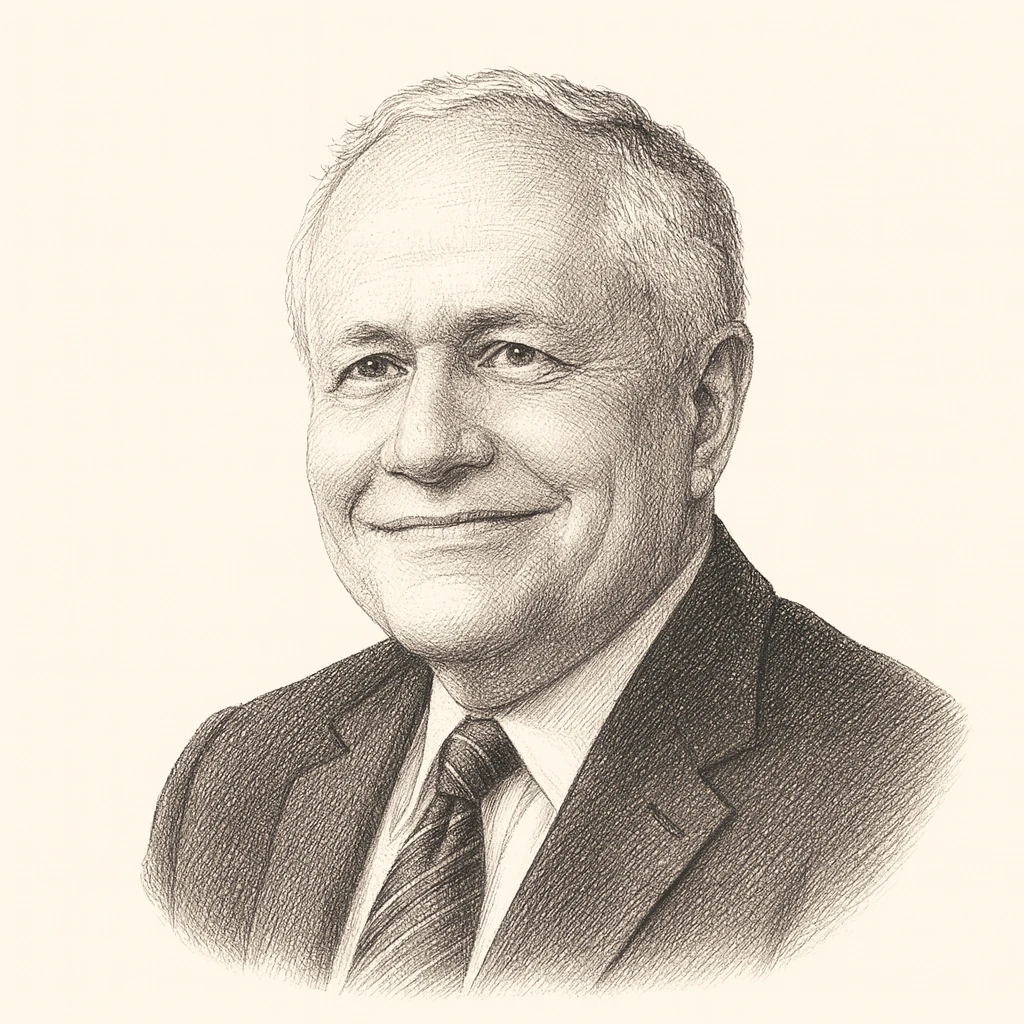
William Kristol is an American political commentator, editor, and activist whose career has traced the arc of neoconservatism from its ascendancy within the Republican Party to its fracture in the Trump era. The son of Irving Kristol, often called the "godfather" of neoconservatism, and the historian Gertrude Himmelfarb, he was trained in political philosophy at Harvard and taught before moving into government. He served as chief of staff to Education Secretary William Bennett and later to Vice President Dan Quayle, experiences that shaped his conviction that ideas and political strategy must work in tandem.
Kristol's most enduring influence came as a founder and editor of The Weekly Standard, launched in the mid-1990s, which became a flagship of movement conservatism and a leading voice for an assertive, values-driven American foreign policy. He championed an interventionist grand strategy sometimes described as "national greatness" conservatism, arguing that the United States should use its power actively to promote democracy and defend liberal order abroad. He was among the most visible advocates for a muscular posture in the Middle East, and his co-founding of the Project for the New American Century placed him at the center of debates over American primacy and the case for regime change in Iraq. He also became known as a shrewd tactician, famously urging Republicans to oppose the Clinton health care plan outright rather than compromise.
What distinguishes Kristol from many contemporaries is his sharp break with the Republican coalition after Donald Trump's rise. A prominent Never Trump conservative, he argued that Trumpism represented a betrayal of the principles—constitutionalism, internationalism, and a certain moral seriousness—that he believed conservatism should embody. After The Weekly Standard closed, he helped launch The Bulwark, a platform for center-right and anti-Trump commentary, and became active in efforts to build cross-partisan opposition to what he characterized as authoritarian tendencies in American politics.
Across these phases, Kristol has been less a systematic theorist than an editor, strategist, and public intellectual who translates ideas into political action. His trajectory illustrates both the influence and the internal tensions of neoconservatism: a tradition rooted in anti-totalitarianism and confidence in American purpose that found itself, in his case, defending institutions and norms against a populist movement it had not anticipated.
Bill Kristol is associated with Neoconservative. See the archetype