
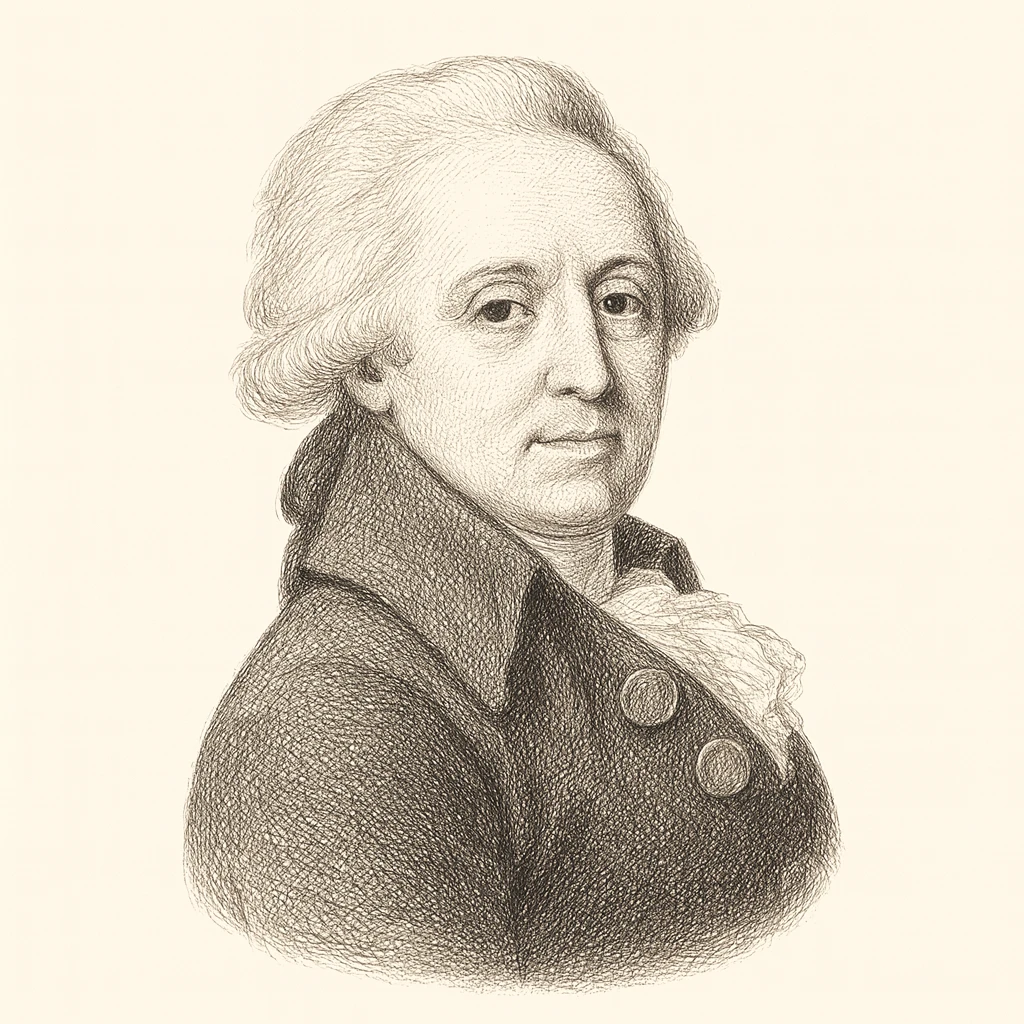
Condorcet stands as one of the last great figures of the French Enlightenment, a mathematician who turned the tools of reason toward politics and moral life. He is best known for applying probability theory to collective decision-making, most famously in his work on voting and juries, where he showed both the promise and the paradoxes of aggregating individual judgments into a common will. The so-called Condorcet paradox — that majority preferences can cycle without a stable winner — and the jury theorem, which argues that under certain conditions larger groups reach better decisions, remain foundational to modern social choice theory and to debates about the rationality of democracy itself.
His political thought was rooted in a confident belief that human institutions could be improved through knowledge, education, and the extension of rights. He argued for universal public education as the engine of both civic equality and progress, and he was among the era's more consistent advocates for extending citizenship broadly. He publicly opposed slavery, defended the civil rights of Protestants and Jews, and was one of the few prominent thinkers of his time to argue for the political equality of women, contending that excluding them from rights violated the very principles the Revolution claimed to uphold.
Condorcet took an active part in the French Revolution, serving in its representative assemblies and contributing to constitutional design. He aligned broadly with more moderate republican currents and fell afoul of the radical Jacobins; condemned during the Terror, he went into hiding and died in custody in 1794 under circumstances that have never been fully settled. It was in this final period that he composed his most enduring statement of faith in human perfectibility, a sketch of history charting humanity's advance through successive stages toward reason, liberty, and improved welfare.
That combination — rights-based egalitarianism, a wager on education and expertise, and an unwavering optimism about progress — makes him an ancestor of both liberal constitutionalism and technocratic reform. His work bridges the humane, individual-rights strand of liberalism and the belief that rational social engineering can enlarge freedom, and its confidence in progress drew an early reply from Thomas Malthus, whose 1798 Essay on the Principle of Population took aim at "the speculations of Mr. Godwin, M. Condorcet, and other writers."
Marquis de Condorcet is associated with Social Liberal. See the archetype