
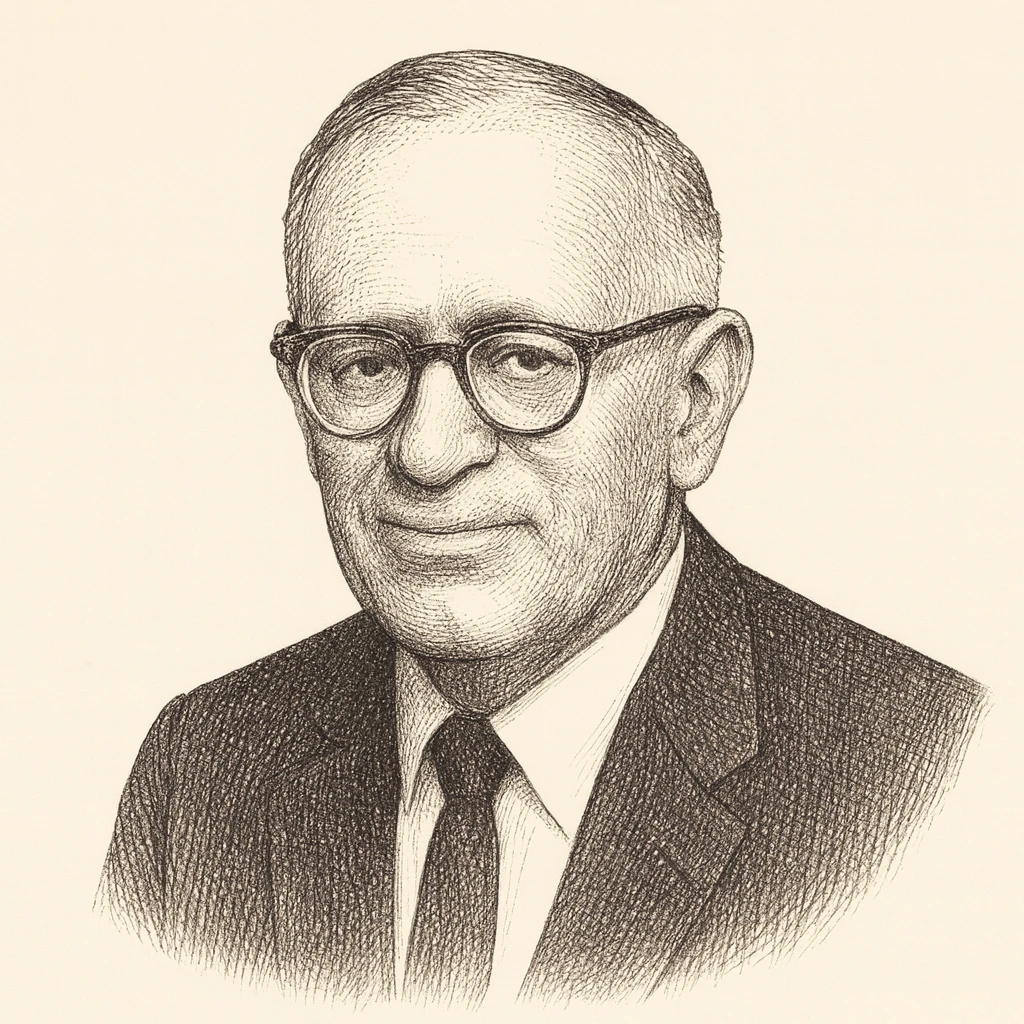
Richard Weaver was an American professor of English and rhetoric, long associated with the University of Chicago, whose work bridged literary study and political philosophy. He is best remembered for Ideas Have Consequences (1948), a compact and combative book that traced what he saw as the disintegration of Western culture to a late-medieval philosophical turn — the nominalist rejection of universals associated with William of Ockham. For Weaver, the denial that abstract truths and objective goods exist as anything more than names set the West on a long slide toward materialism, moral relativism, and the sovereignty of appetite and technique over transcendent order.
Weaver's political thought was less a program than a diagnosis. He argued that a healthy society rests on shared belief in a hierarchy of values and an order of being that stands above individual will and majority preference. From this he defended tradition, private property (which he treated as a bulwark of independence and a "metaphysical right"), regional loyalties, and rhetoric understood as an ennobling art rather than mere manipulation. His Southern Agrarian sympathies ran deep: he saw the antebellum and postbellum South as the last non-materialist civilization in America, a culture rooted in place, memory, and piety, and he wrote sympathetically about its social order — a social order built on slavery, for which his posthumously published The Southern Tradition at Bay stands as the extended apologia.
Within the conservative movement that coalesced in the 1950s, Weaver became an intellectual touchstone. His insistence that culture and metaphysics, not economics alone, determine a society's fate gave traditionalist conservatives a vocabulary distinct from libertarian and anti-communist strands. He contributed to William F. Buckley's National Review and influenced figures such as Russell Kirk in framing conservatism as a defense of enduring moral order against the modern spirit.
Weaver's legacy is contested but durable. Admirers credit him with restoring seriousness to arguments about the moral foundations of political life; critics point to the concrete record: he defended the segregated South against federally imposed integration, notably in "Integration is Communization" (National Review, July 13, 1957). Either way, his central conviction — that the abstractions people hold shape the world they build — remains a recurring premise in traditionalist and conservative thought.
Richard Weaver is associated with Traditionalist. See the archetype