
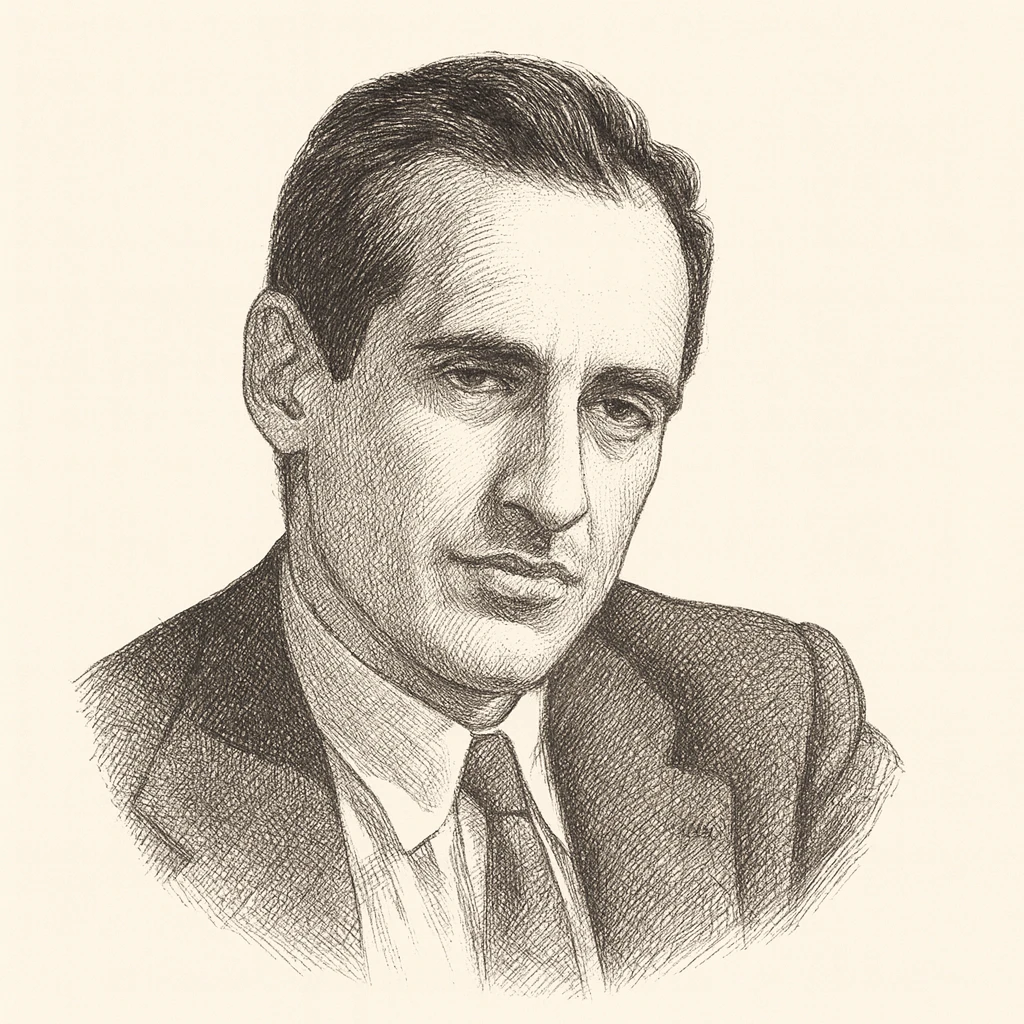
Frank Meyer was an American writer and editor best known as the principal architect of "fusionism," the effort to reconcile the two great strands of postwar American conservatism: the libertarian emphasis on individual freedom and limited government, and the traditionalist emphasis on virtue, moral order, and inherited social authority. A former Communist who broke sharply with the left, Meyer brought to conservatism the intensity of a convert and the analytic habits of someone who had once thought within a rigorous ideological system. He became a central figure at National Review, the magazine founded by William F. Buckley Jr., where his long-running work as a senior editor and columnist gave him a platform to shape the movement's self-understanding.
Meyer's core argument held that freedom and virtue were not competing goods but interdependent ones. He contended that virtue is meaningful only when freely chosen: a moral order imposed by the state produces obedience, not genuine goodness. From this he drew a political conclusion that libertarian means—a limited state, wide personal liberty, free markets—were the necessary condition for traditionalist ends, since only free persons can pursue the good. This allowed him to argue that a defense of individual liberty and a defense of Western moral and religious tradition belonged together rather than in tension.
This synthesis proved enormously consequential as a practical matter. Fusionism offered a shared theoretical vocabulary that allowed free-market advocates, anti-communists, and cultural traditionalists to see themselves as members of a single movement, and it became something close to the operating philosophy of the Buckley-era conservative coalition. Meyer's ideas are widely credited with helping give coherence to the political alignment that later found electoral expression in figures like Barry Goldwater and Ronald Reagan.
Meyer's fusionism has always had critics from within the right as well as without. Traditionalists argued that he subordinated moral order to a libertarian premise the tradition never accepted, while some libertarians regarded the traditionalist ends as a compromise of principle. Debate continues over whether fusionism was a genuine philosophical reconciliation or a useful political truce. Even so, his attempt to hold liberty and virtue in a single frame remains a defining reference point for anyone thinking about how freedom and tradition can coexist.
Frank Meyer is associated with Traditional Libertarian. See the archetype