
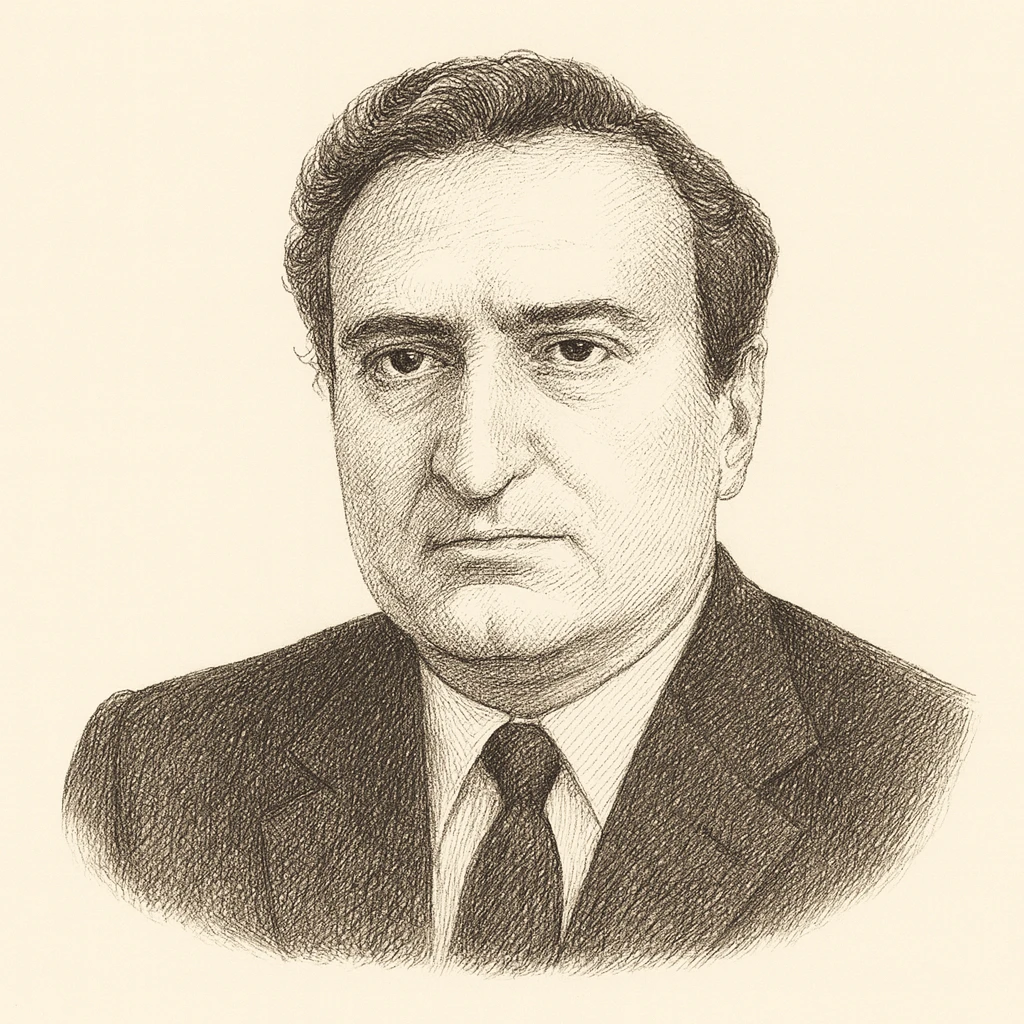
Eugene Genovese (1930–2012) was an American historian who became one of the most influential and controversial interpreters of slavery and the antebellum South. Trained in a Marxist intellectual tradition, he approached the slaveholding South not as a straightforward capitalist economy but as a distinctive social order dominated by a planter class whose worldview, values, and mode of production set it apart from the bourgeois North. He drew heavily on the concept of hegemony associated with Antonio Gramsci, using it to analyze how ruling classes secure consent and how relations of domination are reproduced through culture, ideology, and everyday paternalistic bonds rather than by force alone.
His central arguments centered on the notion of paternalism: that master and slave were bound in a reciprocal, unequal relationship in which planters justified their power through an ethic of obligation, while the enslaved carved out spaces of autonomy, community, and moral agency within a brutal system. This framework treated the enslaved as historical actors who shaped the world they inhabited, and it treated the slaveholders as a class with a coherent, anti-bourgeois ideology. Genovese's willingness to take the intellectual self-understanding of the planter class seriously—analyzing its critique of free-labor capitalism—distinguished him and, at times, drew criticism.
Genovese was also a prominent and combative public intellectual on the academic left, known for his defiant political statements during the Vietnam era and for helping cultivate a scholarly Marxist historiography in the United States. Over the course of his life, however, his politics shifted markedly. He moved away from the left toward conservatism and traditionalism, expressing sympathy for aspects of Southern conservative thought and community-centered social values, and eventually returned to the Catholicism of his upbringing. This trajectory, shared in part with his wife and frequent collaborator Elizabeth Fox-Genovese, made him a notable example of a thinker who carried certain preoccupations—class, community, the critique of liberal individualism, and skepticism toward market society—across a dramatic ideological migration.
His lasting political significance lies less in a fixed doctrine than in how he taught scholars to think: about power as cultural as well as economic, about the moral complexity of unequal social orders, and about the ways historical materialism can illuminate societies that resist neat capitalist categorization. His work remains a reference point in debates over slavery, class, and the uses of Marxist analysis in American history.
Eugene Genovese is associated with Trad Socialist. See the archetype