
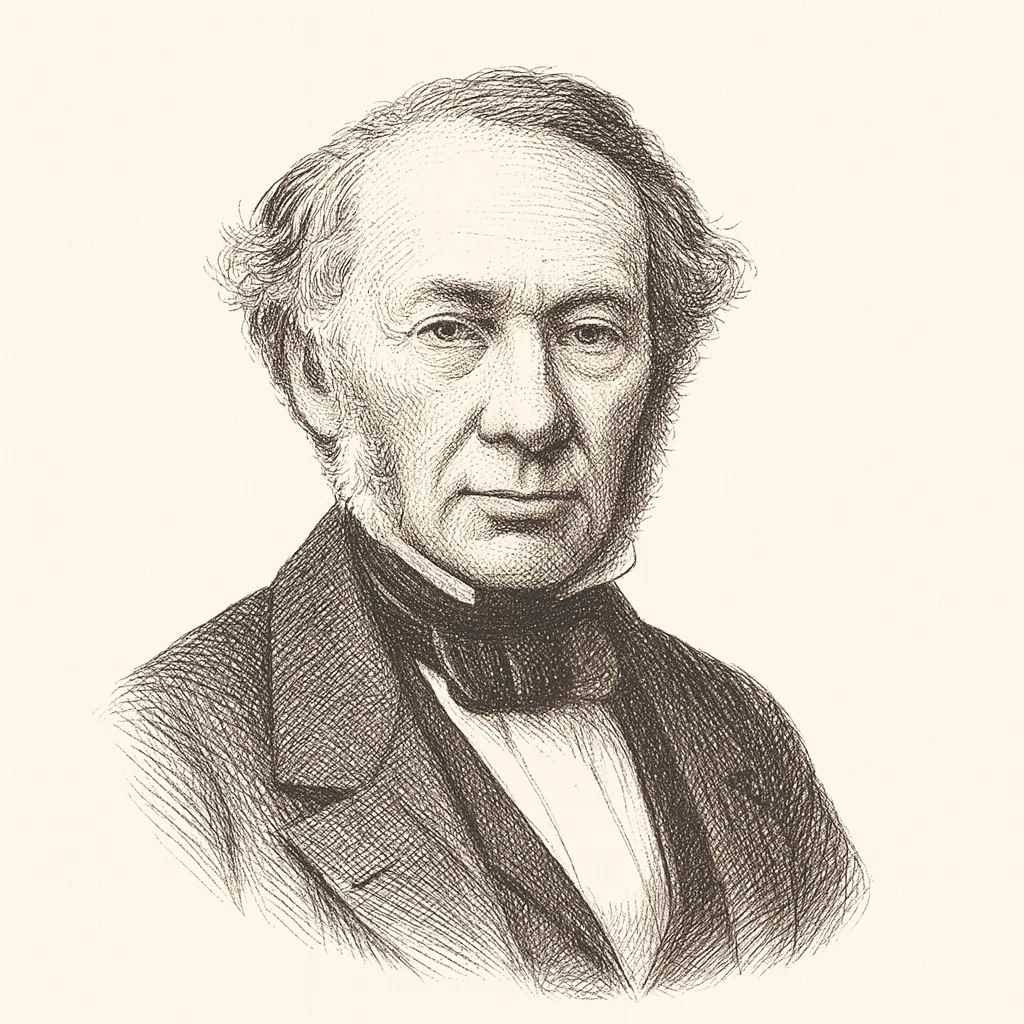
Richard Cobden was a Manchester calico printer who entered public life to argue about tariffs and ended as the most influential unofficial figure in British foreign policy. With John Bright he built the Anti-Corn Law League into the most effective single-issue campaign in British history — subscription-funded, staffed by paid lecturers, distributing millions of tracts through the new penny post, organized constituency by constituency around the register of electors — and in 1846 Peel repealed the Corn Laws and destroyed his own party doing it.
The economic case was that duties on imported grain raised the price of food to enrich landowners at the expense of everyone else, and Cobden argued it in those class terms without embarrassment: the aristocracy was a sectional interest dressed as the nation.
The larger case was international, and it is what makes him a figure in political thought rather than campaign history. Cobden held that free trade would do more than enrich: by making nations dependent on one another's prosperity it would remove the material motive for war, dissolve the aristocratic monopoly of foreign policy, and render standing armies, colonies and the balance of power unnecessary. Peace, retrenchment and reform. He opposed the Crimean War at the cost of his seat, opposed intervention in general including intervention for liberal causes, condemned the opium war and the treatment of India, and denounced the empire as a system of outdoor relief for the aristocracy.
The Cobden-Chevalier treaty of 1860, which he negotiated personally with Napoleon III, cut tariffs between Britain and France and set off a decade of European trade liberalization through most-favored-nation clauses.
Cobdenism as a doctrine — commercial interdependence as the road to peace, non-intervention as a principle rather than a preference — remained the core of British radical liberalism until 1914 and returned in twentieth-century liberal internationalism. Its central prediction, that trade makes war unprofitable and therefore unlikely, was tested in 1914 and has been argued over ever since.
Wondering where you land? Take the 4-minute assessment