
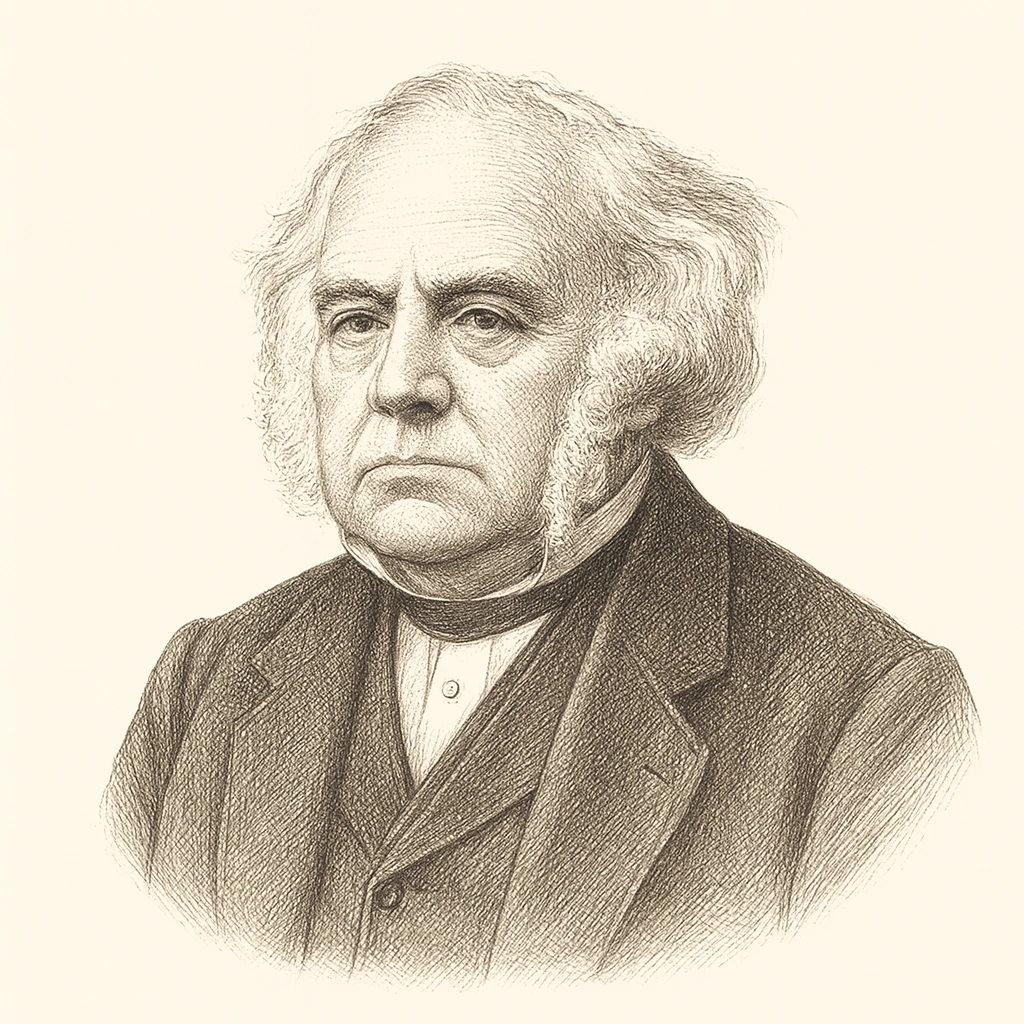
John Bright was a Rochdale cotton spinner and a Quaker, and both facts governed his career. He met Cobden in 1841 shortly after his wife's death, when Cobden told him to come with him and they would never rest until the Corn Laws were repealed, and he became the League's platform voice — by common consent the finest speaker in the Commons in a century that valued the skill above all others.
His Quakerism made him a consistent opponent of war, and it cost him more than free trade ever did. He denounced the Crimean War from the beginning, when it was overwhelmingly popular, in the speech about the Angel of Death having been abroad throughout the land and one almost hearing the beating of his wings. Manchester threw him out at the next election. He opposed the Afghan wars, the bombardment of Canton, and the coercion of Ireland, and he resigned from Gladstone's cabinet in 1882 over the bombardment of Alexandria.
He was equally isolated over America. When most of the British establishment, including much of the Liberal press, favored the Confederacy on grounds of cotton and of dislike for democracy, Bright argued for the Union throughout, on the ground that the war was about slavery and that the American republic was the standing proof that ordinary men could govern themselves. Lincoln kept his portrait and a Bright letter was in his pocket at Ford's Theatre.
His third cause was the franchise. Bright campaigned through the 1860s for the enfranchisement of the urban working class, arguing against the doctrine that the constitution belonged to those with property, and the Reform Act of 1867 is substantially his achievement even though a Conservative government passed it. He coined the phrase about England being the mother of parliaments, and refused a peerage twice.
He was not a systematic thinker and produced no book. What he supplied was the moral vocabulary of nineteenth-century radical liberalism — that foreign policy is a moral question, that the interests of the people and of the governing class are not identical, and that the case for extending the vote rests on the capacity of ordinary men.
Wondering where you land? Take the 4-minute assessment