
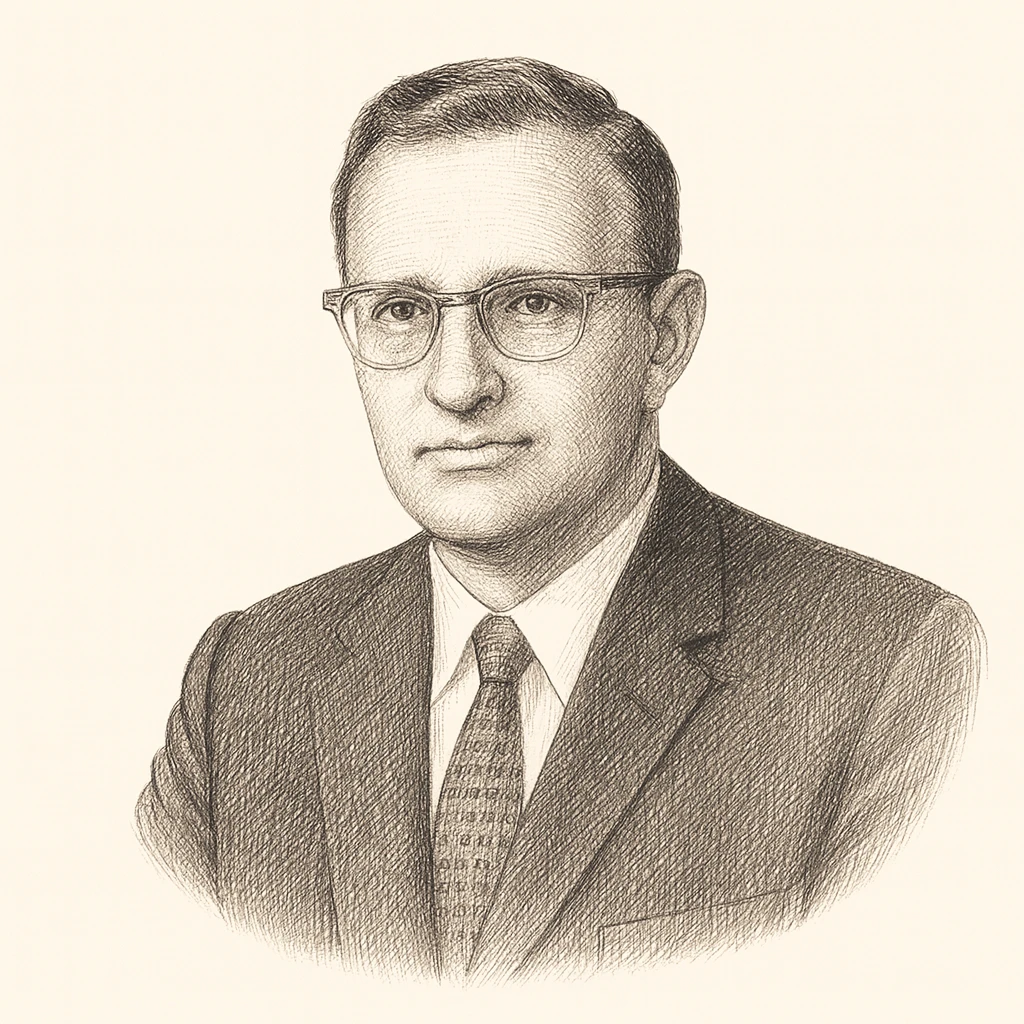
Harry V. Jaffa (1918–2015) was an American political philosopher and a leading figure in the school of thought associated with Leo Strauss, under whom he studied. He spent much of his career at Claremont McKenna College and the Claremont Graduate School, and he became closely identified with the intellectual milieu that would give rise to the Claremont Institute, a think tank devoted to recovering what its members regard as the principles of the American Founding. Jaffa's work sits at the intersection of classical political philosophy and American constitutional thought, and he insisted that questions of justice and natural right, rather than mere historical or procedural analysis, lay at the heart of political life.
Jaffa is best known for his interpretation of Abraham Lincoln and the American Founding, most influentially developed in his study of the Lincoln–Douglas debates. He argued that the Declaration of Independence, with its claim that all men are created equal, expressed a genuine truth about natural rights, and that Lincoln's statesmanship represented a principled defense of that proposition against the moral relativism he associated with Stephen Douglas's doctrine of popular sovereignty. In Jaffa's reading, the American regime was founded on universal moral principles accessible to reason, and the crisis over slavery was fundamentally a contest over whether those principles would be honored or abandoned.
This emphasis on natural right and the moral substance of the Founding placed Jaffa in tension with other strands of American conservatism, including traditionalists who stressed prescription, custom, and historical continuity over abstract principle. His disputes with figures on the right—over the meaning of equality, the status of the Declaration, and the proper grounds of political order—made him a polemical as well as a scholarly presence. Jaffa contended that conservatism, to be coherent, had to conserve the principles of the Founding themselves rather than merely resist change.
Through his teaching, his voluminous writing, and the institutions and students associated with him, Jaffa exercised a lasting influence on the intellectual right in the United States. The "West Coast Straussian" tradition he helped shape continues to inform debates about constitutional interpretation, the meaning of the Declaration and Constitution, and the moral foundations of the American political order.
Harry Jaffa is associated with National Conservative. See the archetype