
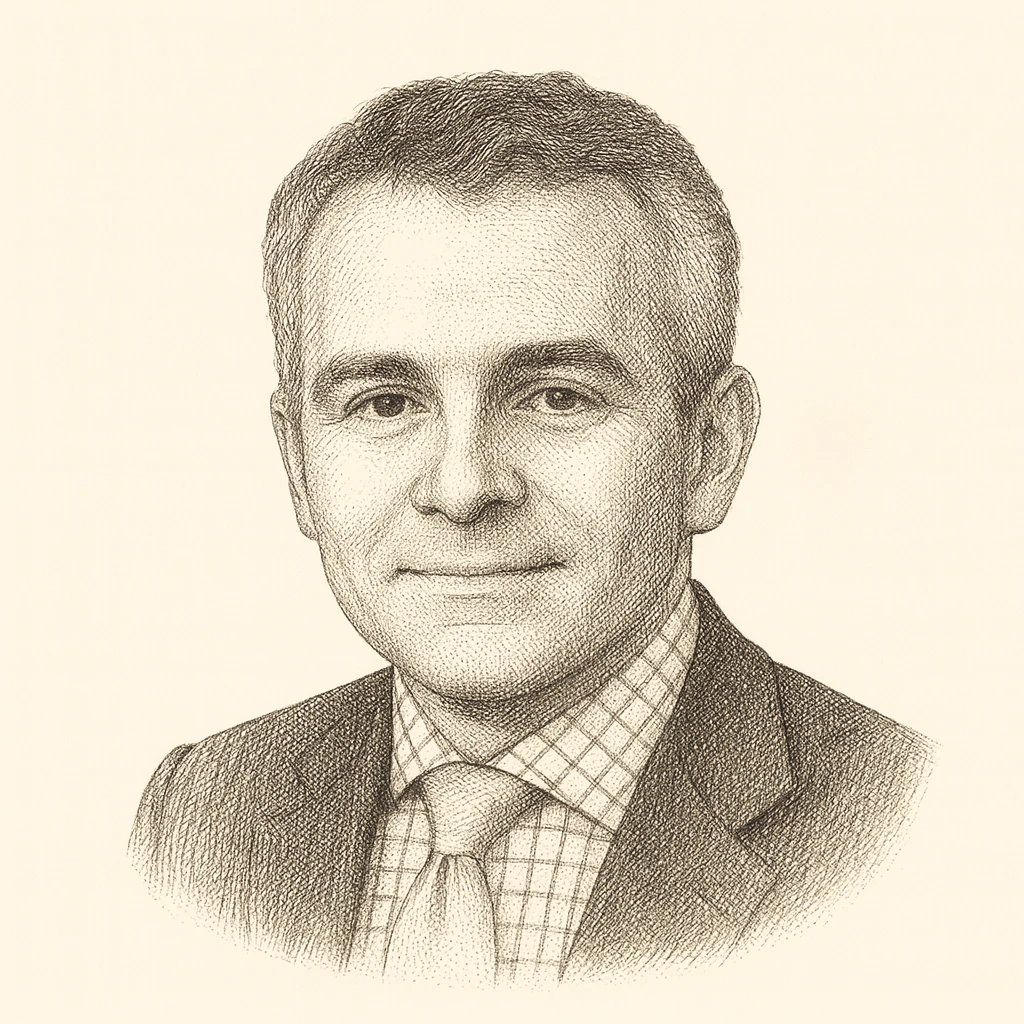
Ryan T. Anderson is an American political philosopher and writer whose work sits within the natural-law tradition of contemporary conservative thought. Educated at Princeton University and the University of Notre Dame, where he earned his doctorate, Anderson became closely associated with the school of "new natural law" theory linked to thinkers such as Robert P. George, John Finnis, and Germain Grisez. This approach seeks to ground moral and political conclusions in reasoned reflection on human nature and objective goods rather than on religious revelation alone, and Anderson has consistently framed his interventions as arguments open to secular public reason.
Anderson rose to prominence through debates over marriage, most notably as a co-author of the book "What Is Marriage?" with Robert George and Sherif Girgis, which advanced a conjugal understanding of marriage as inherently oriented toward the union of man and woman. Through the years surrounding the Supreme Court's same-sex marriage rulings, he became one of the most visible intellectual defenders of the traditional view, following the marriage debates with the book "Truth Overruled." He later turned to questions of gender identity in "When Harry Became Sally," which argued against affirming transgender identity through medical and social transition and which became a focus of controversy over its distribution.
His institutional career reflects the network of conservative and religiously informed policy institutions in the United States. He long served as a senior research fellow at the Heritage Foundation, helped found and edit the journal Public Discourse associated with the Witherspoon Institute, and became president of the Ethics and Public Policy Center, a Washington think tank devoted to applying the Judeo-Christian moral tradition to public policy. In these roles he has sought to connect academic philosophy with legislative and legal advocacy.
Anderson's political significance lies in his effort to translate natural-law philosophy into arguments usable in mainstream policy and legal debate, particularly on marriage, sexuality, bioethics, and religious liberty. Admirers regard him as a rigorous defender of a coherent moral anthropology; critics see his positions on LGBT questions as exclusionary. Either way, he has been an influential figure in shaping how social conservatives articulate their case, favoring reasoned argument over appeals to tradition or scripture as a strategy for engaging a secular public.
Ryan T. Anderson is associated with Religious Conservative. See the archetype