
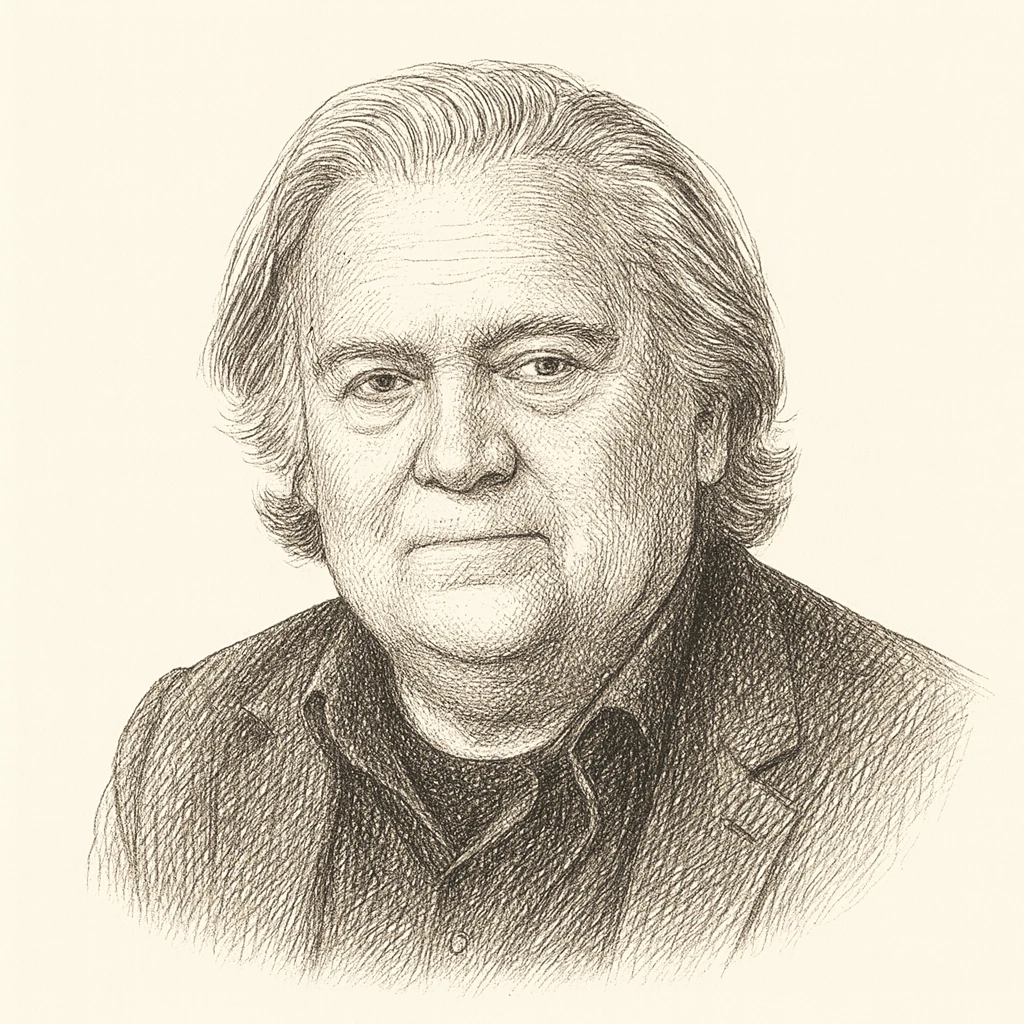
Steve Bannon is an American political strategist and media entrepreneur best known for his role in shaping the nationalist strain of right-wing politics that surrounded Donald Trump's 2016 campaign and presidency. After careers in the U.S. Navy, investment banking at Goldman Sachs, and film production, Bannon became executive chairman of Breitbart News, which he built into an aggressive platform for the populist right. He served briefly as chief executive of Trump's 2016 campaign and then as chief strategist in the early months of the administration before departing in 2017.
Bannon's political thought centers on economic nationalism, opposition to what he calls globalism, and a defense of national sovereignty and traditional cultural identity against transnational institutions, mass immigration, and what he portrays as an entrenched managerial elite. He has framed politics as a civilizational struggle, drawing on themes of Judeo-Christian heritage and casting the working and middle classes as victims of financialization and open borders. His rhetoric about the 'deconstruction of the administrative state' captured a distrust of permanent bureaucracies and a desire to disrupt established governing arrangements. He has also promoted a confrontational stance toward China, treating it as the central geopolitical rival of the era.
Beyond the United States, Bannon sought to knit together nationalist and populist movements internationally, cultivating ties with European right-wing parties and figures and presenting himself as an organizer of a broader anti-globalist front. His approach emphasizes media as a weapon—flooding the information environment, energizing a grassroots base, and treating cultural conflict as inseparable from political power. Through his War Room podcast and broadcasts, he has continued to serve as an influential voice on the populist right, promoting themes of election skepticism and grassroots mobilization.
Bannon's later years have been marked by legal controversy, including a conviction for contempt of Congress after defying a subpoena from the committee investigating the January 6, 2021 Capitol attack, which led to a prison term from which he was released in 2024. Regardless of these battles, his significance as a political thinker lies in his role popularizing and organizing a coherent nationalist-populist worldview, one that reframed conservative politics around sovereignty, anti-elitism, and cultural identity and reshaped debates on the American and international right.
Steve Bannon is associated with National Populist. See the archetype