
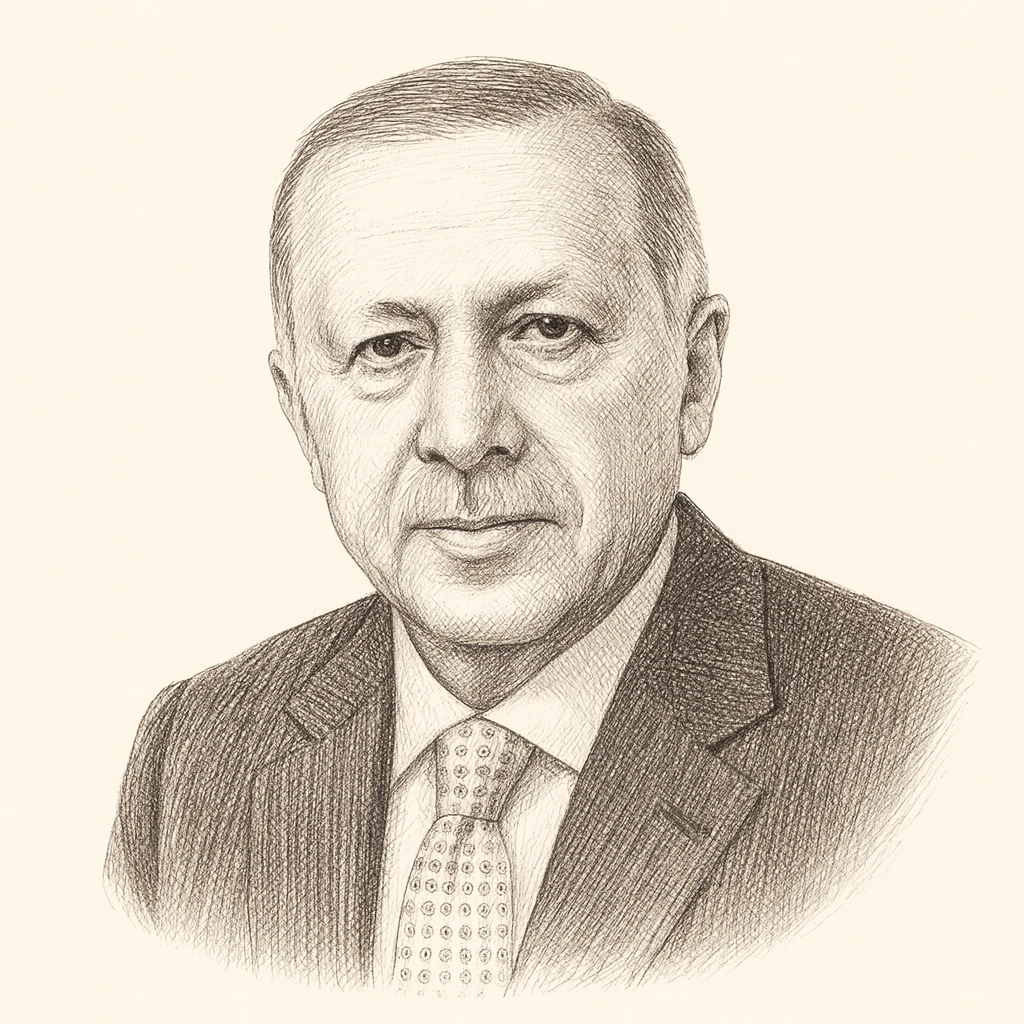
Recep Tayyip Erdoğan rose from Istanbul's religiously conservative and working-class milieu through the movement of political Islam associated with Necmettin Erbakan, later breaking from its more explicitly Islamist framing to help found the Justice and Development Party (AKP) in 2001. His early governing career, first as mayor of Istanbul and then as prime minister, presented a synthesis of pious social values, market-friendly economics, and an appeal to voters who felt marginalized by the secular Kemalist establishment. In this sense his politics are best understood as a challenge to the founding settlement of the Turkish Republic: where Atatürk's project subordinated religion to a secular, Westernizing state, Erdoğan built a durable coalition around the dignity, visibility, and grievances of observant Muslims.
His thought, more practical than systematic, centers on the claim that legitimate authority flows from the electoral majority of the ordinary, devout nation against an entrenched elite—secular military officers, judges, journalists, and urban cosmopolitans he casts as unrepresentative guardians. This majoritarian and populist logic has justified concentrating power in the presidency, especially after the 2017 constitutional referendum, and framing opposition as illegitimate or treasonous. He couples this with an assertive nationalism and a narrative of restored Turkish greatness, sometimes invoking the Ottoman past, that positions Turkey as an independent power resistant to Western tutelage.
Erdoğan's record is seriously contested. Supporters credit him with expanding public services, empowering a previously excluded religious majority, and asserting national sovereignty. Critics, including many international observers, document a marked slide toward authoritarianism: the jailing of journalists and opponents, purges following the 2016 coup attempt, erosion of judicial independence, and pressure on press freedom. His invocation of democracy is thus paired with a hollowing of the checks that liberal democracy depends on.
As an intellectual reference point, Erdoğan matters less for written doctrine than for demonstrating a replicable model: how a charismatic leader can mobilize religious identity and cultural resentment into an electorally dominant, increasingly personalized regime. He is frequently cited in debates about "illiberal democracy," religious populism, and the durability of competitive authoritarian rule, standing as a leading contemporary example of national-populist governance built on faith and majority.
Recep Tayyip Erdoğan is associated with National Populist. See the archetype