
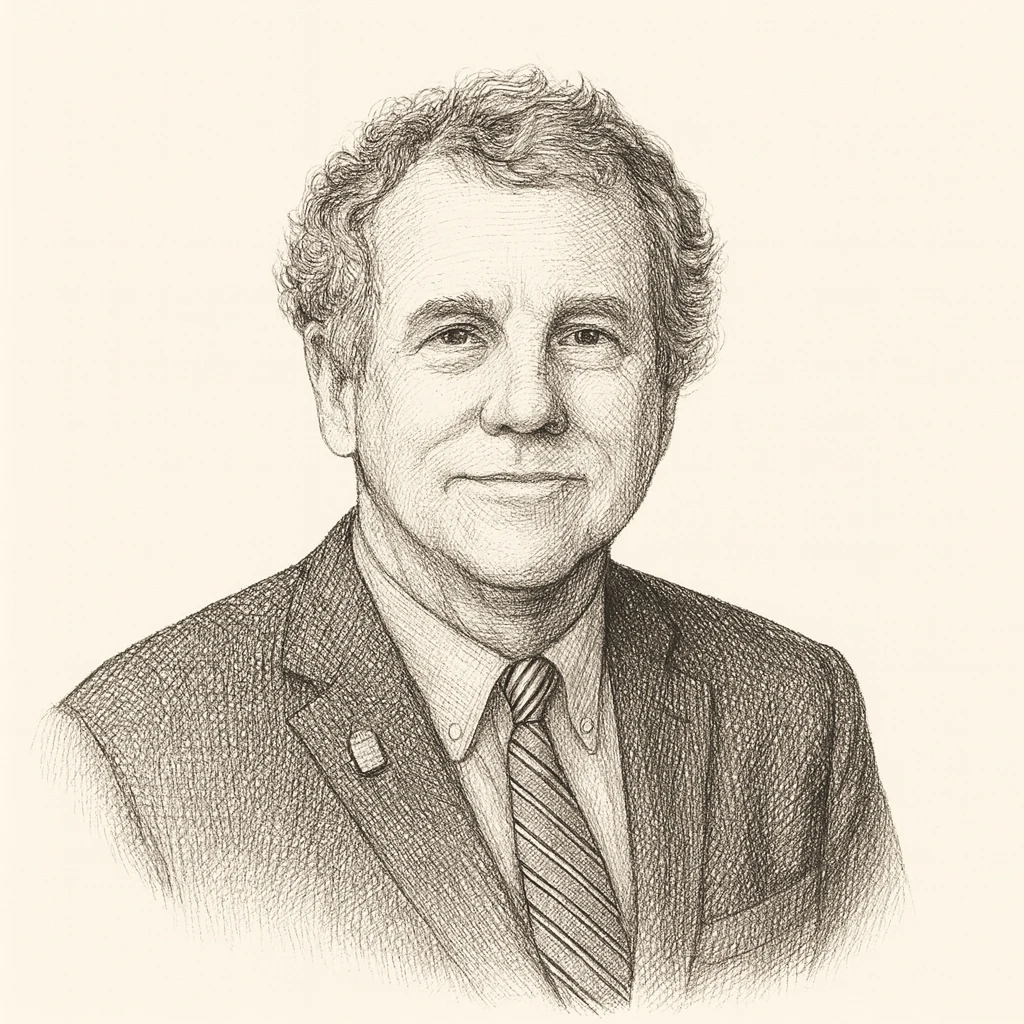
Sherrod Brown built a political identity around economic populism, positioning himself as a champion of working-class Americans and organized labor within the Democratic Party. Over a long career in the U.S. House and then the Senate representing Ohio, he became one of the most consistent congressional critics of free-trade agreements, arguing that deals such as NAFTA and later trade arrangements sacrificed American manufacturing jobs and depressed wages in industrial communities. His central conviction was that trade and economic policy should be judged by their effects on ordinary workers rather than on aggregate growth or corporate interests, a stance that placed him among the earliest and most vocal opponents of the bipartisan free-trade consensus of the 1990s and 2000s.
Brown's thought consistently linked the language of dignity to material conditions, framing labor rights, wages, health care, and workplace safety as matters of respect owed to those who work. He argued that the Democratic Party should recover its identity as the party of workers and reach voters in de-industrialized regions who had drifted toward Republicans. This made him a notable figure in debates over how Democrats might win in the industrial Midwest, since he repeatedly won statewide in Ohio even as the state trended Republican. Observers often cited his career as evidence that an unapologetically populist, pro-union economic message could hold ground where more centrist or culturally focused appeals faltered.
His positions aligned him with the progressive and labor-oriented wing of American liberalism, though his emphasis fell more on class and economic solidarity than on other axes of progressive politics. He was a durable advocate for expanded access to health care, robust financial regulation and consumer protection, and industrial policy aimed at revitalizing domestic manufacturing. In these commitments he reflected a strand of American political thought that treats the working family as the moral center of policymaking and views concentrated corporate power with suspicion.
Brown's significance lies less in original theoretical writing than in his role as a practicing exemplar of economic populism within electoral politics. His career sharpened an ongoing argument about whether the Democratic coalition should prioritize appeals to working-class economic interests, and his repeated statewide victories in a competitive state gave that argument practical weight. After losing his 2024 reelection bid to Republican Bernie Moreno, he remained a reference point in discussions of how the party might rebuild support among blue-collar voters. On May 5, 2026, he won the Democratic nomination in Ohio's special Senate election, setting up a November race against Republican Jon Husted, who was appointed to the seat JD Vance vacated on becoming vice president.
Sherrod Brown is associated with Rooted Progressive. See the archetype