
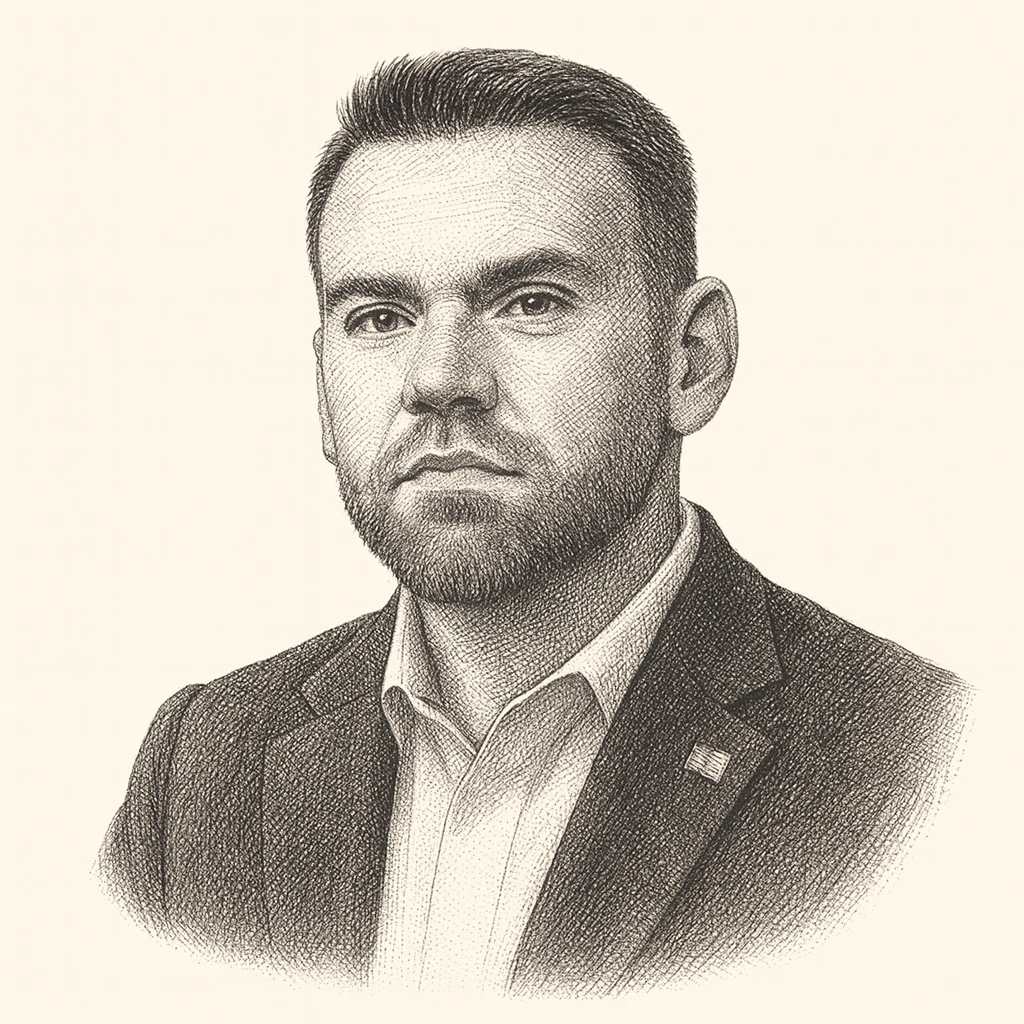
Jack Posobiec is an American right-wing media personality, activist, and commentator who rose to prominence during and after the 2016 U.S. presidential election. He built his reputation through social media, particularly on platforms like Twitter, where he cultivated a large following by promoting pro-Trump messaging, nationalist themes, and combative opposition to progressive politics and mainstream media. His work exemplifies a style of politics that treats online attention, virality, and narrative combat as central instruments of political power, blurring the lines between journalism, activism, and entertainment.
Posobiec is associated with the populist, nationalist wing of the American right that coalesced around Donald Trump. His political thought emphasizes hostility to what he frames as a corrupt establishment, skepticism of institutions such as the press and intelligence agencies, and opposition to immigration and progressive cultural change. He has been a prominent voice in debates over "globalism" versus nationalism, and he engages heavily with culture-war issues, positioning himself as a defender of traditional and Western values against what he characterizes as left-wing overreach. He has more recently identified with self-styled "national conservative" and anti-liberal currents, and co-authored a book critiquing what he describes as the political left's methods.
His influence and controversy stem substantially from his role in amplifying unverified claims and conspiracy narratives. Posobiec was among the figures who helped spread the "Pizzagate" conspiracy theory and promoted other misleading narratives, and critics and fact-checkers have repeatedly documented his role in circulating disinformation. Supporters see him as an insurgent media figure willing to challenge dominant narratives, while critics regard him as a purveyor of falsehoods and inflammatory content. Either way, he illustrates how a networked, personality-driven right-wing media ecosystem operates outside legacy institutions.
Posobiec's significance lies less in a systematic body of political theory than in his function as a node in contemporary right-wing information networks. He demonstrates how activists can shape political discourse through memes, framing, and rapid mobilization of online audiences, and he embodies the fusion of populist grievance, media savvy, and combative rhetoric that has characterized much of the post-2016 American right. His career is a case study in the changing infrastructure of political persuasion in the digital age.
Jack Posobiec is associated with Reactionary Strongman. See the archetype