
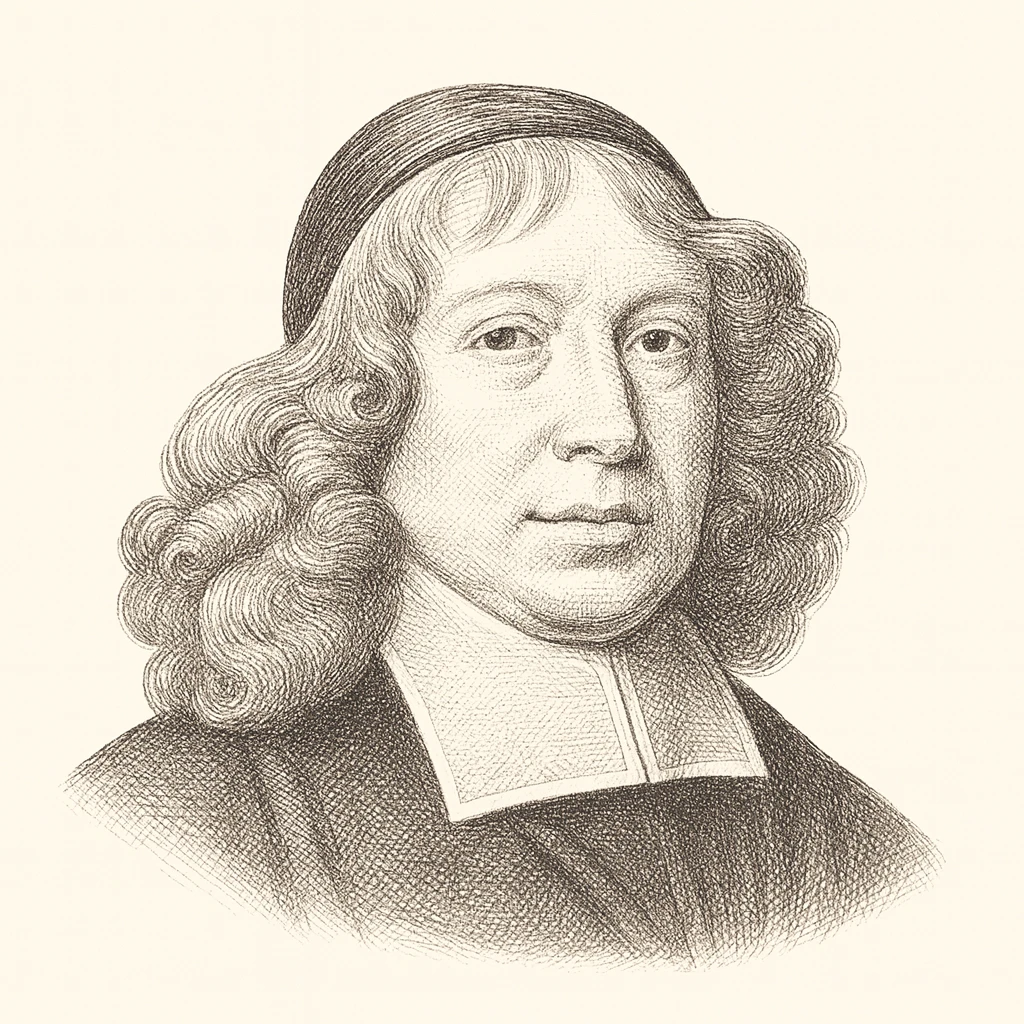
Samuel Rutherford was a Presbyterian minister at Anwoth, exiled to Aberdeen for refusing episcopacy, Professor of Divinity at St Andrews, and one of the Scottish commissioners to the Westminster Assembly. Lex, Rex was published in 1644 during the civil war; at the Restoration it was burned by the hangman and he was charged with treason, escaping trial only by dying first.
The title states the case: the law is king, not the king law. Rutherford argues that political power comes from God in the sense that human nature is God's creation and society is natural to it, but that no particular ruler holds power except by the people's designation. Sovereignty is originally in the community; the people constitute the king by a covenant that is conditional on his performing the office; and what is given conditionally may be resumed when the condition fails. He is precise that the king is a fiduciary, holding power as a trust for the good of those who conferred it, and that a trust abused is forfeit.
From this he draws the conclusions the Restoration found unforgivable. A tyrant may be resisted by force. Resistance need not wait on the whole people acting together, since inferior magistrates and even private persons defending themselves against unjust violence act lawfully. The king has no power over conscience in matters of religion. And the covenant binds both parties: a ruler who breaks it is no longer to be obeyed in the things he commands contrary to it.
The framework is Calvinist resistance theory of the kind Althusius had systematized, sharpened by a lawyer's attention to the mechanics of trust and conditional grant, and pressed by a man whose church was at that moment fighting for its existence. Its afterlife is longest in the places the Covenanters reached: the argument descends through the Scottish and Ulster Presbyterian tradition to the American colonies, where Lex, Rex circulated in the revolutionary decades and where its account of conditional, forfeitable authority was congenial to men making the same case against another Stuart's successor.
Wondering where you land? Take the 4-minute assessment