
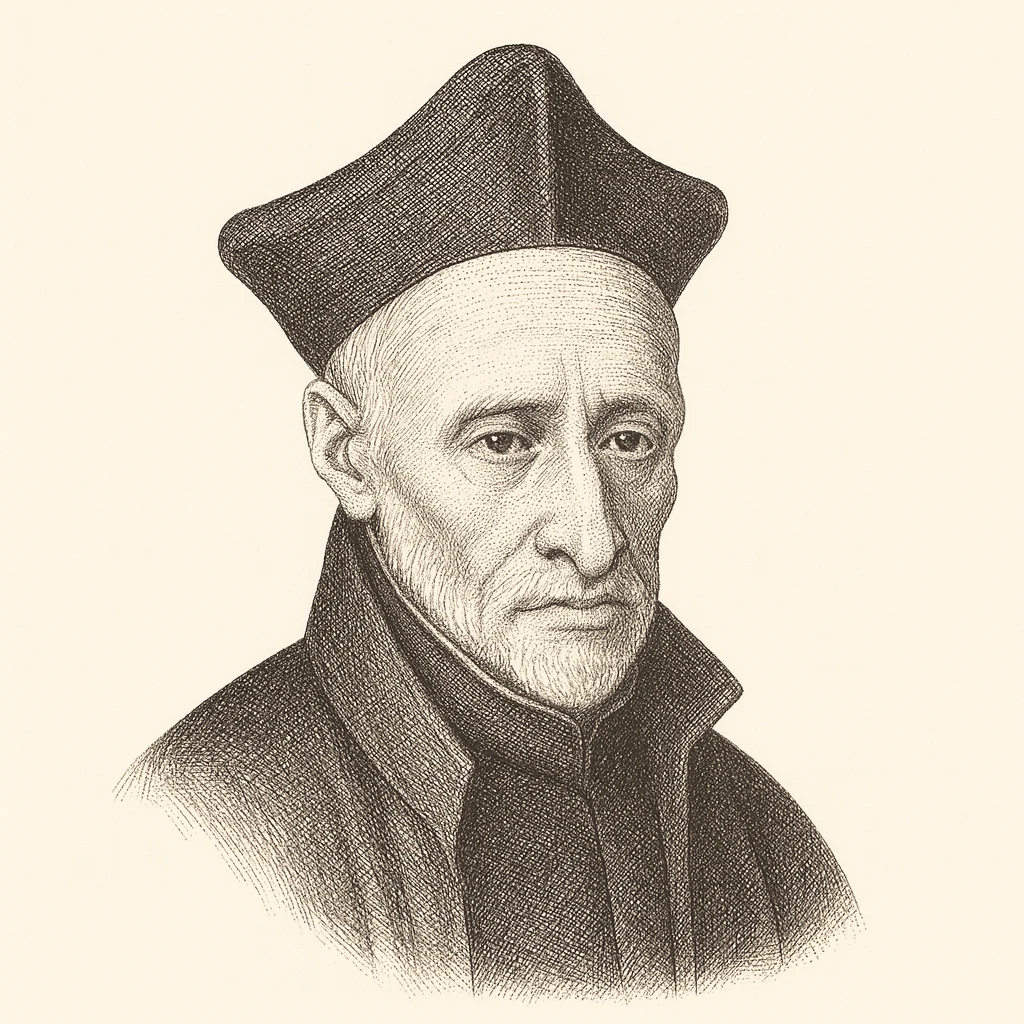
Francisco Suárez was a Jesuit who taught at Rome, Alcalá, Salamanca and Coimbra, and whose Metaphysical Disputations of 1597 was the first systematic metaphysics in the West arranged by topic rather than as a commentary on Aristotle. It became the standard textbook in Protestant as well as Catholic universities, and Descartes, Leibniz and Schopenhauer all worked from it. He is the point at which scholasticism, having been declared obsolete, entered the philosophy that replaced it.
De Legibus of 1612 is the political work. Law, for Suárez, is an act of a superior's will directed to the common good and promulgated — reason discerns what is right, but obligation comes from a command. This puts him between the intellectualist tradition that grounded natural law in the structure of things and the voluntarism that grounded it in bare divine will: natural law is founded in rational nature, but binds because God wills it. The distinction mattered enormously to later jurisprudence, and it is one of the routes by which the idea that law requires a legislator entered secular legal theory.
His account of political authority is the more consequential half. Power to rule does not descend to any individual from God; it arises in the political community as a whole, immediately and by natural law, once men have formed a body politic. The community then transfers that power to a ruler by a compact, and the terms of the transfer determine the constitution. It follows that particular governments are of human institution, that the community retains rights against a ruler who becomes a tyrant, and — in the Defensio Fidei of 1613, written against James I's oath of allegiance — that a tyrannical ruler may in extremity be resisted. James had the book burned in London.
The transmission is direct and well documented. Grotius drew on him; Locke's Second Treatise cites Hooker, who worked in the same scholastic natural-law idiom; and the language of a community that holds power before it delegates it, and may reclaim it, passed into the constitutional arguments of the following century. Filmer wrote Patriarcha specifically to refute Suárez and Bellarmine.
Wondering where you land? Take the 4-minute assessment