
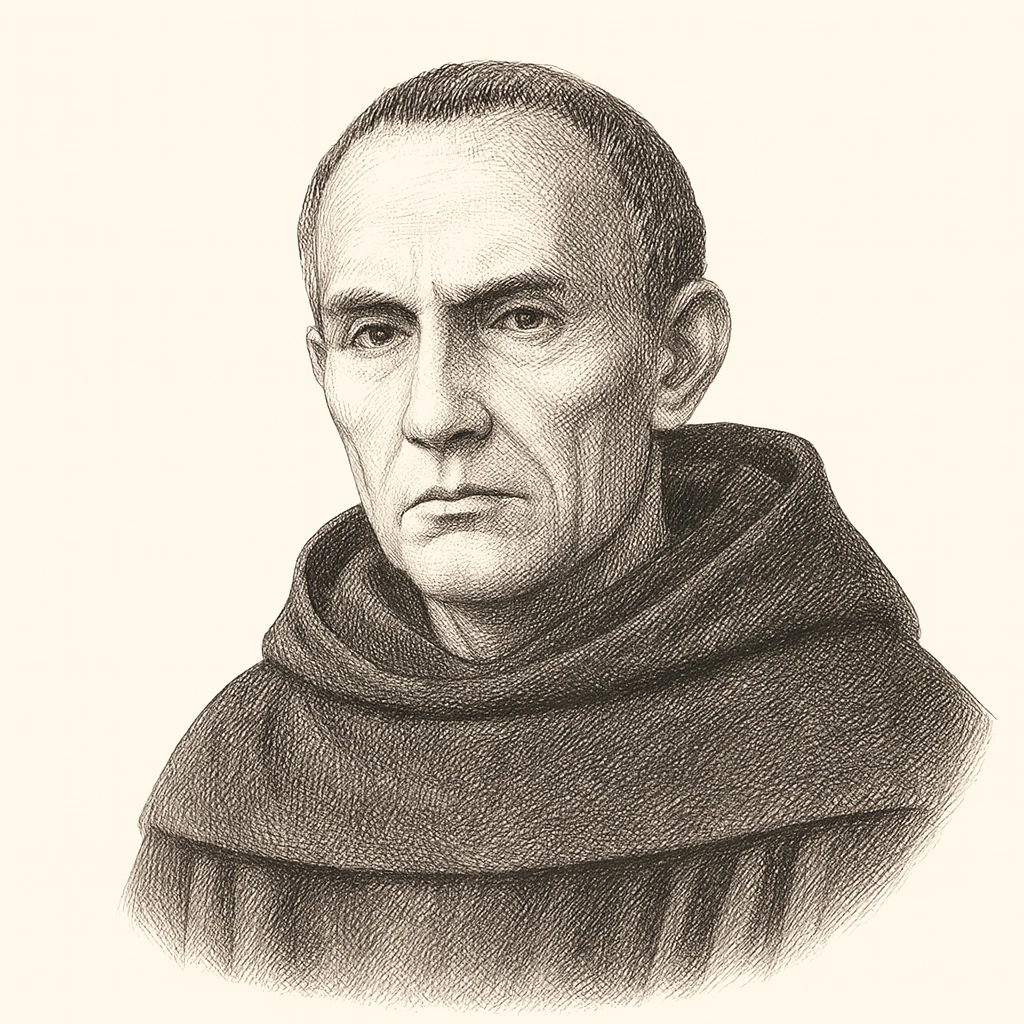
Francisco de Vitoria held the prime chair of theology at Salamanca from 1526 and published nothing; what survives are his lectures, taken down by students, and they changed the law of nations.
In 1539 he delivered De Indis, on the question of what right Spain had to the Americas. He works through the justifications on offer and rejects each. The Indians were true owners of their lands before the Spaniards came, and neither mortal sin nor unbelief deprives a man of dominion, since dominion rests on natural law and not on grace. The emperor is not lord of the whole world. The pope has no temporal jurisdiction over unbelievers and could not grant what he does not hold. Discovery gives title only over things belonging to nobody, which these lands were not. Refusal to accept Christianity is no ground for war, since faith cannot be compelled and the gospel had not been preached to them in a way that obliged belief.
Having demolished the standard titles, he offers some that could in principle justify a Spanish presence — a right of natural society and communication, including travel and trade; a right to preach; protection of converts; and intervention against practices like human sacrifice — and these have been read both as a decent minimum and as the opening through which empire returned. What is not in dispute is the framework he built to state them. Vitoria argues that all peoples, Christian or not, belong to a single international community governed by a law of nations derived from natural law, binding on sovereigns who have no superior, and that the same rules apply to both parties in a war. From this he develops a theory of just war — right authority, just cause, right intention, proportionality, and the limits of what may be done to the innocent — in a form that remains recognizable.
Grotius read him and cited him. So did Suárez, who systematized what Vitoria had lectured. The modern discipline of international law has since the nineteenth century named him among its founders, and the United Nations charter's premise, that sovereign peoples are members of a community with law between them, is his premise.
Wondering where you land? Take the 4-minute assessment