
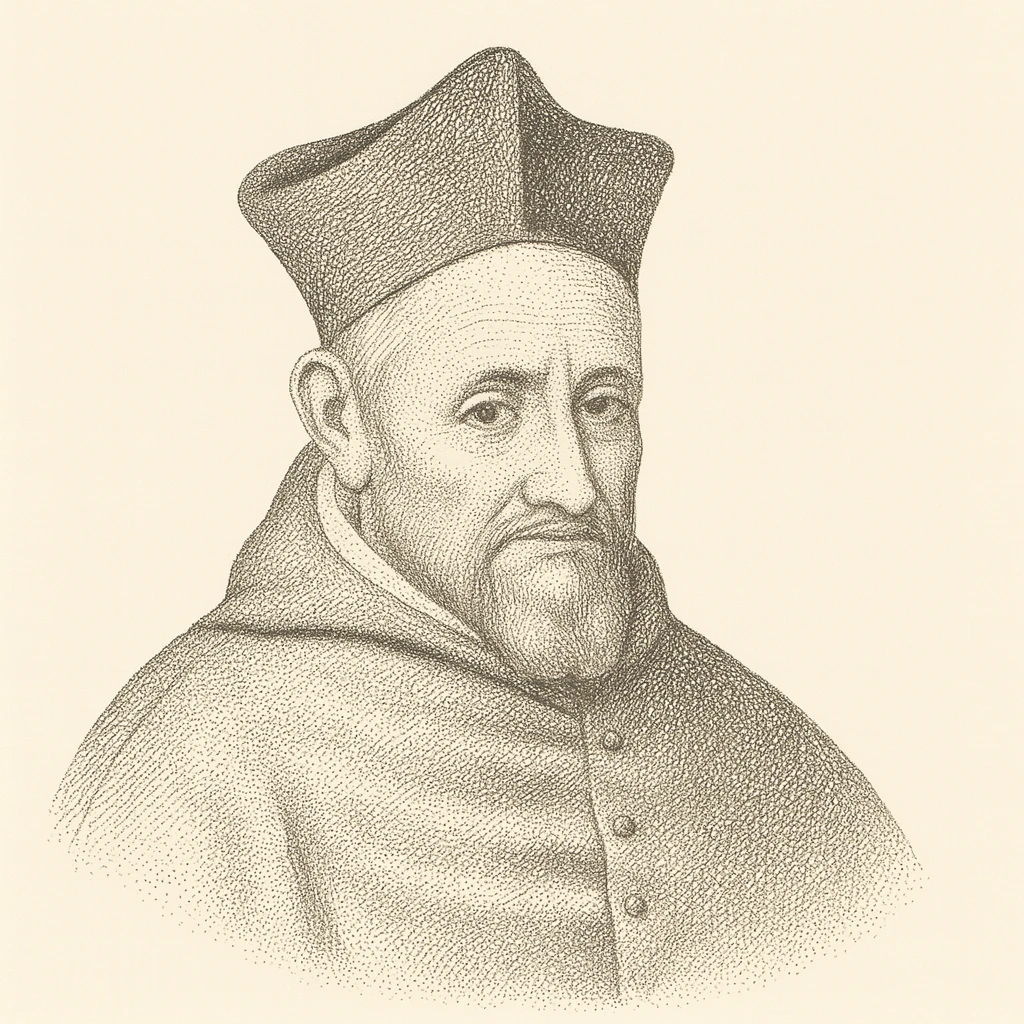
Robert Bellarmine was the Catholic Reformation's ablest controversialist, professor at the Roman College, cardinal, and the church's official examiner in the cases of both Giordano Bruno and Galileo — he signed the 1616 admonition, while privately allowing that if real proof of the earth's motion were produced the scriptures would have to be reinterpreted.
His Disputations on the Controversies of the Christian Faith is a systematic engagement with Protestant positions, and it made his reputation. But his political significance lies in a doctrine that satisfied nobody. Against Protestant claims for the royal supremacy he held that the pope has authority over temporal rulers; against the extreme papalist tradition running from Giles of Rome he denied that this authority is direct or that the pope is temporal lord of the world. The pope's temporal power is indirect: it arises only where spiritual ends require it, permitting him in extremity to release subjects from allegiance to a ruler who endangers the faith. Papal absolutists thought this a betrayal, and Sixtus V put the relevant volume on the Index.
The premise underneath it was more explosive than the conclusion. Bellarmine argued that political authority comes from God to the people, and from the people to the ruler by their consent — that no particular form of government is divinely ordained, that the community may change its constitution for good reason, and that kings therefore hold their power from those they govern. He was arguing for a limit on kings in the interest of the church, but the argument stood free of that purpose.
James I of England answered him personally. Robert Filmer wrote Patriarcha explicitly to destroy the position, naming Bellarmine and Suárez as its authors — and since Locke wrote the First Treatise to destroy Filmer, the doctrine that power originates in the community entered English constitutional argument by way of the Jesuit whom Protestant England most detested. Jefferson's phrasing in the Declaration has been traced to the same lineage, though the route is disputed.
Wondering where you land? Take the 4-minute assessment