
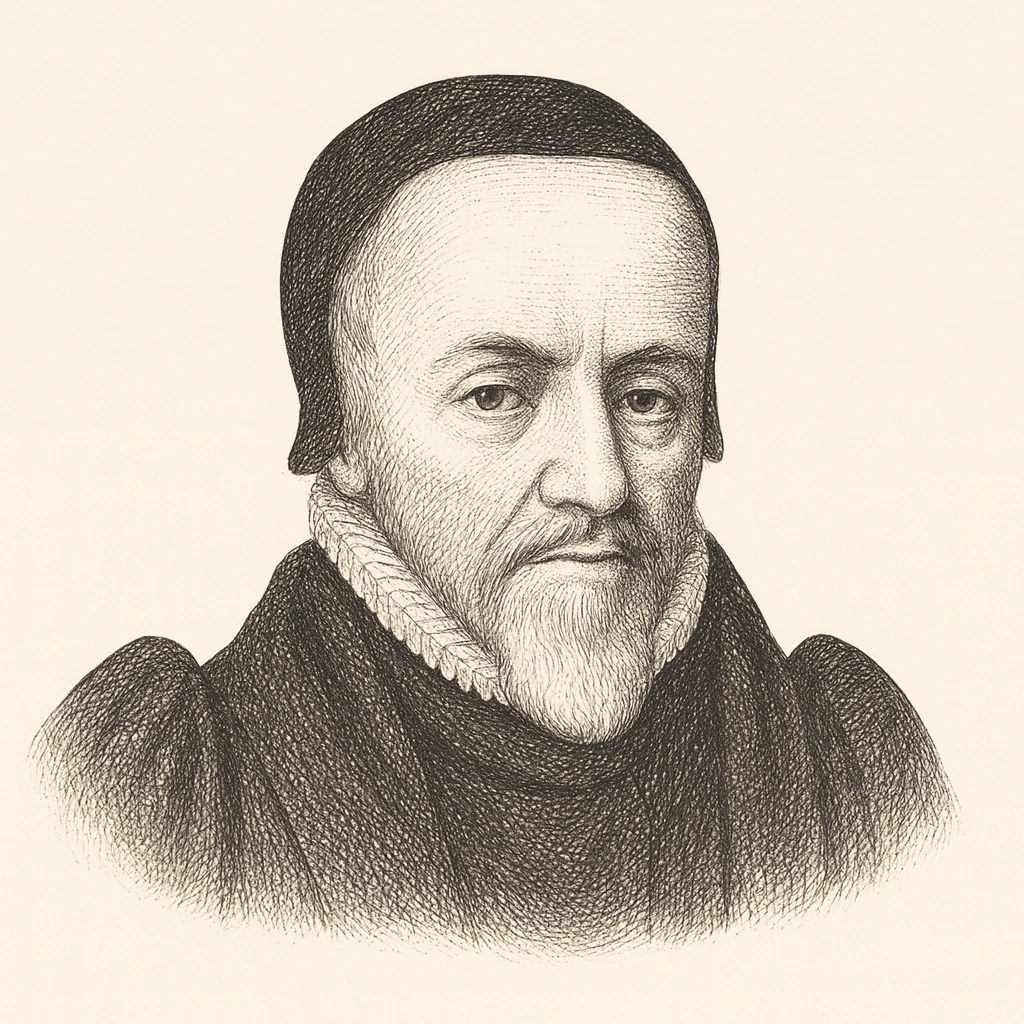
Richard Hooker was Master of the Temple and then a country parson, and he wrote the Laws of Ecclesiastical Polity against Presbyterian critics who held that scripture prescribes a single form of church government binding on all Christians at all times. His reply became the foundation of Anglican political theology and, unexpectedly, a source for English constitutionalism.
His argument begins several steps further back than the quarrel required. There is an eternal law by which God works; from it derive the law of nature governing physical things, the law of reason governing rational creatures, divine law revealed in scripture, and human law made by societies. Each governs its own province. Scripture is sufficient for salvation and does not pretend to settle everything: on matters it leaves indifferent, including much of church order, human societies must decide by reason and experience, and what they decide binds because they decided it. Change of circumstance may justify change of arrangement. This is a defense of the established church that concedes it is a human arrangement, and it depends on treating reason as a genuine source of law rather than a fallen faculty.
From this he derives an account of political authority that Locke would use. Men are naturally equal, and no one has by nature dominion over another; government therefore arises from consent, either expressed by the men themselves or inherited through the consent of their forebears, and the authority of law rests on that agreement. Hooker's purpose was conservative — he was justifying obedience to an existing settlement — but the premises were not.
Locke cites him repeatedly in the Second Treatise, always as the judicious Hooker, and quotes him at length on natural equality and on consent as the origin of political power. The tactical value was considerable: it let Locke ground a resistance argument in a divine of impeccable establishment credentials. Whether Hooker would have recognized the use is another matter — his own conclusion was that a settled polity ought not to be disturbed for the sake of the perfect.
Wondering where you land? Take the 4-minute assessment