
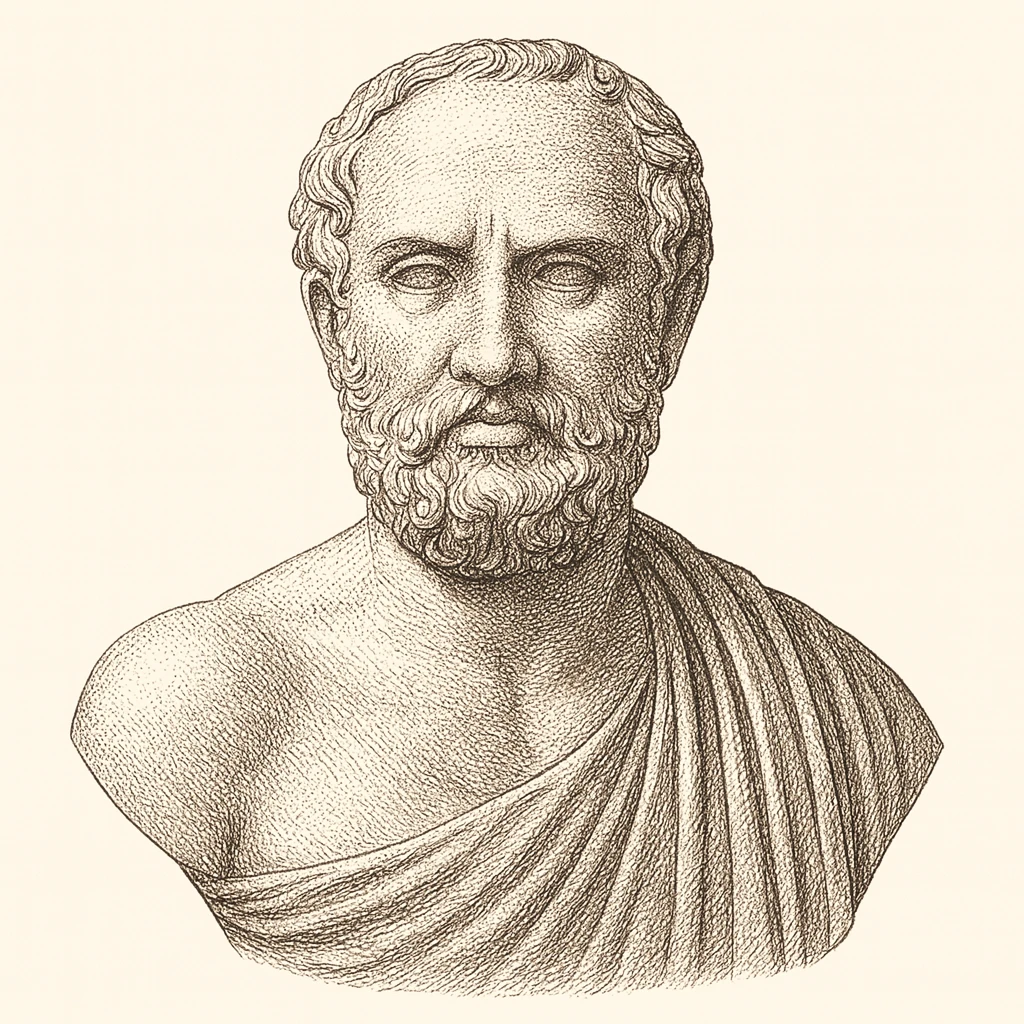
Thucydides commanded an Athenian squadron in the north Aegean, failed to relieve Amphipolis in 424 BC, and was exiled for twenty years. He spent them writing an account of the war he had failed to affect, and the exile is visible in the result: he had access to both sides, and no stake left in flattering either.
He announces at the outset that he is doing something new. Where Herodotus had gathered what people said, Thucydides claims to have tested every report against those present, discarded the marvelous, and written not for a prize competition but as a possession for all time — useful because human nature being what it is, similar things will happen again. The claim to permanence rests on a claim about regularity: politics has a structure that recurs.
The structure he describes is uncomfortable. States expand because they fear what will happen if they do not; the war's real cause, he says, was the growth of Athenian power and the fear this caused in Sparta, whatever the parties said about treaties and grievances. Domestic politics obeys similar pressures: his account of the revolution at Corcyra describes how, once civil war begins, the meanings of words shift to suit factions, so that recklessness becomes courage and moderation becomes cowardice. And in the Melian Dialogue, the Athenian envoys tell a small neutral island that questions of justice arise only between equals in power, while the strong do what they can and the weak suffer what they must. Melos refuses, and is destroyed.
Whether Thucydides endorses these speeches or convicts the Athenians by reporting them has been argued for two and a half thousand years, and the text does not settle it — the Melian argument is followed immediately by the Sicilian expedition, in which Athenian confidence destroys Athens. What is not in doubt is the influence. Hobbes translated the History as his first published work and said Thucydides was the most politic historiographer that ever writ; the Leviathan's account of the state of nature is recognizably built from it. Machiavelli's separation of how men live from how they ought to live runs along the same line. The modern discipline of international relations took him as its founder, and every realist argument that power rather than law is the operative fact of relations between states is a footnote to Book V.
Wondering where you land? Take the 4-minute assessment