
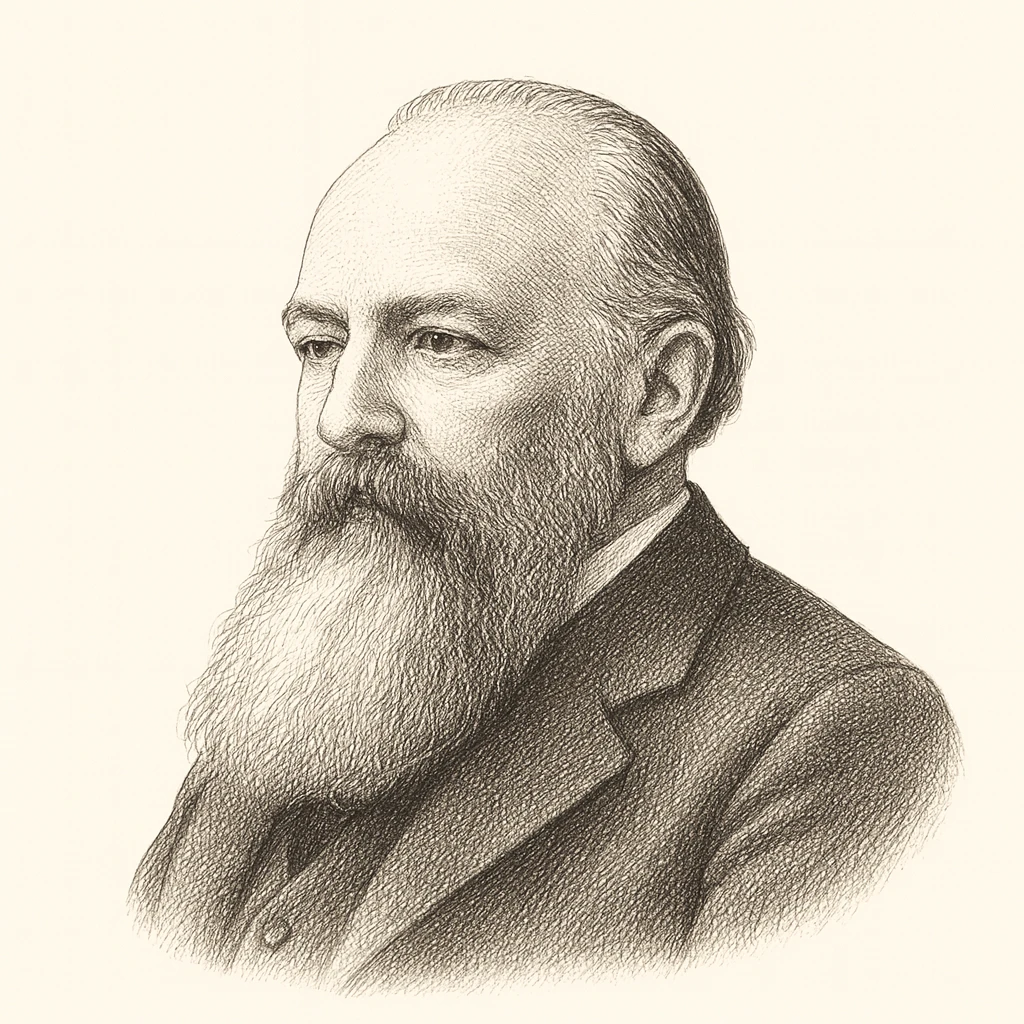
John Dalberg-Acton was a Catholic aristocrat with German and Italian connections, educated at Munich under Döllinger because Cambridge would not admit Catholics, a Liberal MP, a friend of Gladstone, and finally Regius Professor of Modern History at Cambridge. He read enormously, collected some sixty thousand books, and published almost nothing — his History of Liberty is the most famous unwritten book in the discipline.
His subject was the growth of freedom understood as a moral achievement rather than a political convenience, and his premise was that liberty is not the power of doing what we like but the right of being able to do what we ought. He located its sources in the refusal of the early Christians to concede that the state was the highest authority, in the medieval conflicts between spiritual and temporal power, in the resistance theories of the sixteenth century, and in the English and American constitutional settlements. What all of these share is a limit: some authority above the sovereign, some domain the sovereign cannot enter.
From this follows the conviction that generated his most quoted sentence. Writing to Bishop Creighton in 1887 about how historians should judge popes and kings, Acton objected to any presumption in favor of the powerful: power tends to corrupt, and absolute power corrupts absolutely. Great men are almost always bad men, even when they exercise influence and not authority. The letter is an argument that the historian's duty is to apply one moral standard to everyone, and that treating rank as mitigation destroys the discipline.
He acted on it against his own church. He opposed the definition of papal infallibility at the First Vatican Council, worked in Rome to organize the minority bishops against it, and afterwards refused to concede that the church's authority could reach the historical record — he thought the Inquisition and the Massacre of St Bartholomew were crimes and that saying so was a Catholic's duty. Döllinger was excommunicated for the same position; Acton was not, largely because nobody wished to make an example of an English peer.
Hayek named him with Tocqueville as the tradition he was continuing.
Wondering where you land? Take the 4-minute assessment