
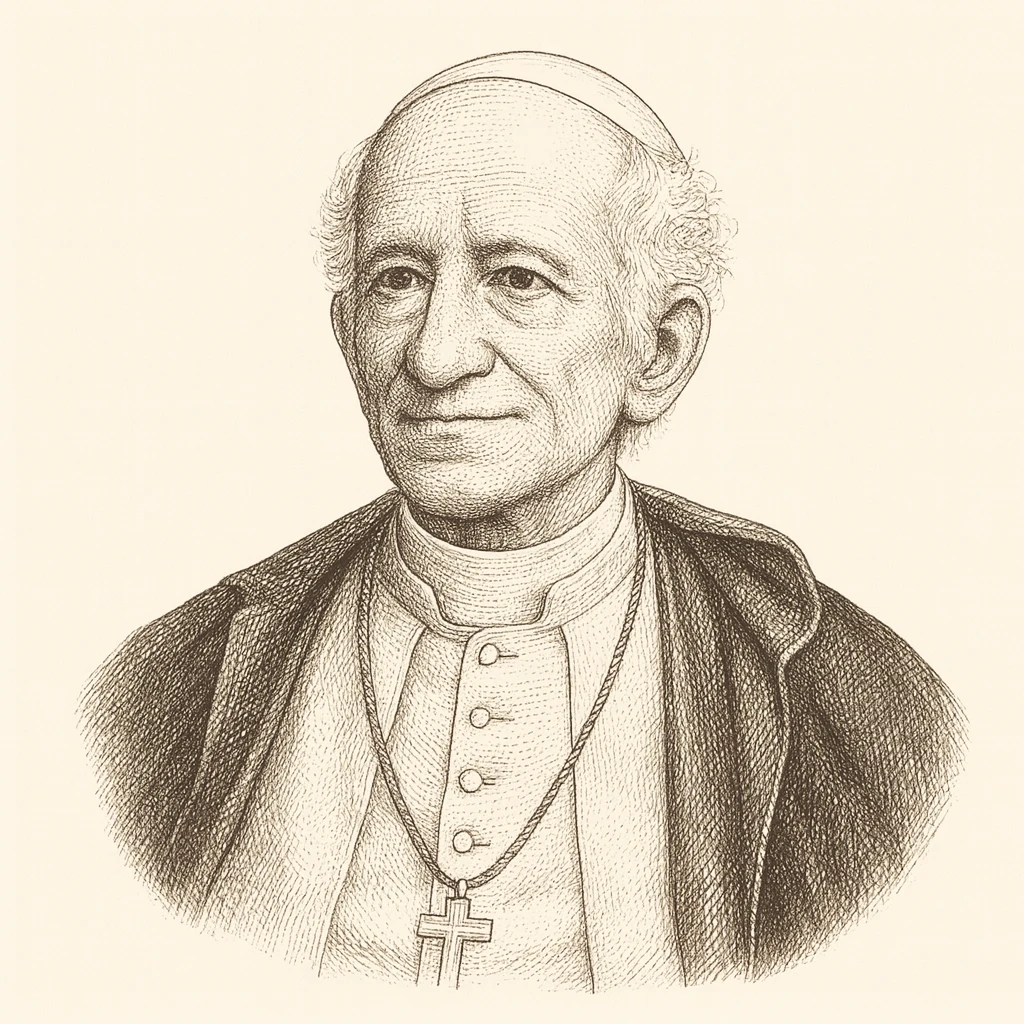
Gioacchino Pecci, who reigned as Pope Leo XIII from 1878 to 1903, is remembered above all as the author of Rerum Novarum (1891), the encyclical widely regarded as the founding document of modern Catholic social teaching. Written amid the upheavals of industrialization, urban poverty, and the rise of organized labor and socialist movements, the letter sought to define a distinctly Catholic response to what was then called the "condition of workers." Leo condemned socialism explicitly, rejecting the abolition of private property as both unjust and contrary to human nature, and he defended the right to own property as rooted in natural law. At the same time, he criticized the abuses of unrestrained capitalism, insisting that labor was not a mere commodity and that employers bore genuine moral obligations to their workers.
The political vision of Rerum Novarum rests on several ideas that shaped later Christian democratic and social-conservative thought. Leo argued for a just wage sufficient to support a worker and his family, affirmed the right of workers to form associations, and defended the family as the primary and natural social unit prior to the state. He assigned the state a real but limited role: it should protect the common good, safeguard the vulnerable, and intervene when justice required, without absorbing functions that properly belonged to families, churches, and voluntary associations. This balance later informed the principle of subsidiarity elaborated by his successors.
Beyond social questions, Leo promoted the revival of Thomistic philosophy, encouraging the study of Thomas Aquinas as the intellectual foundation for Catholic engagement with modern thought. He sought a measured accommodation with modern political realities, encouraging Catholics in some countries to participate in constitutional and republican politics rather than reject them outright, while firmly upholding the authority and teaching role of the Church.
His legacy is genuinely foundational rather than partisan: Rerum Novarum has been invoked by figures across the political spectrum, and successive popes have marked its anniversaries with encyclicals extending its arguments. For religious conservatives, Leo remains a touchstone for the claim that social and economic order must be grounded in moral and natural law, and that neither the market nor the state may override the dignity of the person, the family, and religious authority.
Pope Leo XIII is associated with Religious Conservative. See the archetype