
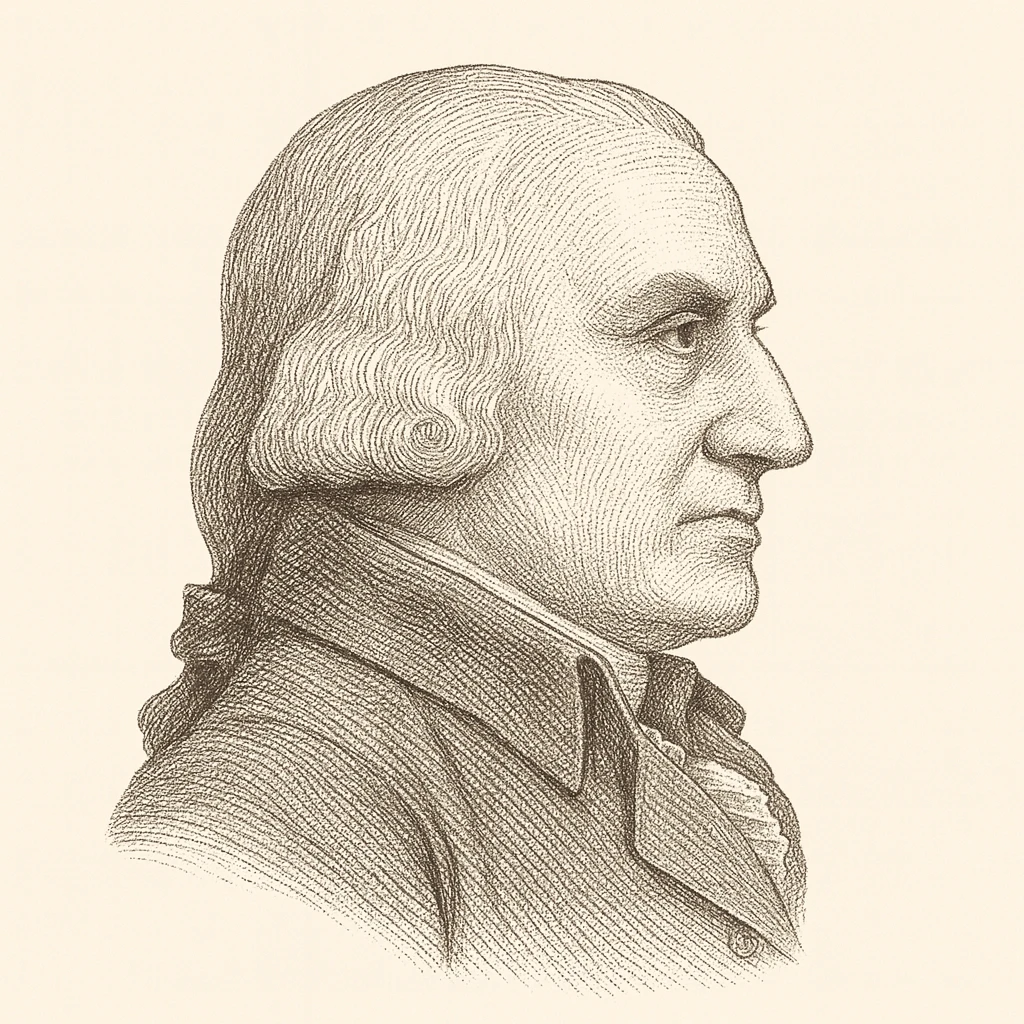
John Millar heard Adam Smith lecture at Glasgow, read law under Lord Kames in Edinburgh, and on Kames's recommendation took the chair of Civil Law at Glasgow in 1761, holding it for forty years. He was by all accounts the outstanding teacher of the Scottish universities in his generation, lecturing without notes to classes that drew students from England and America, and his politics were unusually forthright for a professor of law: an advocate of the American colonists, a critic of the slave trade, a supporter of parliamentary reform, and a defender of the early French Revolution long after that had become uncomfortable.
The Origin of the Distinction of Ranks, published in 1771, is the first sustained attempt to explain social stratification as a historical product. Millar takes the stadial framework he had from Smith and Kames and applies it not to law in general but to the specific question of who has authority over whom. He examines the position of women, the authority of fathers over children, the relation of master and servant, the power of chiefs and sovereigns, and in each case argues that the arrangement follows from the mode of subsistence and the distribution of property it produces. The treatment of women is the most striking: he opens the book with it, treats the condition of women as an index of a society's development, and derives it from economic circumstance rather than from nature or scripture.
He was equally clear about the direction of causation in politics. The Historical View of the English Government of 1787 argues that the constitution is not the working out of ancient liberties but the record of shifting economic power, that commerce dissolved feudal dependence by giving tenants somewhere else to go, and that the growth of manufacturing was creating a new set of interests the constitution had not yet accommodated. Later editions added notes on the corrupting effect of the national debt and of colonial patronage on parliamentary independence.
The result is a body of work that reads as sociology written before the word existed, and Millar has accordingly been claimed as a precursor by writers with very different aims — by historians of sociology for the analysis of rank, and by Marxists for the argument that legal and political forms follow from property relations.
Wondering where you land? Take the 4-minute assessment