
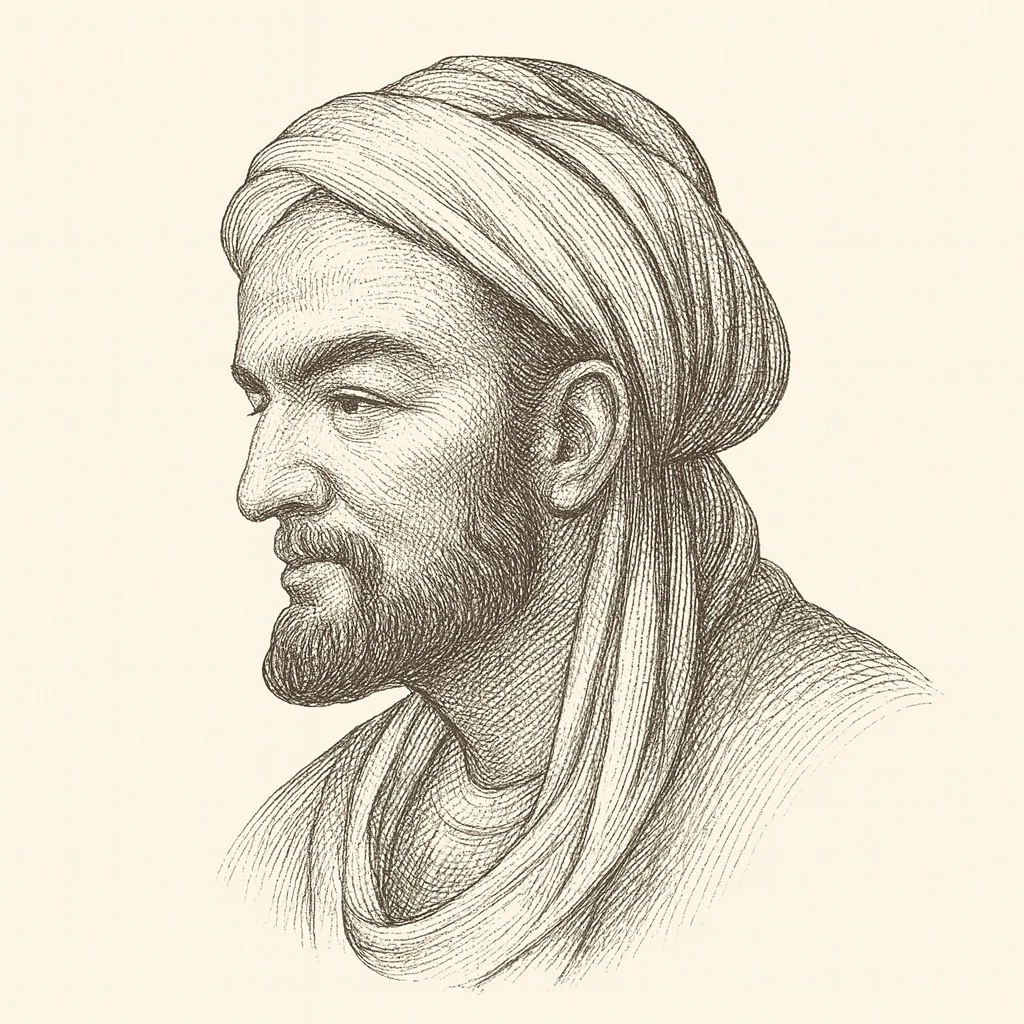
Avicenna — Ibn Sina — was a physician, administrator and philosopher working across the Persian principalities, and the author of the most influential philosophical system between antiquity and the high Middle Ages.
His Book of Healing was an encyclopedia of logic, natural science and metaphysics; his Canon of Medicine remained a European medical textbook into the seventeenth century. What matters for political and philosophical thought is the metaphysics. Avicenna reconciled Aristotle with a Neoplatonic account of emanation and, in doing so, drew a distinction the Latin West had lacked: between what a thing is and that it is — essence and existence. In his account every contingent being has an essence to which existence is added, and only in the necessary being are the two identical. Translated at Toledo in the twelfth century, that distinction became the backbone of scholastic metaphysics; Aquinas adopted and modified it, and the vocabulary of act, potency, necessity and contingency that the schoolmen argued in is substantially Avicennian.
He also produced one of philosophy's enduring thought experiments. The "flying man" asks the reader to imagine a person created fully formed, suspended in the void, with no sensory contact of any kind — and argues that such a person would still affirm their own existence, which shows the self is known independently of the body. It anticipates Descartes's cogito by six centuries, and the resemblance has been argued over ever since.
Avicenna reached the Latin West a full generation before Averroes, which shaped how the recovery of Aristotle unfolded: Europe met a Neoplatonized, systematized Aristotle first and the austere Aristotelian of the commentaries afterwards, and much of the thirteenth century's philosophical argument is the friction between the two. Aristotle's own entry in this roster names him and Averroes as the channels through which that framework survived — this is the figure that description points to.
Wondering where you land? Take the 4-minute assessment