
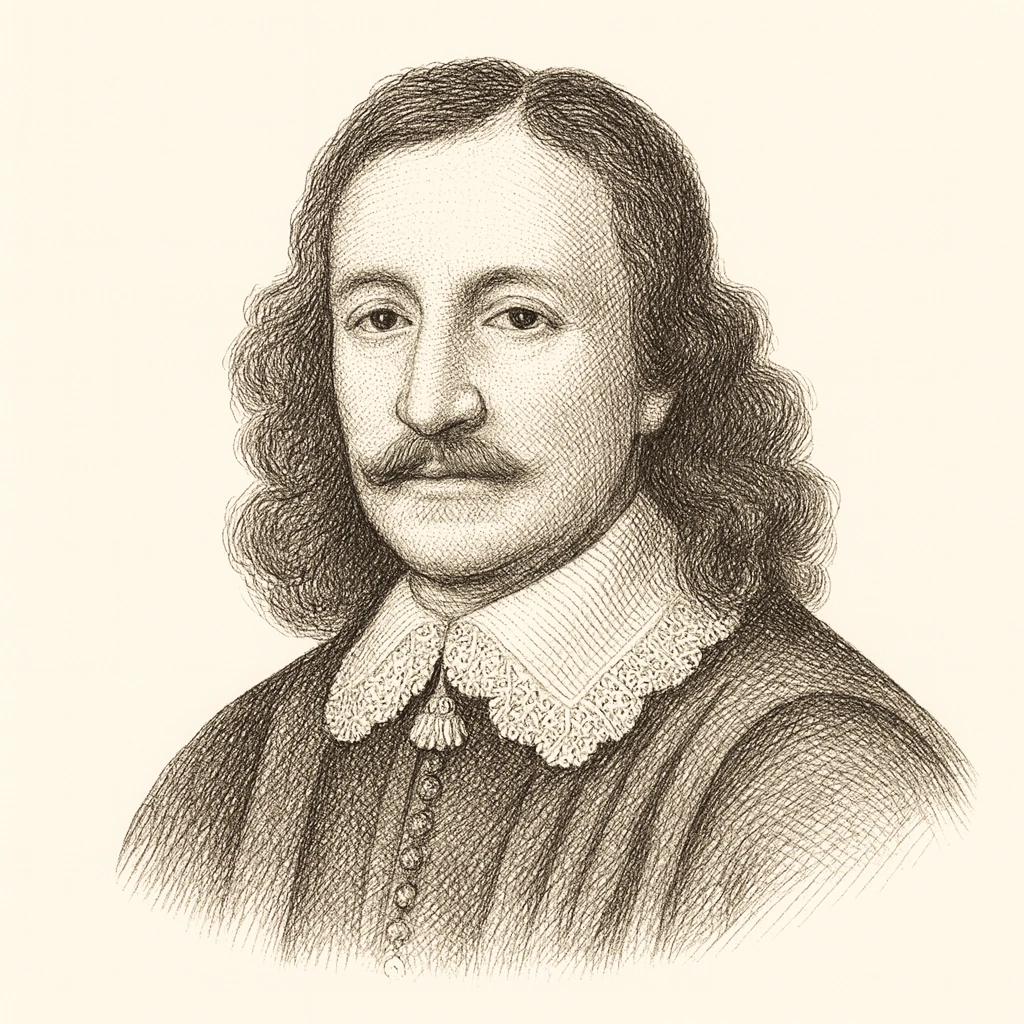
Algernon Sidney fought for Parliament, sat in the councils of the Commonwealth, refused to serve Cromwell after the protectorate, and lived abroad through the Restoration until a pardon let him return. In 1683 he was arrested in connection with the Rye House Plot. The crown could produce only one witness where the law required two, so the prosecution offered as the second witness his own manuscript — the unpublished Discourses Concerning Government, seized from his study. Scribere est agere, said Judge Jeffreys: to write is to act. He was beheaded, and his scaffold paper is one of the great statements of the republican creed.
The Discourses is a paragraph-by-paragraph demolition of Filmer's Patriarcha, and its structure is dictated by that. Against the claim that Adam's dominion descended to kings, Sidney argues that if such a title existed nobody could now identify its holder, and every reigning house in Europe would be a usurper. Against natural subjection he asserts that men are born free and equal, and that governments are constituted by those who live under them for their own good: liberty is not a grant from a ruler but the condition into which people are born, and any authority not derived from consent is usurpation.
He goes further than Locke on resistance and further on the merits of tumult. Where Locke's right of revolution is a last resort against a settled design of tyranny, Sidney treats disturbance as the ordinary price of liberty and holds that a people may remove a magistrate who has become useless or hurtful without waiting for extremity. He is also more classical: his models are Rome, Sparta and the Hebrew commonwealth rather than an abstract state of nature, and virtue in citizens matters to him in a way it does not to Locke.
Jefferson named him with Locke as containing the elementary books of public right from which the Declaration was drawn, and prescribed both for the University of Virginia. In eighteenth-century America Sidney was the martyr of the cause, his name and his motto — that resistance to tyrants is obedience to God — appearing on seals, in pamphlets and on the Massachusetts state seal proposal.
Wondering where you land? Take the 4-minute assessment