
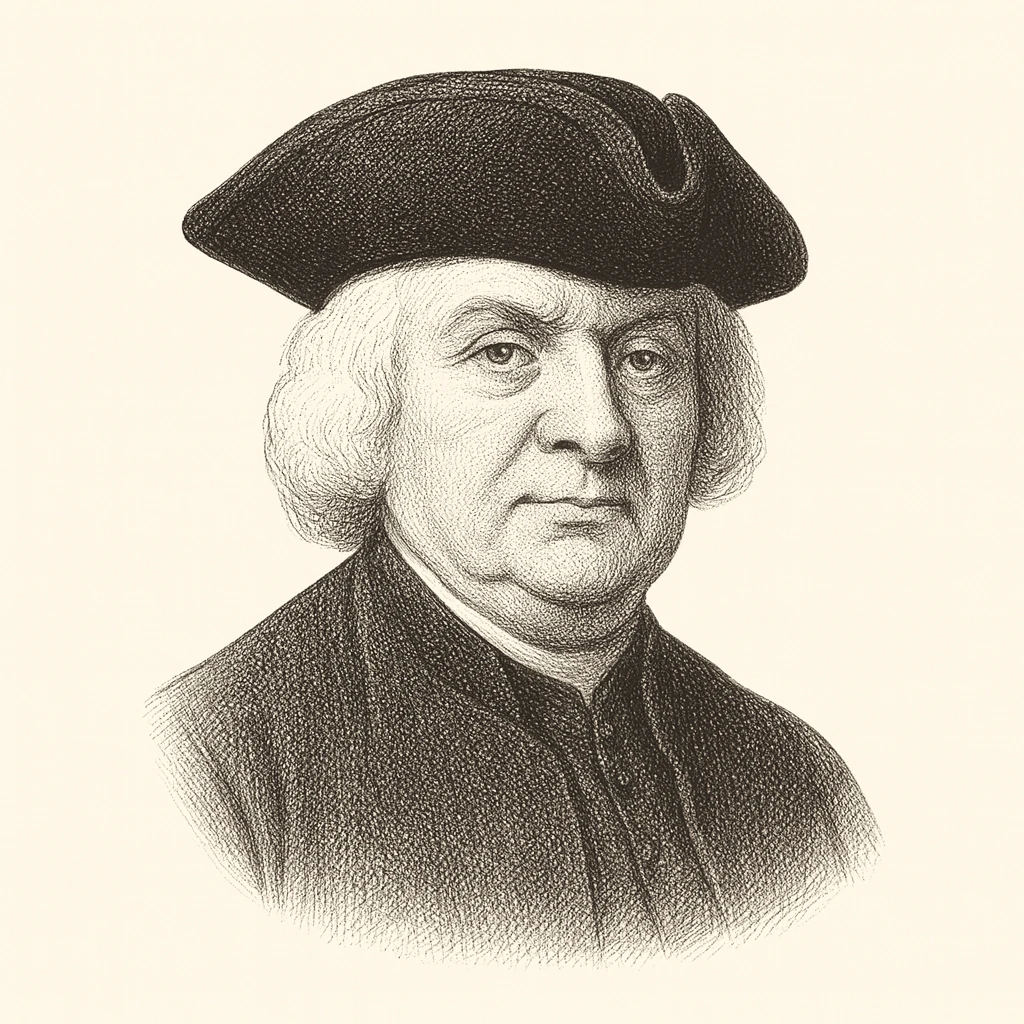
William Paley taught at Cambridge and rose to be Archdeacon of Carlisle, and for half a century his books were what educated Englishmen had read. The Principles of Moral and Political Philosophy of 1785 was a required text at Cambridge until the 1840s, and Natural Theology was still being answered a century after it appeared.
His ethics is utilitarian and theological at once, which is the combination the nineteenth century would pull apart. Virtue, he wrote, is the doing good to mankind, in obedience to the will of God, and for the sake of everlasting happiness. The criterion of right action is its tendency to promote general happiness — but the obligation to pursue general happiness rests on divine command and divine sanction, since without a future state a person has no sufficient reason to prefer the general good to his own. Paley is thus a utilitarian whose whole system depends on God, and he is candid that expediency alone will not bind anyone.
The political consequences were conservative in the specific sense of preferring what exists to what is theorized. Paley rejected natural rights and the social contract as fictions with no historical warrant, and grounded political obligation on utility instead: obey because the consequences of general disobedience are worse than the inconveniences of submission. He then defended the unreformed constitution — rotten boroughs and all — on the ground that it produced good government in practice whatever it looked like in principle, an argument that made him useful to the establishment and contemptible to the radicals.
Bentham's secular utilitarianism was constructed in explicit distinction from this, and displaced it: once the calculation could stand without divine sanction, the theological half became optional and then embarrassing. But Paley had put the calculating framework into general English circulation first, and the shape of nineteenth-century moral argument owes as much to his textbook as to Bentham's system.
Natural Theology, with its watch found upon a heath and its inference to a designer, was read by every English schoolboy who mattered — Darwin among them, who admired the writing and spent his life dismantling the argument.
Wondering where you land? Take the 4-minute assessment