
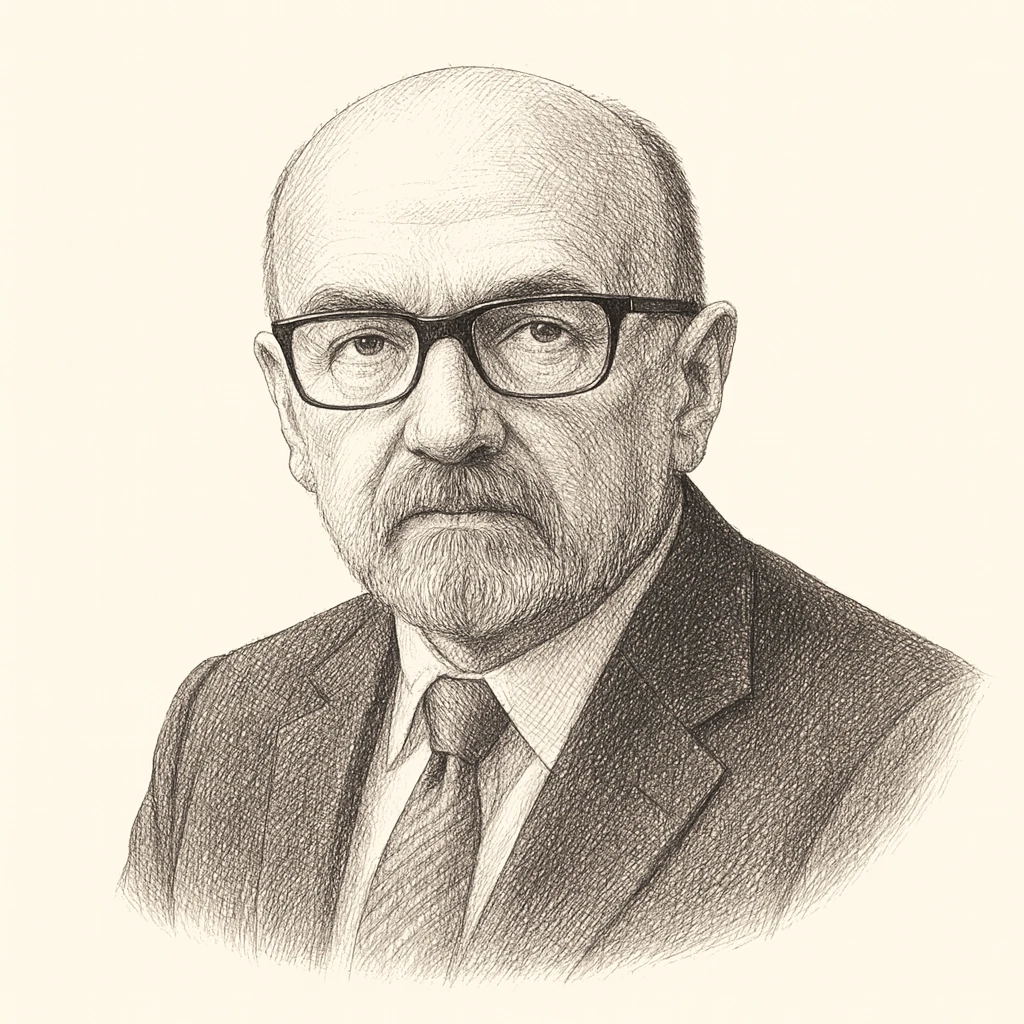
Ryszard Legutko is a Polish philosopher known internationally as a conservative critic of contemporary liberal democracy. Trained as a scholar of ancient philosophy—with a particular focus on Plato—he spent much of his career as an academic in Kraków while also being active in the anti-communist opposition associated with the Solidarity movement. This dual formation, combining classical political philosophy with firsthand experience of life under a communist regime, is central to his political thought and shapes both its themes and its polemical edge.
Legutko is best known for the argument, developed most influentially in his book on the "demon in democracy," that liberal democracy and communism, despite their obvious opposition, share deep structural and temperamental similarities. He contends that both are animated by a faith in progress, a drive toward homogenization, an impatience with tradition, and a tendency to treat their own worldview as self-evidently rational, casting dissenters as backward or morally suspect. On this reading, liberal democracy exerts subtle pressures toward conformity and displaces older loyalties—religion, nation, family, and inherited custom—much as ideological states once did, though through cultural and institutional means rather than overt coercion.
Against this, Legutko defends a classical and conservative conception of politics grounded in virtue, the classical philosophical tradition, and the moral inheritance of Christianity and the nation. He is skeptical of the modern liberal emphasis on autonomy, equality, and emancipation when these become organizing ideals of an entire social order, arguing that they can erode the shared substance a political community needs. His diagnosis places him within a broader current of contemporary conservative and postliberal thought that questions whether liberalism is neutral among ways of life or itself a comprehensive, expansionist ideology.
Beyond his scholarship, Legutko has been a public figure in Polish and European politics, associated with the conservative right and serving in elected office at the European level. His writing has given him a significant readership among Western conservatives and postliberals, for whom his critique offers a vocabulary linking the experience of the former Eastern bloc to present-day anxieties about political and cultural conformity. Whether read as a bracing warning or an overstated equivalence, his work has become a notable reference point in debates over the character and limits of liberal democracy.
Ryszard Legutko is associated with Welfare Nationalist. See the archetype