
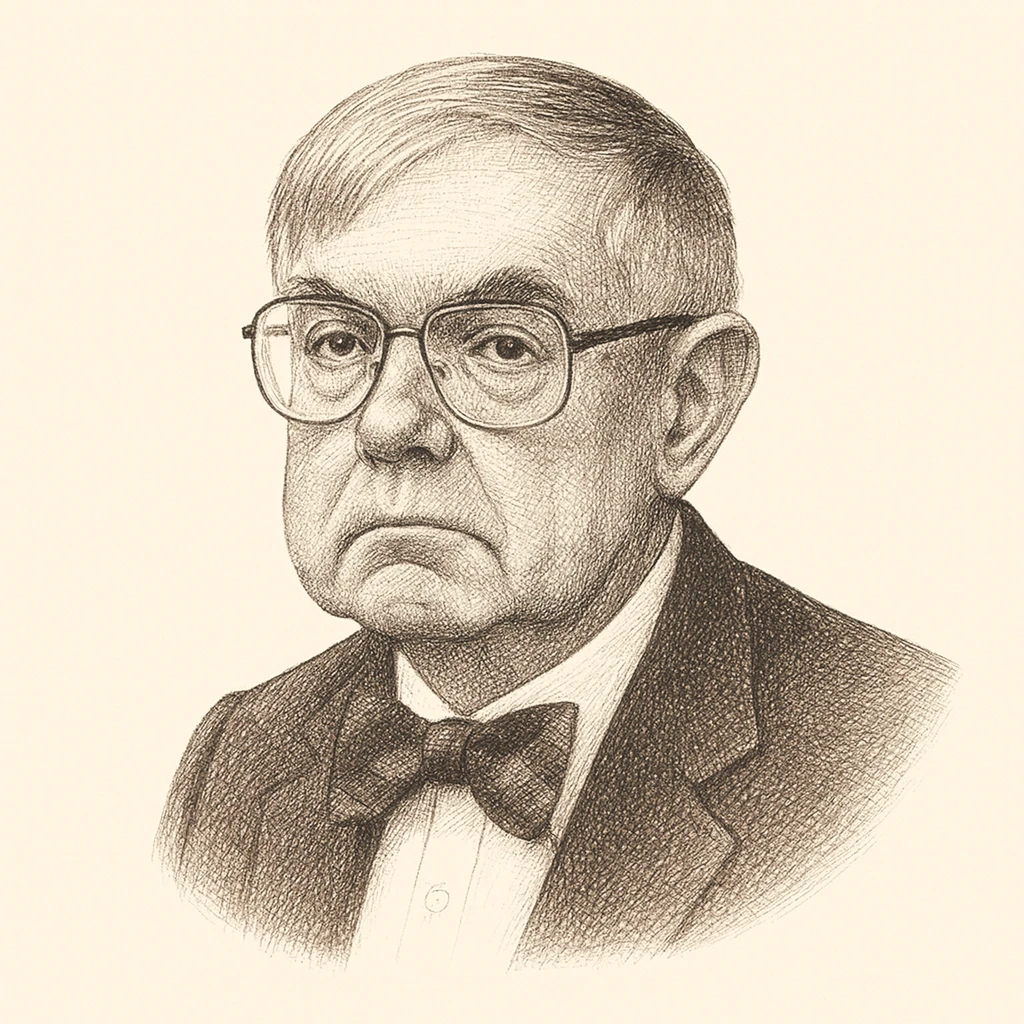
Samuel T. Francis (1947–2005) was an American political writer and theorist associated with the paleoconservative movement that broke from mainstream American conservatism in the late twentieth century. Trained as a historian and having worked as a policy analyst and later as a syndicated columnist and editor, he built much of his political thought around a critique of what he saw as the failure of the conservative movement to actually conserve anything or to resist the growth of a centralized, bureaucratic state. His collected essays argued that establishment conservatism had accommodated itself to the very managerial order it claimed to oppose, becoming, in his view, a permanent and ineffectual opposition.
Francis's most influential intellectual move was his adaptation of James Burnham's theory of the managerial revolution. Where Burnham described the rise of a managerial elite that displaces older owning and entrepreneurial classes across business, government, and culture, Francis extended this analysis to interpret contemporary American politics as a struggle between an entrenched managerial regime and the ordinary population it administers. He drew on the sociological concept of "Middle American Radicals"—a stratum feeling squeezed from both above and below—to argue that a populist, nationalist revolt of this middle class offered the only genuine challenge to managerial rule. This framework anticipated later debates about populism, elite estrangement, and the shortcomings of movement conservatism.
His thought pointed toward a politics rooted in cultural identity, national sovereignty, and resistance to globalizing economic and social forces, positioning him among the paleoconservatives who opposed both liberal cosmopolitanism and free-market universalism. Later in his career he was dismissed by The Washington Times in 1995 over remarks at an American Renaissance conference and went on to edit the newsletter of the Council of Conservative Citizens; his identitarian turn drew wide condemnation and estranged him from parts of the right. This trajectory has shaped how his legacy is assessed: some treat his managerial and populist analysis as a serious contribution to understanding class and power in American politics, while others emphasize the racial nationalism that came to characterize his later writing.
Francis's ideas have been cited by observers seeking the intellectual roots of contemporary right-wing populism, and his critiques of the conservative establishment continue to circulate in debates about whether the American right can mount an effective challenge to entrenched institutions.
Wondering where you land? Take the 4-minute assessment