
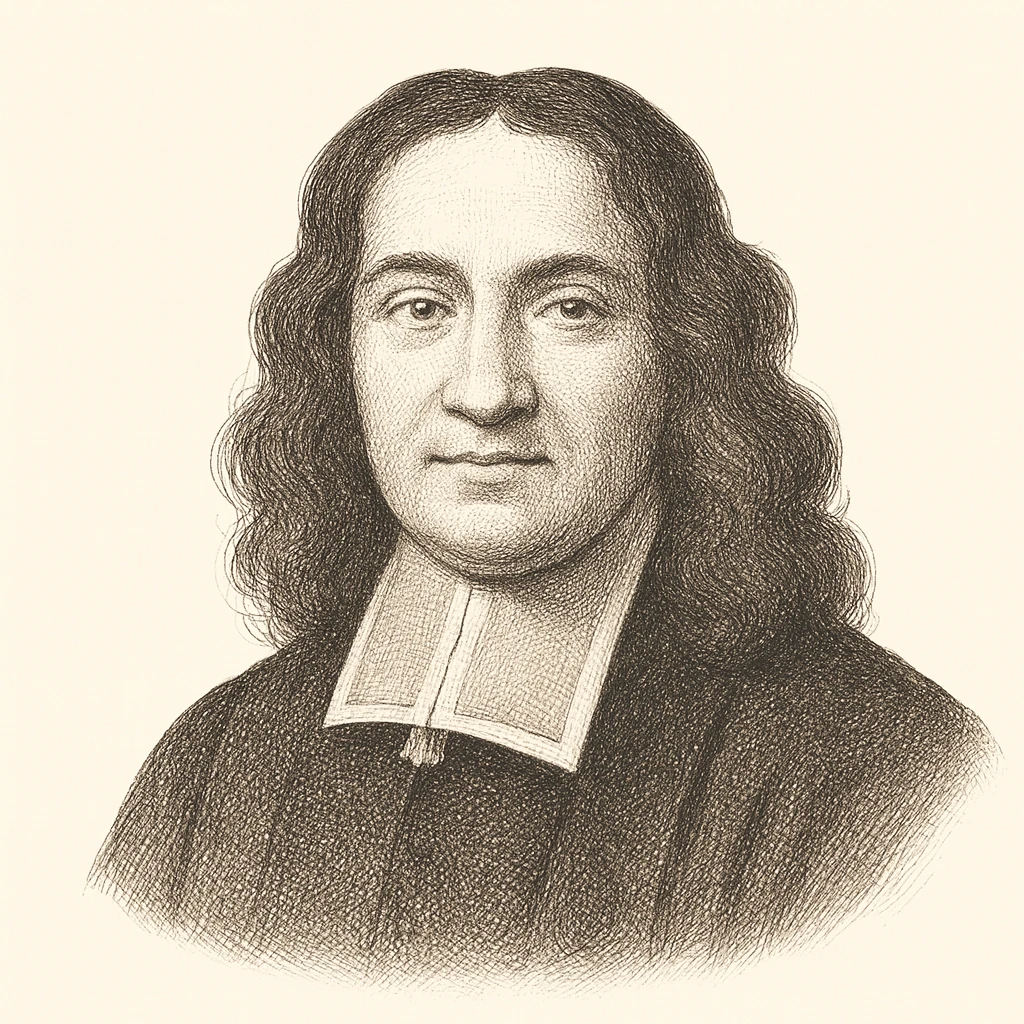
Pierre Bayle was the son of a Huguenot minister, converted to Catholicism briefly as a student and back again, which made him a relapsed heretic liable to death in France, and fled to Rotterdam. His brother died in a French prison. He wrote in a country of refuge about a country that was expelling people for their beliefs, and toleration is the thread through everything he did.
The Philosophical Commentary of 1686 is the most radical case for toleration written in the seventeenth century, and it is more radical than Locke's Letter of the same decade. It takes as its text Christ's parable command compel them to come in, and argues that a literal reading is monstrous and therefore cannot be right. His central argument is about conscience: what obliges is not truth but the conscience's judgment of truth, since no one can act on a truth he does not perceive. An erring conscience therefore binds exactly as a correct one does, and to punish someone for following it is to punish him for doing the only thing he could rightly do. From this the toleration extends where Locke's stopped — to Catholics, to Jews, to Muslims, and to atheists, whom he had already argued in the Pensées diverses could form a perfectly moral society, since men act from passion and custom rather than from their professed beliefs.
The Historical and Critical Dictionary of 1697 is the strangest great book of the period: nominally a reference work correcting errors in earlier dictionaries, in practice a vast structure in which brief entries carry footnotes many times their length, and the footnotes carry the argument. Under cover of scholarship it lays out the case against every philosophical system in turn, presses the problem of evil until no theodicy survives, retails the scandalous with relish, and leaves the reader with the conclusion Bayle claimed to accept — that reason destroys everything and faith must therefore stand alone, a fideism his readers almost universally took as irony.
It became the most widely owned book in eighteenth-century private libraries. Voltaire, Diderot, Hume, Frederick the Great and Jefferson all quarried it. Whether Bayle was a sincere Calvinist or a concealed unbeliever has been argued for three hundred years without resolution.
Wondering where you land? Take the 4-minute assessment