
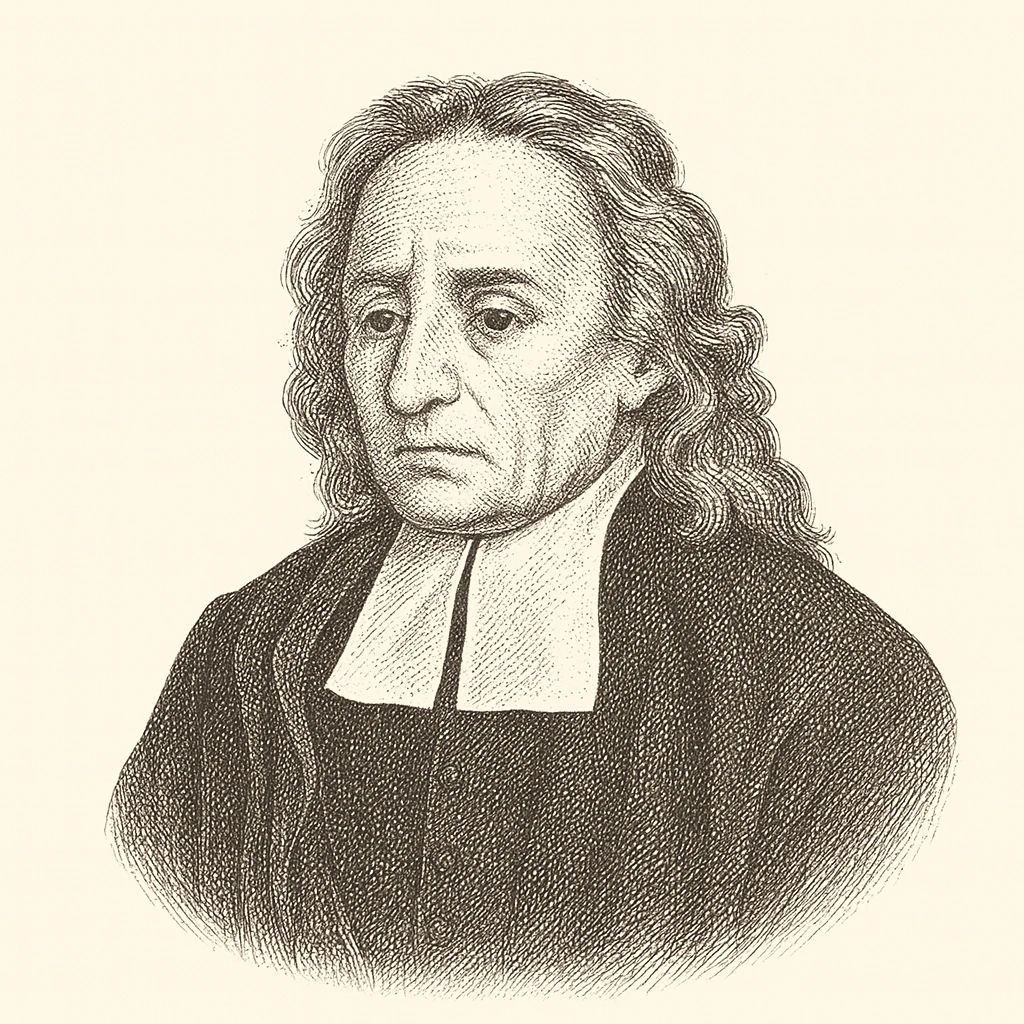
Giambattista Vico spent his life as a poorly paid professor of rhetoric in Naples, applying repeatedly and unsuccessfully for the better-paid chair of law, and published the New Science three times in revised versions without attracting readers. He was rediscovered in the nineteenth century and has been claimed ever since by people who agree with nothing else.
His starting point is an attack on Descartes. The Cartesians held mathematics to be the model of knowledge and history a matter of unreliable report. Vico inverts it: verum esse ipsum factum, the true is precisely the made. We can know mathematics because we constructed its objects, and by the same principle we can know the world of nations with a certainty unavailable in natural science, because men made society, whereas nature was made by God. The proper study of humanity is its own history, and it is knowable from the inside.
The method that follows is imaginative reconstruction. Early peoples did not think as we do; they thought in images, myths and poetic universals, because they lacked the abstractions we take for granted. Myth is therefore not error or allegory but the authentic record of how such minds worked, and language, law and custom are fossils in which their thought is preserved. To understand Roman law one must recover the mentality that produced it, which requires an effort of entering a way of seeing that is genuinely alien.
From this he constructs the ideal eternal history: nations pass through an age of gods, an age of heroes, and an age of men, each with its own language, law, government and character, and then fall back — the ricorso — into a barbarism of reflection worse than the first barbarism of sense, because it is refined and heartless. Progress is real within a cycle and not across them.
Almost every element was ahead of its time. Michelet made him famous in France; Marx cites him in a footnote to Capital for the claim that human history differs from natural history in that we made the one and not the other; Berlin made him the founder of the counter-Enlightenment and of the idea that cultures must be understood in their own terms; and the whole later insistence that the human sciences require interpretation rather than explanation is his.
Wondering where you land? Take the 4-minute assessment