
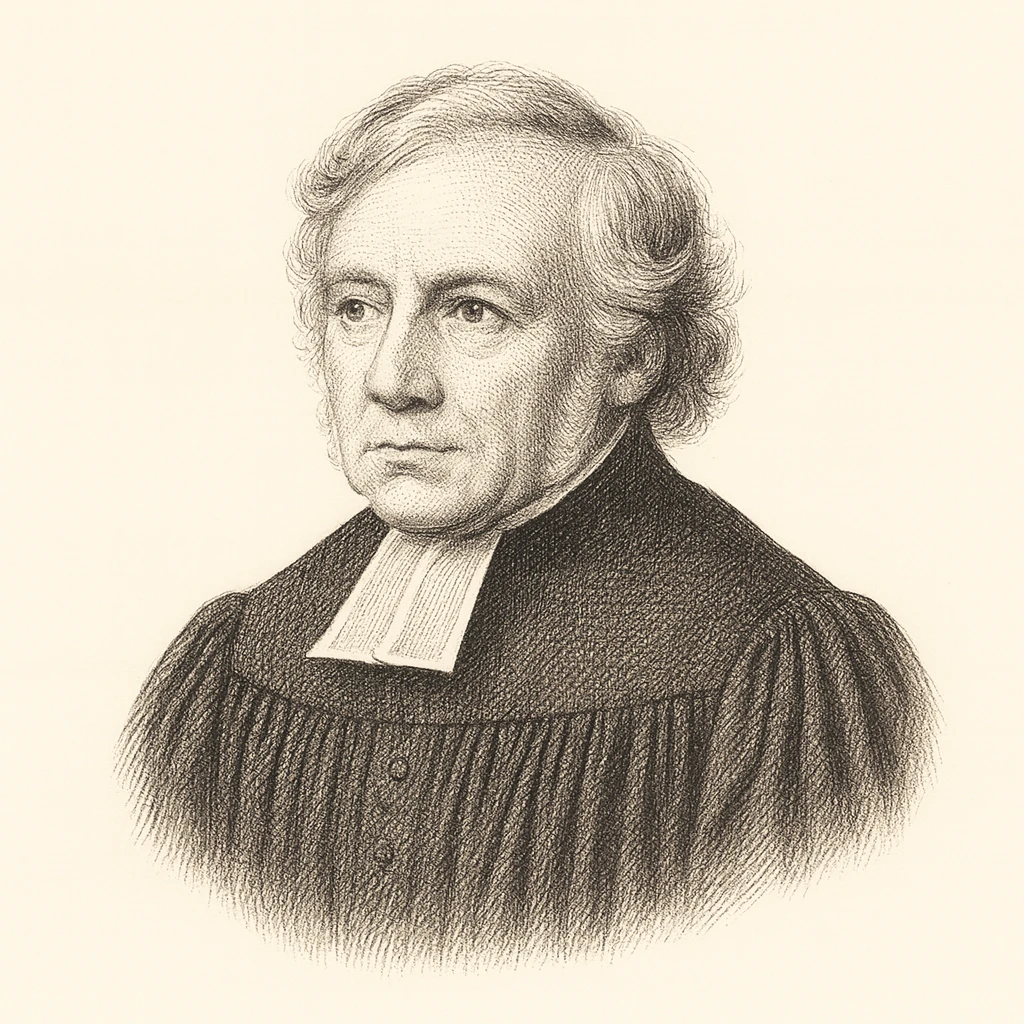
Friedrich Schleiermacher was raised among the Moravian Brethren, lost their faith and kept their piety, became a hospital chaplain in Berlin, moved in the circle of the early Romantics around Friedrich Schlegel, and ended as professor at the university he helped Humboldt found.
On Religion: Speeches to Its Cultured Despisers, published anonymously in 1799, is addressed to exactly the audience its title names — the educated Berliners who had concluded that religion was superstition for the uneducated. Schleiermacher concedes almost everything they say about doctrine and church discipline and then argues that they have mistaken the husk for the thing. Religion is neither a kind of knowing nor a kind of doing; it is a distinct province of the mind, and its essence is intuition and feeling of the infinite in the finite. Dogmas are secondary formulations of an experience that precedes them, and the plurality of religions is not scandal but necessity, since an infinite cannot be exhausted by one finite expression.
In The Christian Faith he restated this as the feeling of absolute dependence — the awareness of being utterly conditioned, which is where the word God gets its content. Theology becomes the description of the religious consciousness of a community rather than the deduction of truths from revelation, which made him the founder of liberal Protestant theology and the target of everyone who thought that a surrender, Barth most famously.
His other lasting contribution is hermeneutics. Earlier theories of interpretation were sets of local rules for difficult passages in scripture or law; Schleiermacher made interpretation a general art with its own theory, argued that misunderstanding is the normal condition and understanding the achievement, and formulated the hermeneutic circle — that the parts are understood from the whole and the whole from the parts. He distinguished grammatical interpretation, locating a text in its language, from psychological interpretation, reconstructing the author's act of composition, and held that a good interpreter may understand an author better than the author understood himself. Dilthey, Gadamer and the whole tradition of interpretive human science run from here.
He also translated Plato into German so well that the version is still read, and argued in the Berlin debates for a university free of state direction.
Wondering where you land? Take the 4-minute assessment