
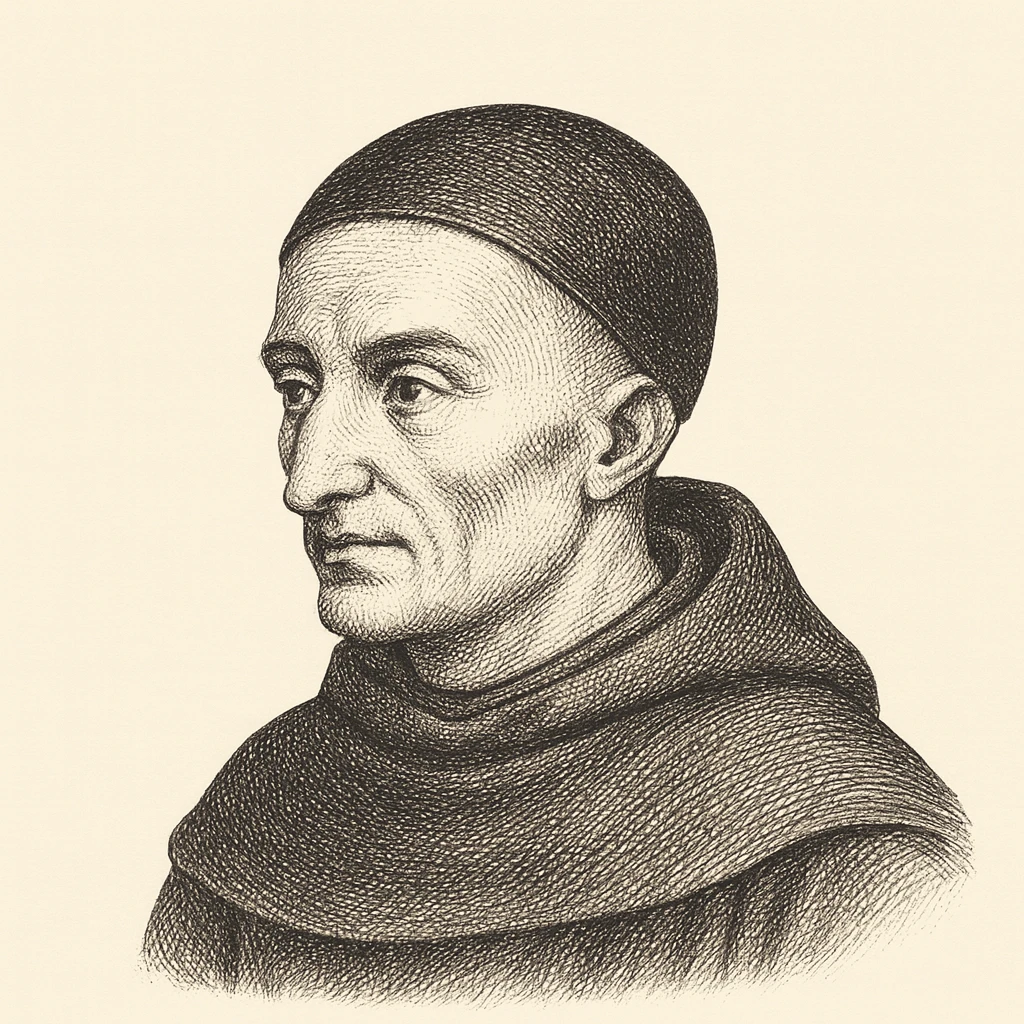
Giles of Rome studied under Aquinas in Paris, became the first Augustinian friar to hold a chair of theology there, tutored the future Philip IV of France, and ended as Archbishop of Bourges. The trajectory produced two books that argue in opposite directions, which is why he is worth attention.
De Regimine Principum, written for his royal pupil around 1280, was the most successful work of political instruction of the Middle Ages: some three hundred manuscripts survive, and it was translated into French, Italian, Spanish, English, Hebrew and Portuguese. It is Aristotle domesticated for a court, working outward from the government of oneself to the government of a household to the government of a kingdom, and it took much of the newly recovered Politics into general circulation. Its assumptions are moderate — kingship is natural, the ruler is bound by the end of the community, tyranny is a corruption — and its influence on the vernacular political vocabulary of late medieval Europe was enormous.
De Ecclesiastica Potestate, written twenty-two years later in the middle of Boniface VIII's quarrel with the same Philip IV, is a different book. Here Giles argues that all temporal power derives from spiritual power as body from soul, that no lordship or property is legitimate except through the church, and that the pope holds a plenitude of power over all things, temporal jurisdiction included, which he may exercise directly whenever he judges it necessary. It is the most extreme statement of papal monarchy ever produced by a serious theologian, and the bull Unam Sanctam of 1302 draws on it closely.
The pairing matters because the two books mark out the ground the following century fought over. Marsilius of Padua wrote the Defensor Pacis against precisely this position, and Ockham spent his exile attacking it. The hierocratic case had to be made at full strength before the case against it could be made at all, and Giles made it at full strength.
Wondering where you land? Take the 4-minute assessment