
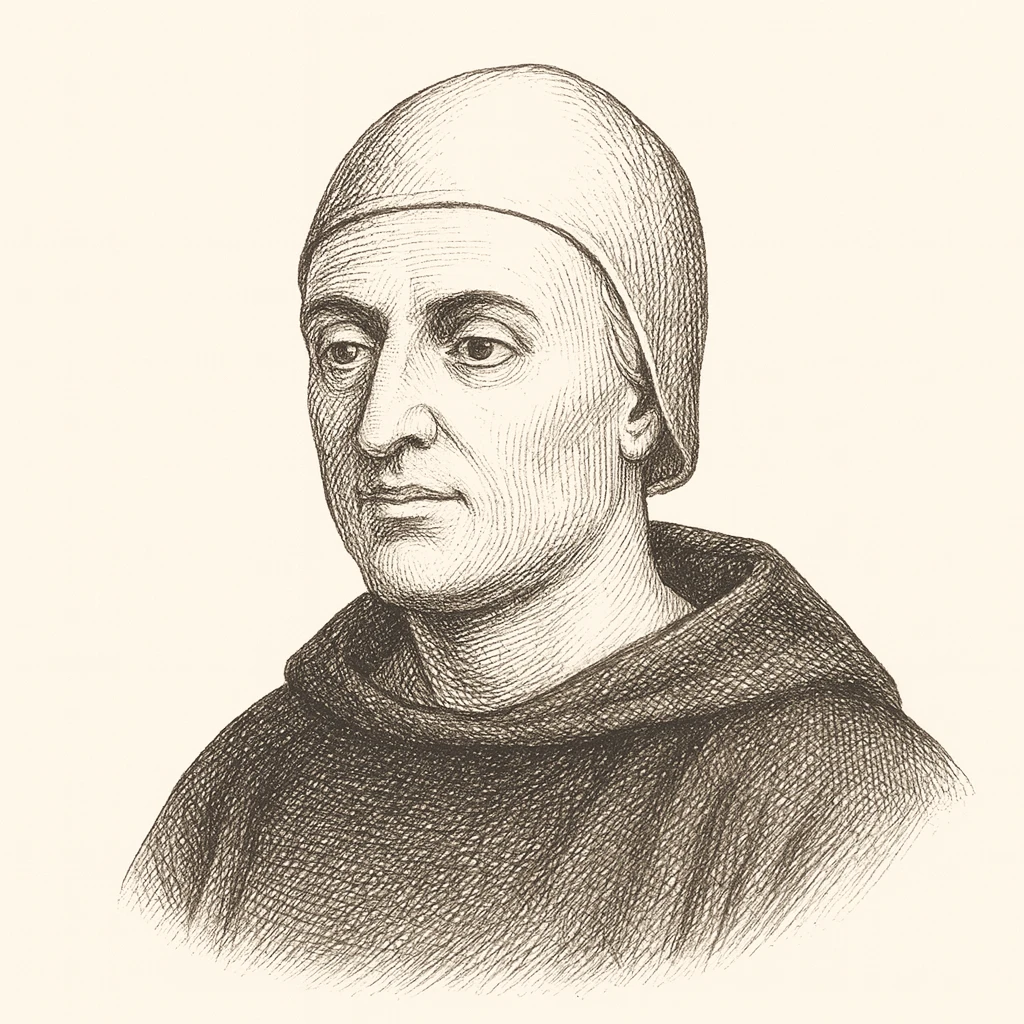
Marsilius trained as a physician in Padua, served briefly as rector of the University of Paris, and in 1324 finished a book so dangerous that when his authorship became known two years later he had to flee to the same imperial court that would shelter Ockham. He was excommunicated, and the Defensor Pacis was condemned as heretical in five propositions by John XXII.
The book's diagnosis is that the one cause of civil discord not identified by Aristotle is the papacy's claim to a jurisdiction alongside the secular one, which makes peace structurally impossible because no community can have two supreme authorities. Its remedy is to deny the claim entirely.
The positive argument is the more remarkable half. Law, Marsilius holds, is a coercive command, and its authority comes not from its justice but from the will of the body competent to enact it. That body is the legislator humanus: the whole body of citizens, or its weightier part, whose judgment is weightier in respect both of quantity and of quality. Government is the executor of what the legislator enacts, holds office by election, and may be corrected or removed by the same authority that instituted it. This is not democracy in a modern sense — the weightier part does substantial work — but it locates sovereignty in the community with a clarity nobody else in the fourteenth century approached.
The negative argument follows from the definition of law. If law is coercive command, then divine law, which carries no penalty in this life, is not law in the same sense at all, and the clergy have no coercive power of any kind — no jurisdiction, no property immunity, no power to excommunicate without the legislator's consent. Priests administer sacraments and teach; punishment belongs to the community alone. The church's own structure follows: authority in matters of faith belongs to a general council of clergy and laity summoned by the human legislator, not to the pope, whose primacy is a human arrangement.
Marsilius was read by conciliarists, cited by Cranmer's circle when England broke with Rome, and translated into English in 1535 at Thomas Cromwell's direction. Modern scholarship disputes how far he anticipates popular sovereignty, but nobody disputes that the Defensor Pacis is the most radical political text of the Middle Ages.
Wondering where you land? Take the 4-minute assessment