
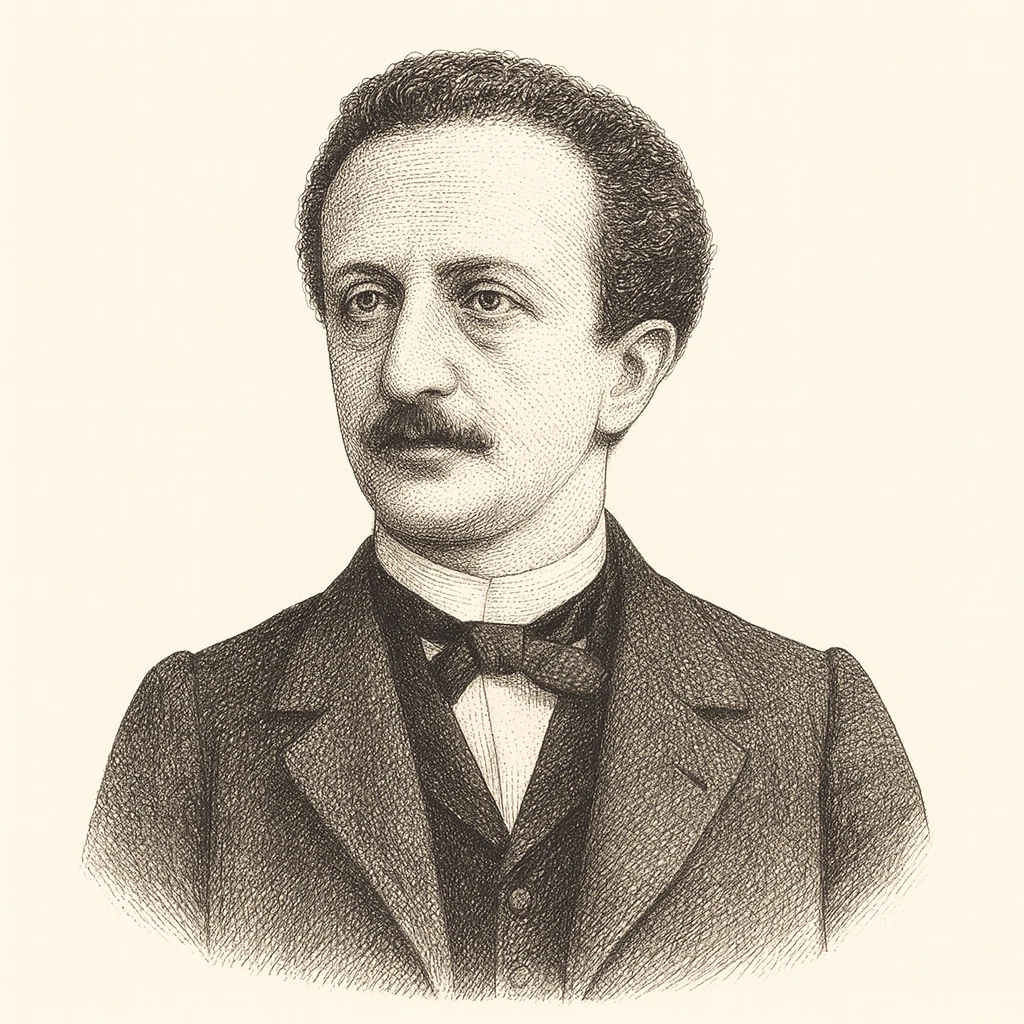
Ferdinand Lassalle made his name winning an eight-year lawsuit for a countess against her husband, served a prison term for his part in 1848, and in 1863 founded the General German Workers' Association — the first independent political party of labor anywhere, and the direct ancestor of the SPD. He was killed the following year in a duel over a woman who had left him.
His program rests on two claims. The first is the iron law of wages, taken from Ricardo and Malthus: under free competition wages tend inexorably to the minimum required for subsistence and reproduction, so trade unions and self-help can achieve nothing durable. The second is that the remedy is producers' cooperatives, financed by the state, in which workers own the capital they work with — which means the state must be captured, and that means universal, equal, direct suffrage. Political power first, economic transformation second.
The state he wanted to capture he understood very differently from Marx. Lassalle held that the state is not merely the executive committee of the propertied but has an ethical vocation of its own, existing to accomplish what individuals cannot achieve alone, and that its purpose is the positive development of the human race toward freedom. This is Hegelian and it is the root of a durable strand of German social democracy that regards the state as an instrument to be used rather than an apparatus to be smashed.
It also led him into the negotiations that damaged his reputation permanently. He met Bismarck several times in 1863-64, and the two found a shared interest: Lassalle wanted universal suffrage against the liberal bourgeoisie, and Bismarck was willing to consider it for exactly the same reason. The correspondence, published in 1928, showed how far the contacts went.
Marx despised him and the Critique of the Gotha Programme of 1875 is an attack on the Lassallean elements in the united party's platform — the iron law, state aid, and the phrase about one reactionary mass. The party adopted them anyway, and much of what social democracy became is Lassalle's rather than Marx's.
Wondering where you land? Take the 4-minute assessment