
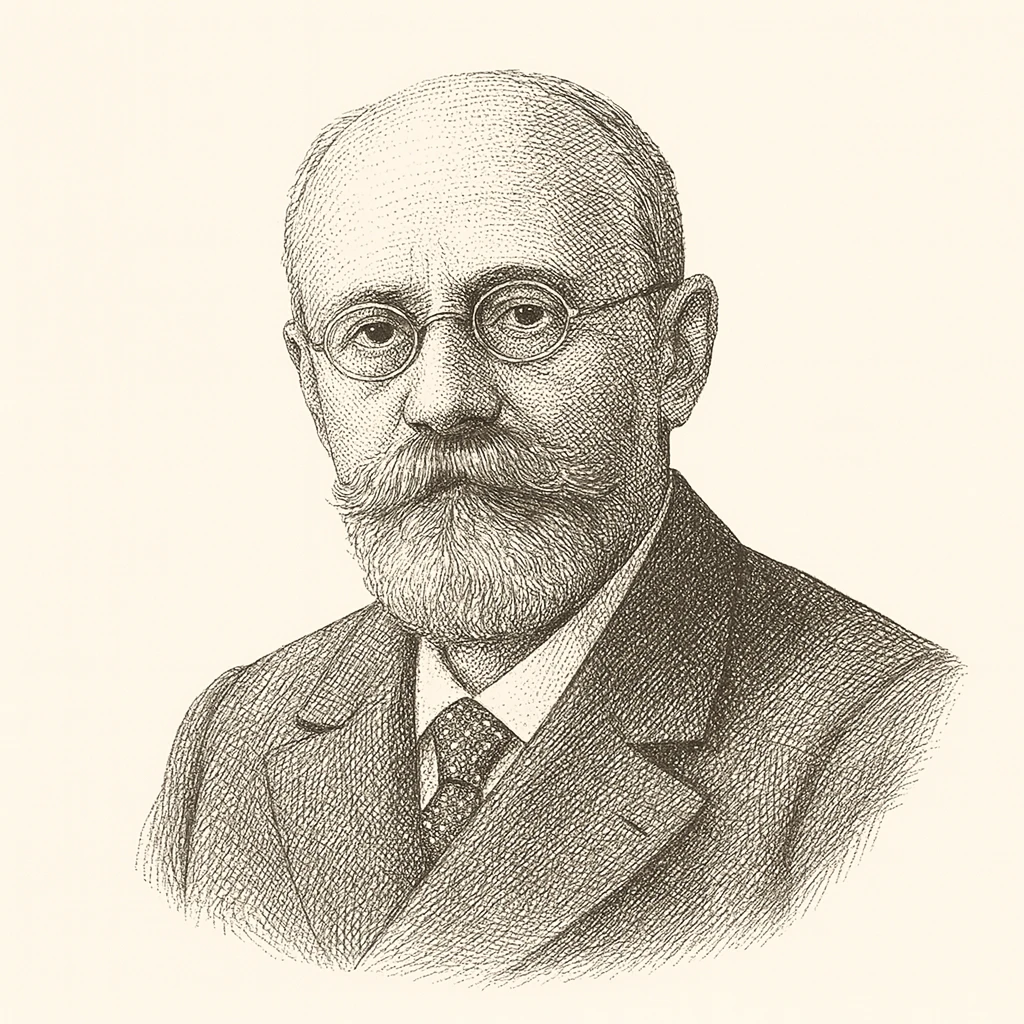
Karl Kautsky founded and edited Die Neue Zeit for thirty-five years, edited Marx's Theories of Surplus Value from the manuscripts, and was for a quarter of a century the recognized authority on what Marxism meant. Between Engels's death in 1895 and the war, no interpretation carried weight against his.
His Erfurt Programme of 1891 set the pattern for European social democracy. It has two parts that do not obviously fit together: a maximum program stating the Marxist analysis — capitalist concentration, class polarization, the inevitable arrival of socialism — and a minimum program of immediate demands, universal suffrage, the eight-hour day, progressive taxation, free education. The party was to be revolutionary in theory and reformist in practice, waiting for a crisis that history guaranteed while working within institutions it did not believe would last. The formula held the SPD together for two decades and has been blamed ever since for a passivity that left it unprepared when the crisis came.
He defended it from both sides. Against Bernstein, who argued from the 1890s that capitalism was not concentrating or polarizing as predicted and that socialism should therefore drop the revolutionary framework and admit it was a reform movement, Kautsky insisted the analysis held and that the goal could not be reduced to the movement. Against the left, and eventually against Lenin, he insisted that socialism required democracy as a condition and not as a tactic, that a revolution made by a minority would produce dictatorship over the proletariat rather than of it, and that the Bolsheviks had substituted a party for a class.
Lenin's reply, The Proletarian Revolution and the Renegade Kautsky, was intended to destroy him and largely did — within Communist parties his name became a term of abuse for a generation. His own prediction, that the Bolshevik regime would consolidate into a bureaucratic dictatorship that would call itself socialism, was better than his critics allowed at the time.
He died in Amsterdam in 1938, having fled Vienna after the Anschluss.
Wondering where you land? Take the 4-minute assessment