
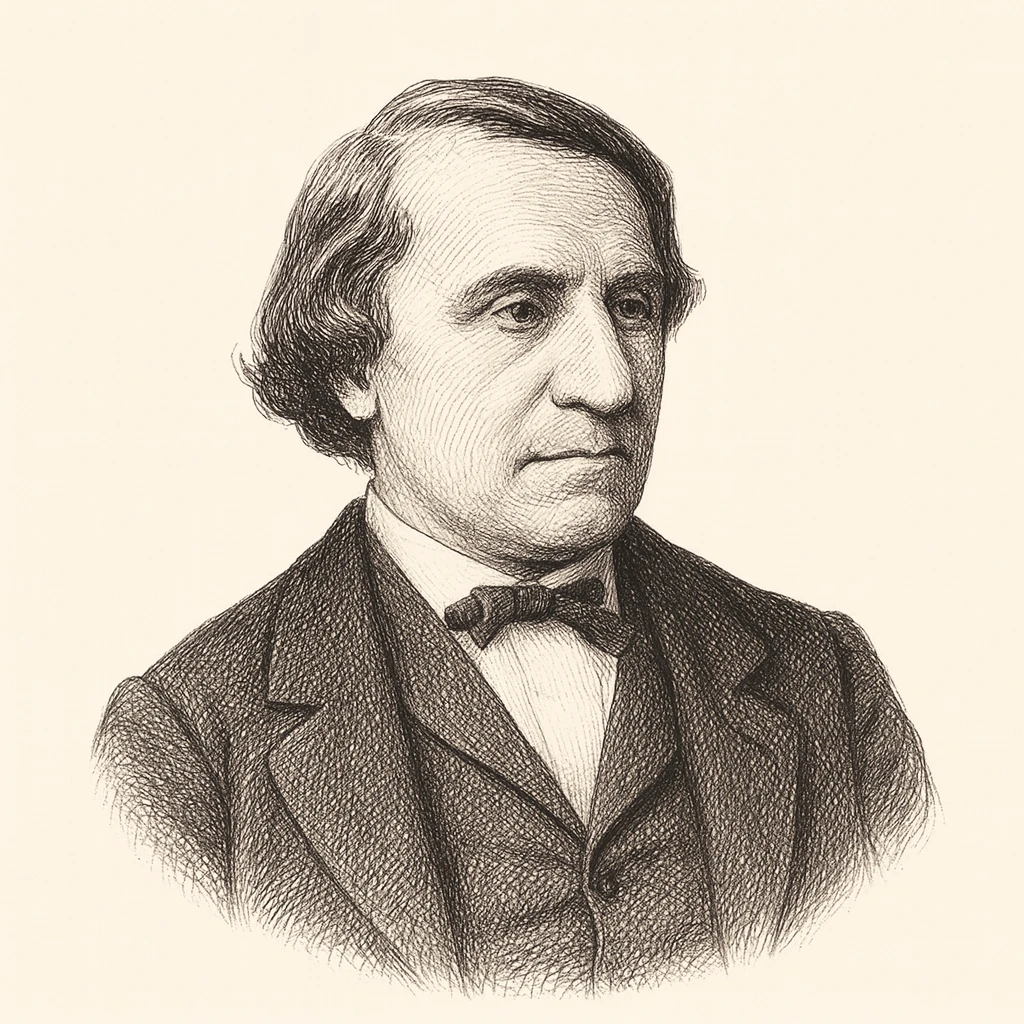
Louis Blanc was a journalist and historian who entered the provisional government of the February revolution in 1848, presided over the Luxembourg Commission on labor, was driven into English exile after the June days, and returned twenty years later to sit in the Third Republic's assembly.
The Organization of Labour of 1839 is the book that made him. Its argument is that free competition is not liberty for the worker but a war in which the weaker party has no defense: it drives wages to subsistence, ruins small producers, concentrates capital, and produces the crises that periodically throw everyone out of work. Formal equality before the law is worthless without the material means to use it. What is needed is a right to work — the state's obligation to guarantee every citizen the means of subsistence through labor — realized by publicly financed social workshops, associations of workers in each industry, capitalized by the state, governed by the workers themselves, and eventually able to outcompete private firms and absorb them. The state provides the capital and then withdraws.
This is the point at which socialism becomes a demand on the state rather than a proposal to build alternative communities alongside it, and it is why Blanc is a founder of social democracy rather than another utopian. From each according to his abilities, to each according to his needs is his formula before it is Marx's.
In 1848 he got a version of his program and it destroyed him. The national workshops actually created were not his social workshops but a relief scheme paying men to move earth, set up by ministers who disliked the idea and administered by an official hostile to it. When they were closed in June the resulting insurrection was crushed with several thousand dead, and the discrediting of the workshops discredited the right to work with them. Blanc spent the rest of his life insisting the experiment had never been tried.
Marx treated him as the type of the reformer who asks the bourgeois state to abolish the conditions of its own existence. Every subsequent argument about whether socialism can be legislated runs through him.
Wondering where you land? Take the 4-minute assessment