
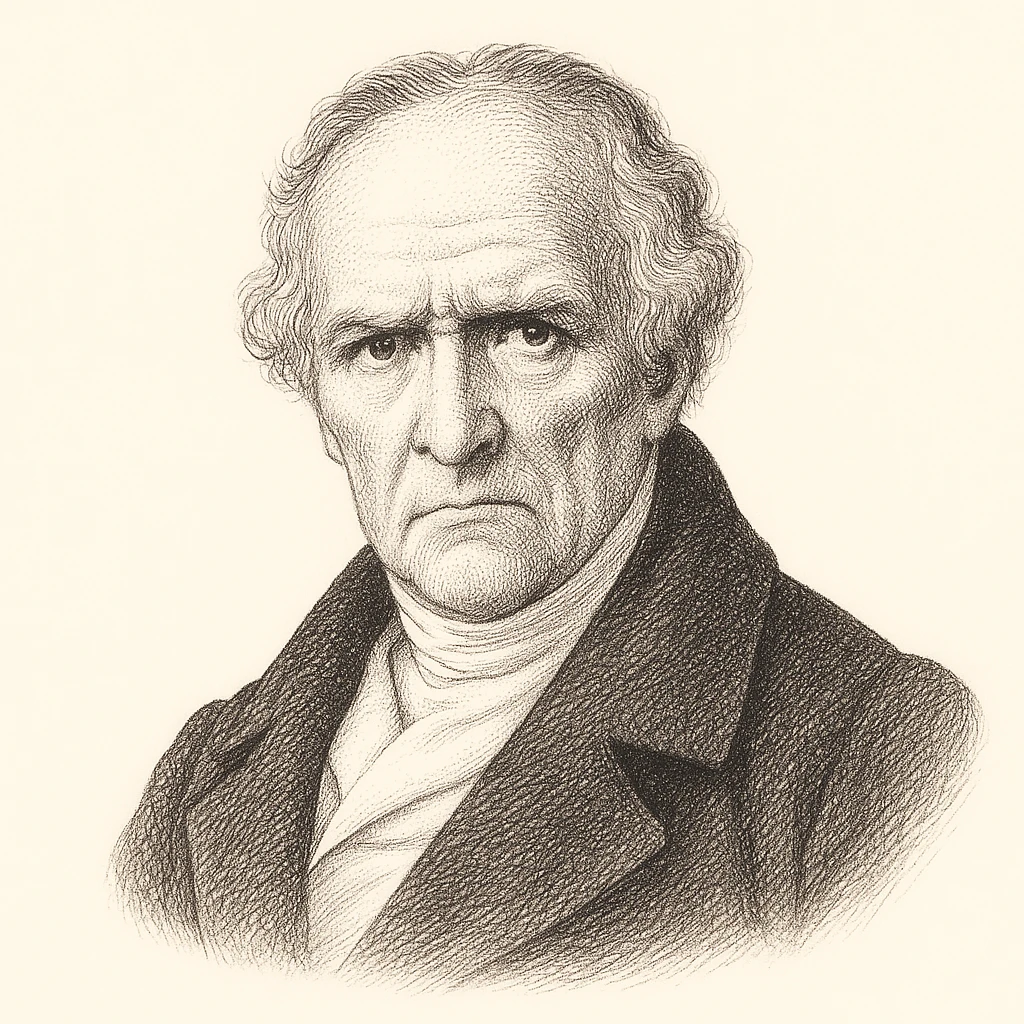
Charles Fourier was a commercial traveller who spent his life in cheap lodgings elaborating a system of extraordinary detail and occasional lunacy — the sea would turn to lemonade, the aurora borealis would warm the poles, humanity would develop tails with an eye on the end — and inside it produced some of the sharpest criticism of commercial society written in the nineteenth century.
His starting point is that civilization frustrates human beings systematically. God gave us twelve passions and a natural drive toward variety and attachment, and then civilization built commerce, marriage and wage labor, each of which requires suppressing what people actually want. Trade, in particular, he treats as organized deception: the merchant profits by the gap between what things cost and what people can be induced to pay, and the whole apparatus of speculation, adulteration and engineered scarcity follows from it. His analysis of poverty arising in the midst of abundance is the passage Marx admired.
The remedy is not to reform the passions but to arrange society so they are satisfied. The phalanstery is a community of about sixteen hundred people, chosen so that the full range of passionate types is represented, in which work is organized into short shifts among varied tasks matched to what people enjoy — the children who like filth are formed into the Little Hordes and given the dirty jobs, and are honored for it. Attractive labor, not compulsion, does the work. Property is unequal and returns are distributed to labor, capital and talent in fixed proportions, so it is not communism.
He was serious about sex and about women in a way nobody around him was. He coined féminisme, held that the degree of women's emancipation is the natural measure of a society's general emancipation — the sentence Marx quoted — and designed his communities to accommodate every sexual arrangement including those he knew would scandalize, on the ground that repression produces the vices reformers complain of.
Some thirty communities were attempted on his model in America. All failed. Engels catalogd him among the utopian socialists, meaning the criticism was brilliant and the mechanism absent, and the judgment stuck.
Wondering where you land? Take the 4-minute assessment