
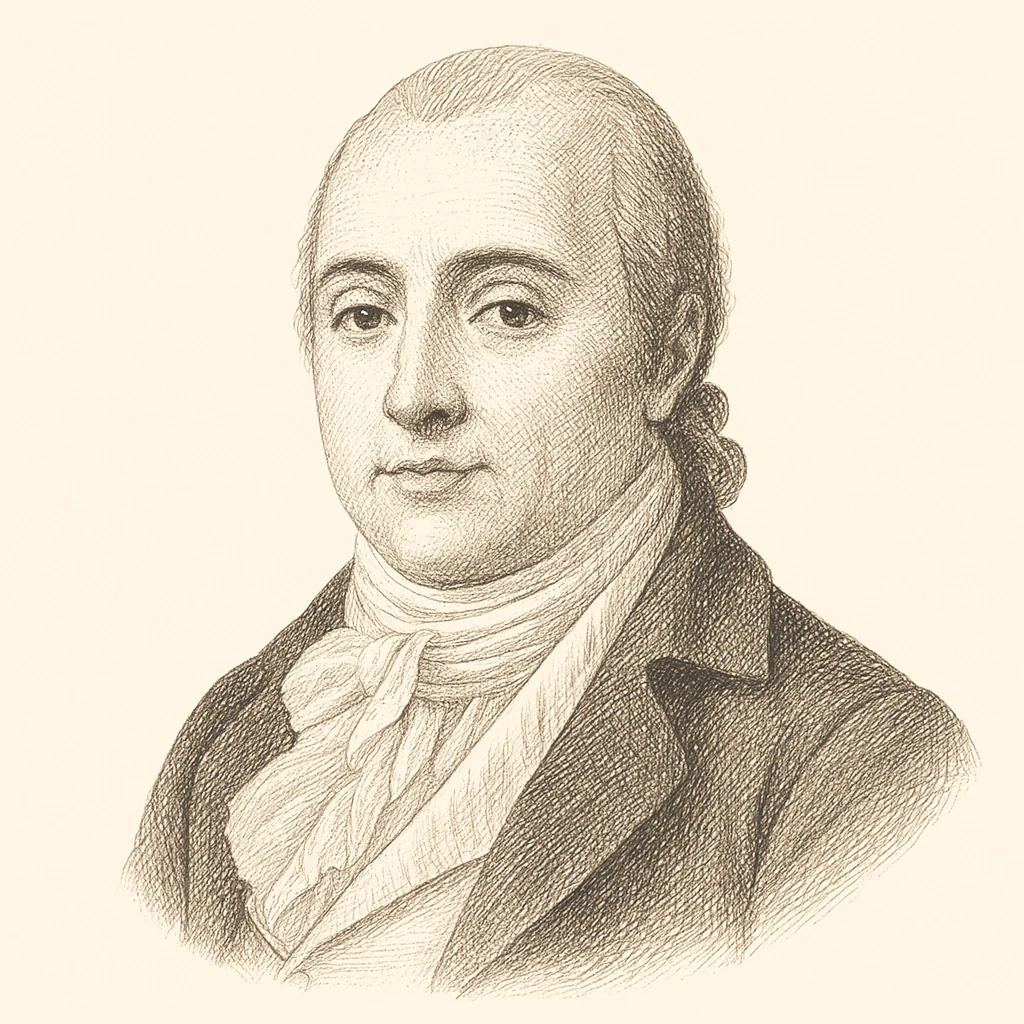
Claude-Henri de Rouvroy, comte de Saint-Simon, fought with the French forces in the American Revolution, renounced his title during the French one, made and lost a fortune speculating in confiscated church land, attempted suicide at sixty-three, and spent his last years dictating to secretaries — one of whom was Auguste Comte.
His organizing idea is that history alternates between organic periods, in which a society shares beliefs and institutions that fit its productive life, and critical periods, in which the old order has been destroyed and the new has not arrived. The Middle Ages were organic; the Enlightenment and Revolution were critical and necessary demolition; and the task of the nineteenth century is to construct the new organic order that industry requires.
That order is to be governed by those who actually produce. In his most notorious parable, he asks his readers to imagine that France suddenly lost its three thousand leading scientists, engineers, bankers, farmers and manufacturers, and then to imagine it lost instead its princes, courtiers, ministers, bishops and marshals: the first would be a catastrophe from which the nation would take a generation to recover, the second an occasion for regret and nothing more. The men who matter are the industrials; the governing classes are a survival. In the new order the administration of things replaces the government of men — a phrase Engels borrowed — and social questions are settled by expertise rather than by contest, because they are technical questions with correct answers.
His last book, The New Christianity, argues that the coming order needs a religion, stripped of dogma and clergy, whose whole content is that society must organize itself for the fastest improvement of the condition of its poorest class.
The Saint-Simonians turned this into a movement, a cult, and a great deal of practical engineering — Suez, French railways, the Crédit Mobilier. The doctrine feeds in three directions at once: into socialism, which took the critique of idle property; into technocracy, which took government by expertise; and into the sociology Comte built from the organic-critical scheme.
Wondering where you land? Take the 4-minute assessment