
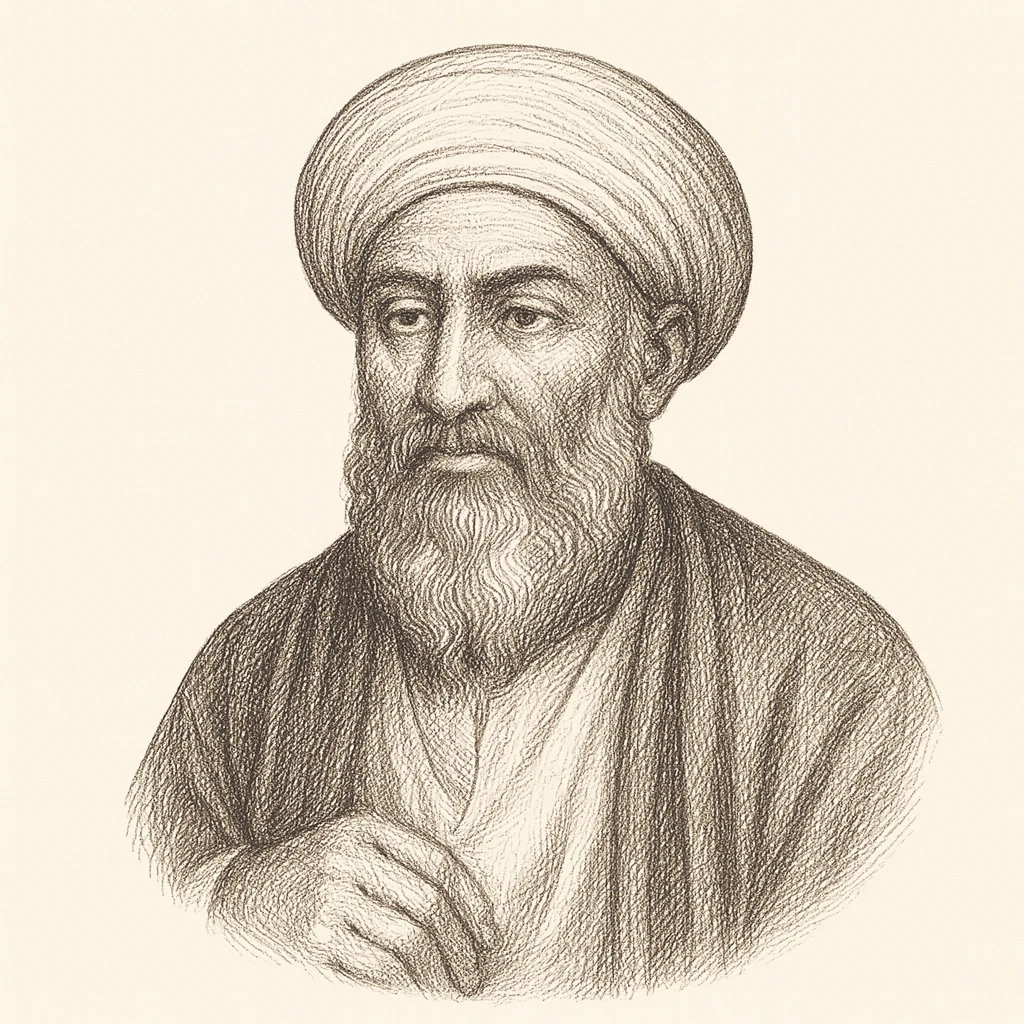
Averroes — Ibn Rushd of Córdoba — was a jurist, physician and philosopher in the Almohad courts of Spain and Morocco, and the single most consequential conduit through which classical philosophy re-entered Christian Europe.
His life's work was a set of commentaries on nearly the whole Aristotelian corpus, written at three levels of difficulty and aimed at recovering what Aristotle actually argued rather than what later Neoplatonists had made of him. That project mattered enormously outside the Islamic world. Latin translations began appearing in the 1220s, and within a generation the Christian universities had an Aristotle they had never possessed: systematic, complete, and philosophically formidable. To the scholastics Aristotle became simply "the Philosopher" and Averroes simply "the Commentator" — a shorthand that records how completely the Latin West read one through the other. Aquinas's own account of the period describes Aristotle arriving through Arabic commentary and the arrival being theologically explosive.
Explosive because Averroes had not softened the difficulties. Aristotle's world was eternal and uncreated; his account of the intellect appeared to leave no room for personal immortality. Averroes's Decisive Treatise argued that philosophy and revealed law are two roads to one truth, addressed to different capacities, and that where they seem to conflict the scriptural text should be read allegorically. His doctrine of the unity of the intellect — that there is one shared intellect in which individual minds participate — was pressed further by Latin followers such as Siger of Brabant into positions the Church could not accept. Aquinas wrote a treatise specifically against them, and the Paris condemnations of 1270 and 1277 targeted the movement directly.
The controversy is why he matters to political thought rather than only to metaphysics. The Latin Averroist crisis forced the medieval universities to work out what philosophy was for and how far it could proceed on its own authority — the argument from which the separation of philosophical from theological reasoning, and eventually of secular from religious authority, descends. In the Islamic world his philosophical influence faded; in Europe it was foundational.
Wondering where you land? Take the 4-minute assessment