
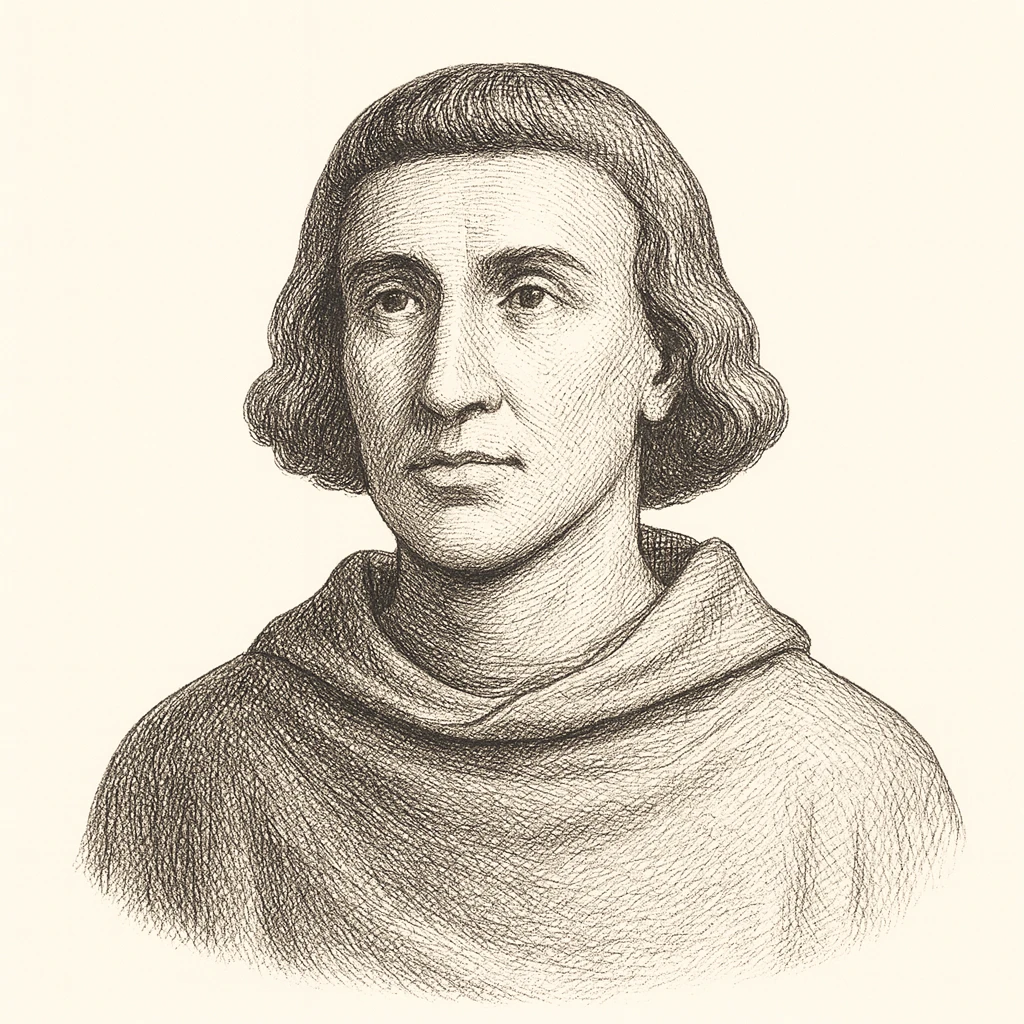
Abelard was the most famous teacher in Europe and the most comprehensively ruined. He defeated his own masters in public disputation, drew students to Paris in numbers that helped make it a university, seduced his pupil Heloise, was castrated by her uncle's hirelings, saw his book on the Trinity burned by a council at Soissons in 1121, and was condemned again at Sens in 1140 at the instance of Bernard of Clairvaux. He wrote his own account of it, the Historia Calamitatum, which is the first autobiography in the West since Augustine and considerably less penitent.
His method is the lasting contribution. In Sic et Non he assembled a hundred and fifty-eight theological questions and set the authorities against each other — fathers, councils and scripture in flat contradiction, arranged without resolution. The point was not skepticism. His prologue lays out rules for reconciling apparent conflicts: check the text, check whether the author retracted it, check the sense of the words, check whether the question was being answered in the same respect. By doubting we come to inquiry, he wrote, and by inquiry we perceive the truth. This turned contradiction from an embarrassment into an engine, and it is the direct ancestor of the scholastic method that Peter Lombard organized and Aquinas perfected — every question in the Summa is an objection, a contrary, a determination and a reply.
In logic he took a position on universals that avoided both the extreme realism of his teacher William of Champeaux and the pure nominalism attributed to Roscelin: universals are words, but words that signify a common status genuinely shared by things. The position kept the problem alive for the next two centuries.
His ethics is the most radical part. In the Scito Te Ipsum he argues that sin lies neither in the desire nor in the deed but in consent — in the will's agreement to what it knows to be wrong. It follows that an act done in invincible ignorance is not sinful, and he says plainly that those who crucified Christ believing they were doing right did not sin in doing so. It is the first sustained defense of conscience as the location of moral responsibility, and it is why he was condemned.
Wondering where you land? Take the 4-minute assessment