
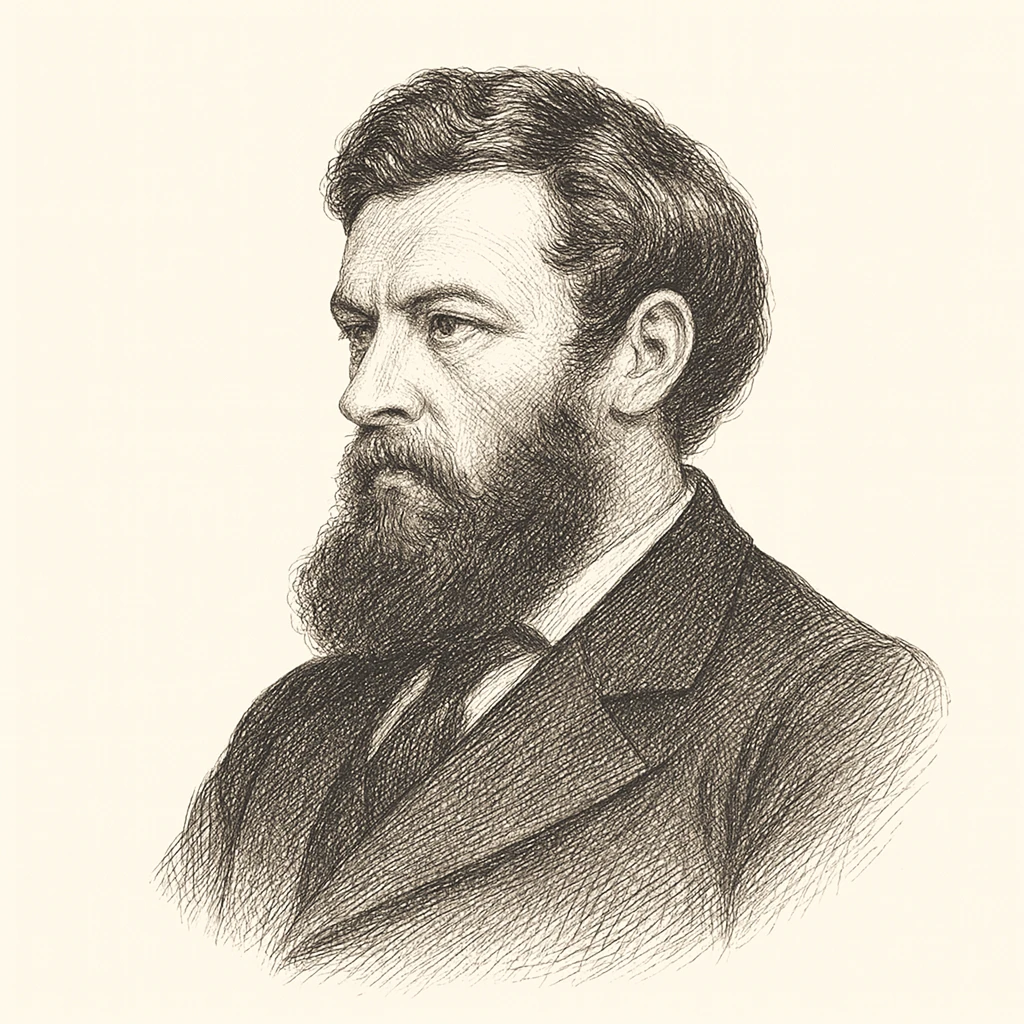
Walter Bagehot was a banker who edited the Economist for seventeen years and wrote about politics with the detachment of someone who understood that institutions are run by people with ordinary motives.
The English Constitution of 1867 discards the textbook account — king, Lords and Commons balancing one another, powers separated — as a description of something that had not existed for a century. What actually governs is the cabinet, a committee of the legislature chosen to be the executive, and the efficient secret of the constitution is precisely this fusion of executive and legislative power rather than their separation. He divides institutions into the dignified parts, which excite and preserve the reverence of the population, and the efficient parts, which do the work; the monarchy is dignified and indispensable for that reason, because a people that will not obey a committee will obey a queen. The sovereign retains three rights and only three: to be consulted, to encourage, and to warn.
He was writing as the second Reform Act passed and was frankly alarmed by it. The deference that made the system work depended on the many accepting the rule of the few, and he doubted it would survive an enlarged electorate — a judgment that reads badly now but which forced him to explain the psychological rather than legal foundations of political authority, which is why the book lasted.
Lombard Street of 1873 did for finance what the earlier book did for politics. In a panic, Bagehot wrote, the Bank of England must lend early and freely, to solvent firms, against good collateral, at a penalty rate. The rule was formulated because the Bank had repeatedly done the opposite, and it is still cited by name in every modern financial crisis; central banks that followed it in 2008 said so.
Physics and Politics applied evolutionary ideas to political development and is the weakest of the three, but its account of how societies must first acquire a cake of custom and then find a way to break it without disintegrating is a real question.
Woodrow Wilson's Congressional Government is Bagehot's method turned on the American system, and says so.
Wondering where you land? Take the 4-minute assessment