
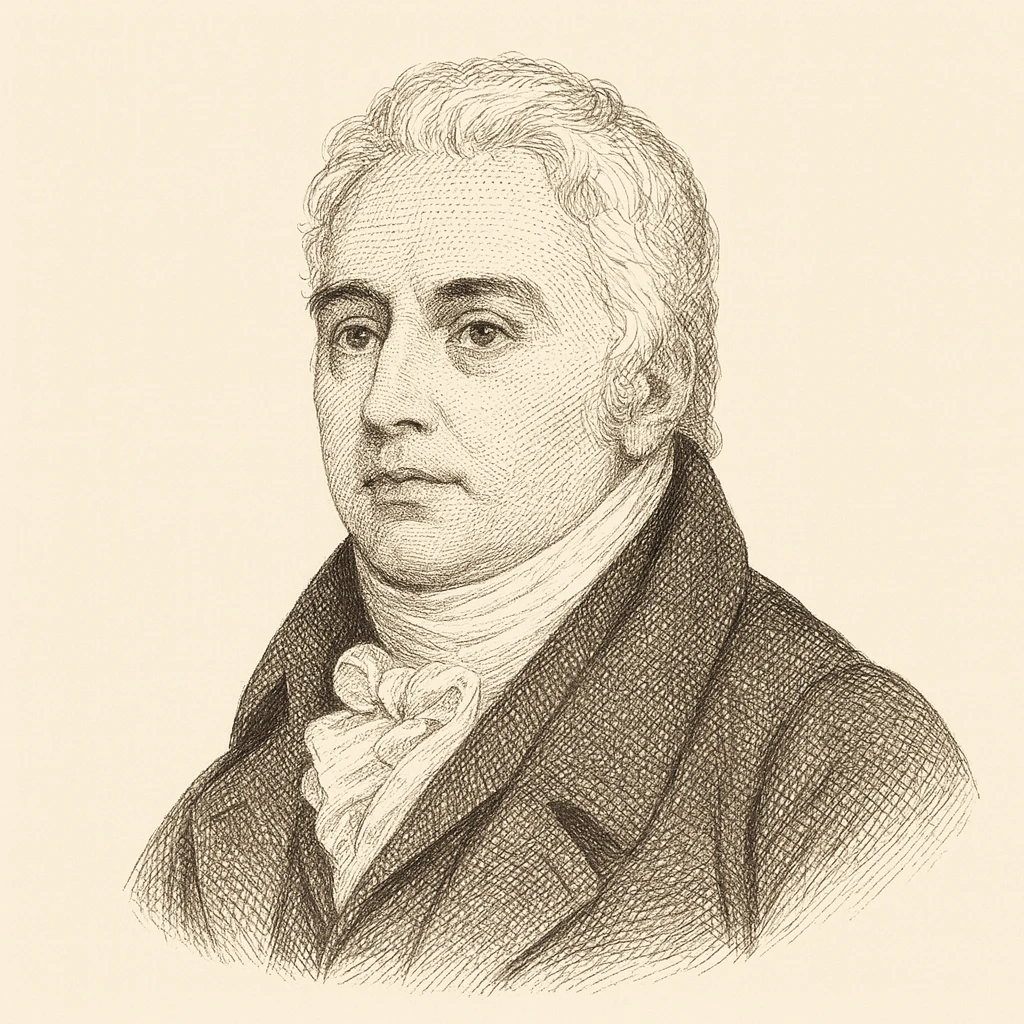
Samuel Taylor Coleridge planned a communist settlement on the Susquehanna with Southey at twenty-two, published Lyrical Ballads with Wordsworth at twenty-six, spent a formative year in Germany reading Kant and Schelling, and passed his later decades opium-dependent and lecturing brilliantly on subjects he never finished writing about. His political trajectory ran from Unitarian radical to Anglican conservative, which he presented not as apostasy but as the working out of a single principle.
His importance in philosophy is as a conduit and an adapter. He read Kant, Fichte and Schelling when almost nobody in England had, and the Biographia Literaria introduced their vocabulary to English readers — sometimes by translating Schelling at length without attribution, which has embarrassed his editors ever since. The distinction he drew between the imagination, which is a living and unifying power that dissolves and recreates, and the fancy, which merely rearranges fixed materials, became the central category of English Romantic aesthetics. Behind it lies the distinction between Reason and Understanding he took from the Germans: Understanding handles the material of sense by rules, Reason apprehends what is universal and spiritual, and an age that has collapsed the two into calculation has lost the faculty by which it could recognize what it is missing.
The political statement is On the Constitution of the Church and State of 1830. Coleridge argues that a healthy nation balances two forces, Permanence, rooted in landed property, and Progression, in commerce and the professions, and that a third element is needed to secure the ends of both: a National Church, understood not as a religious denomination but as an endowed body — the clerisy — distributed through every parish and charged with preserving and diffusing learning and civility. The nation's cultivation is a public good that neither markets nor the state will supply on their own, and property held for that purpose is the nation's, not the church's.
The idea had a long life. Mill, who wrote a famous pair of essays on Bentham and Coleridge as the two seminal minds of the age, took him seriously as the antithesis he needed. Arnold's culture, Newman's university, F.R. Leavis's minority, and much of the British case for public broadcasting and endowed universities descend from the clerisy.
Wondering where you land? Take the 4-minute assessment