
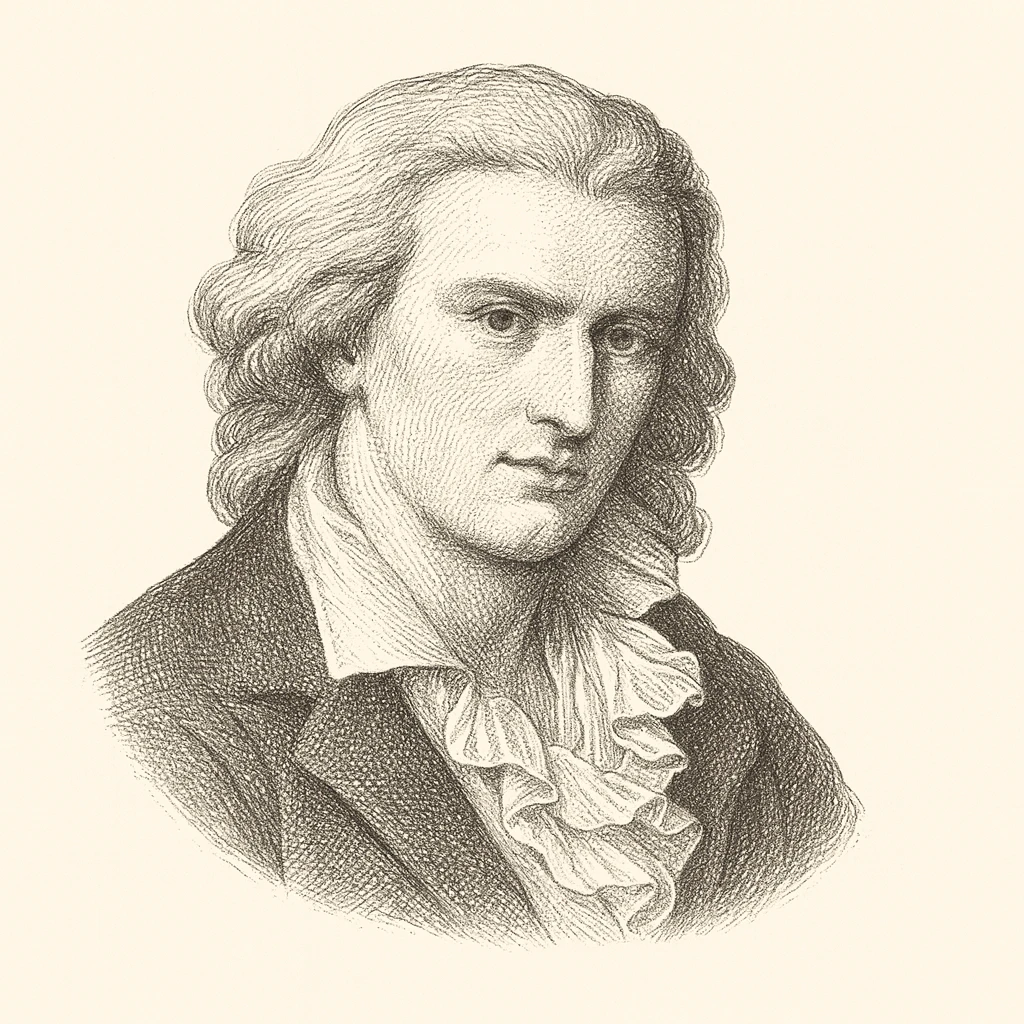
Friedrich Schiller escaped a brutal military academy, made his name at twenty-two with The Robbers, was granted honorary French citizenship by the revolutionary Assembly, and then watched the Revolution consume itself. Almost all his mature theoretical work is an attempt to explain what went wrong.
His answer, set out in the Letters on the Aesthetic Education of Man of 1795, is that the Revolution failed because the moment arrived before the people did. A political order of freedom requires citizens capable of willing freely, and the human beings available had been divided by the division of labor and by the opposition between reason and sense until neither the savage, who lets feeling rule principle, nor the barbarian, who lets principle destroy feeling, could sustain a free state. The Terror is what happens when abstract reason is imposed on people whose sensibility has not been formed to receive it.
The remedy is aesthetic. In the experience of beauty, Schiller argues, the formal drive and the sense drive are held in balance by a third, the play drive, in which neither compels the other; and it is only in play that a human being is wholly human. Beauty therefore restores the wholeness that both nature and civilization have broken, and the aesthetic condition is the passage through which a people must go before political freedom can be more than a paper arrangement. Man ought only to play with beauty, and he ought to play only with beauty.
The claim that culture is a political precondition rather than an ornament has had an enormous afterlife, and a contested one. It gave German liberalism a reason to defer politics indefinitely in favor of Bildung; it also gave Marcuse and the Frankfurt School their argument that aesthetic experience preserves a promise of freedom that instrumental reason has expelled from everywhere else.
His essay On Naive and Sentimental Poetry, which distinguishes writers who are nature from writers who seek it, is the first serious theory of what modernity costs a culture, and Hegel, Nietzsche and the Romantics all worked from it. His plays — Don Carlos, Wallenstein, Mary Stuart, William Tell — put the same questions on stage, and Tell in particular became a text of nineteenth-century national movements everywhere.
Wondering where you land? Take the 4-minute assessment