
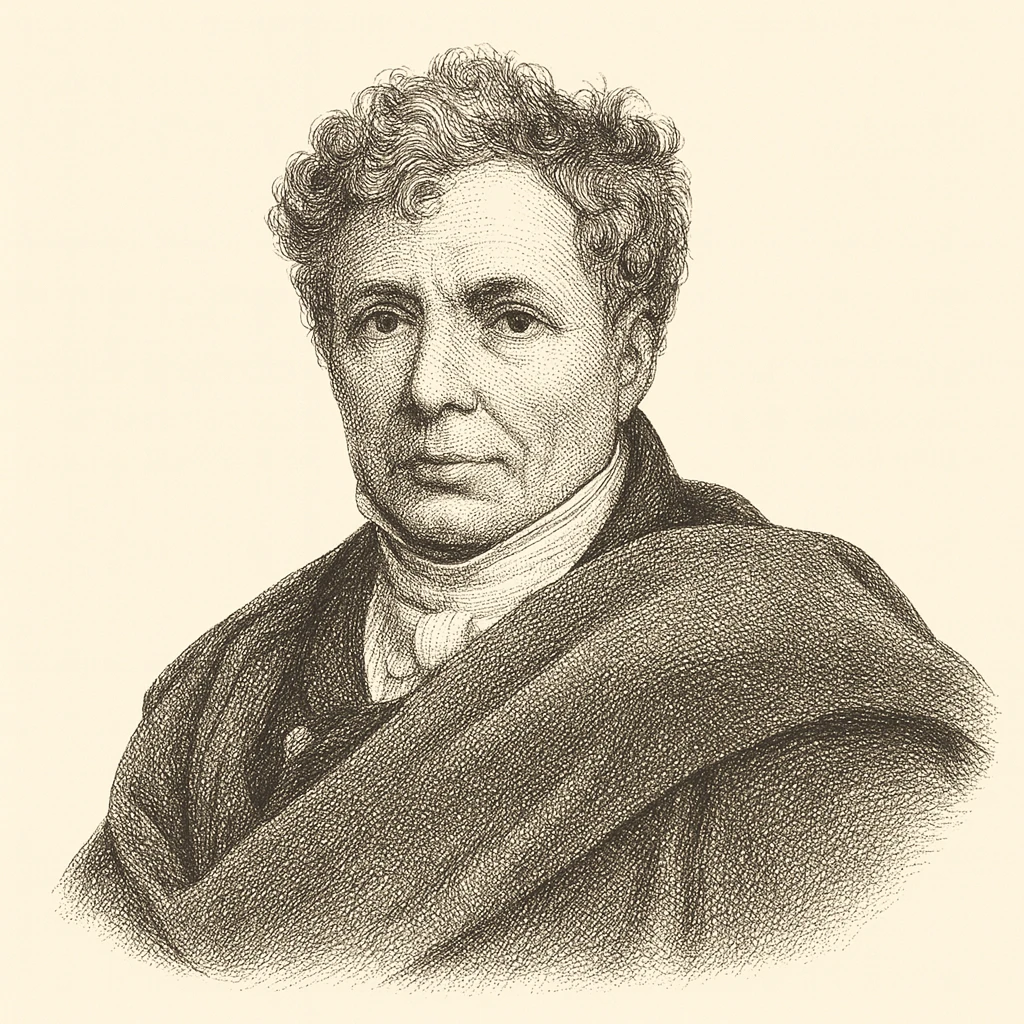
Friedrich Schelling shared a room at the Tübingen seminary with Hegel and Hölderlin, held a chair at twenty-three, was the most celebrated philosopher in Germany before he was thirty, and then watched his former roommate eclipse him so completely that he published almost nothing for the last forty years of his life.
His early achievement was to give nature back to idealism. Fichte had made the not-I a product of the I's activity, which left the natural world as little more than the material of duty. Schelling argued instead that nature and mind are two aspects of one absolute — nature is visible spirit and spirit is invisible nature — and that nature must be understood as a graded series of productive powers ascending toward consciousness rather than as inert stuff. The Naturphilosophie that followed was speculative to a degree that embarrassed later scientists, and it was also the intellectual atmosphere in which Oersted found electromagnetism and Romantic biology looked for unity across the forms of life.
His System of Transcendental Idealism ends by assigning to art the role of highest organ of philosophy: in the work of art, conscious and unconscious production coincide, so that art displays what philosophy can only describe. No other statement did as much to raise the status of art in the nineteenth century.
The late Schelling is the more interesting one for what came after. He came to regard the whole idealist enterprise, his own included, as merely negative philosophy — able to establish what a thing must be if it exists, but never that anything exists at all. Positive philosophy must begin from the sheer fact of existence, which reason cannot deduce and can only encounter. Being precedes thought, and there is an unprethinkable ground that no system will absorb.
He delivered this in Berlin in 1841 to a lecture audience that included Kierkegaard, Engels, Bakunin and Burckhardt. Kierkegaard arrived elated at hearing the word actuality, and left disappointed, but the argument against Hegel's claim that the rational and the actual coincide became his own. Through him, and through Heidegger's reading of the Freedom essay, the late Schelling is one of the sources of existentialism.
Wondering where you land? Take the 4-minute assessment