
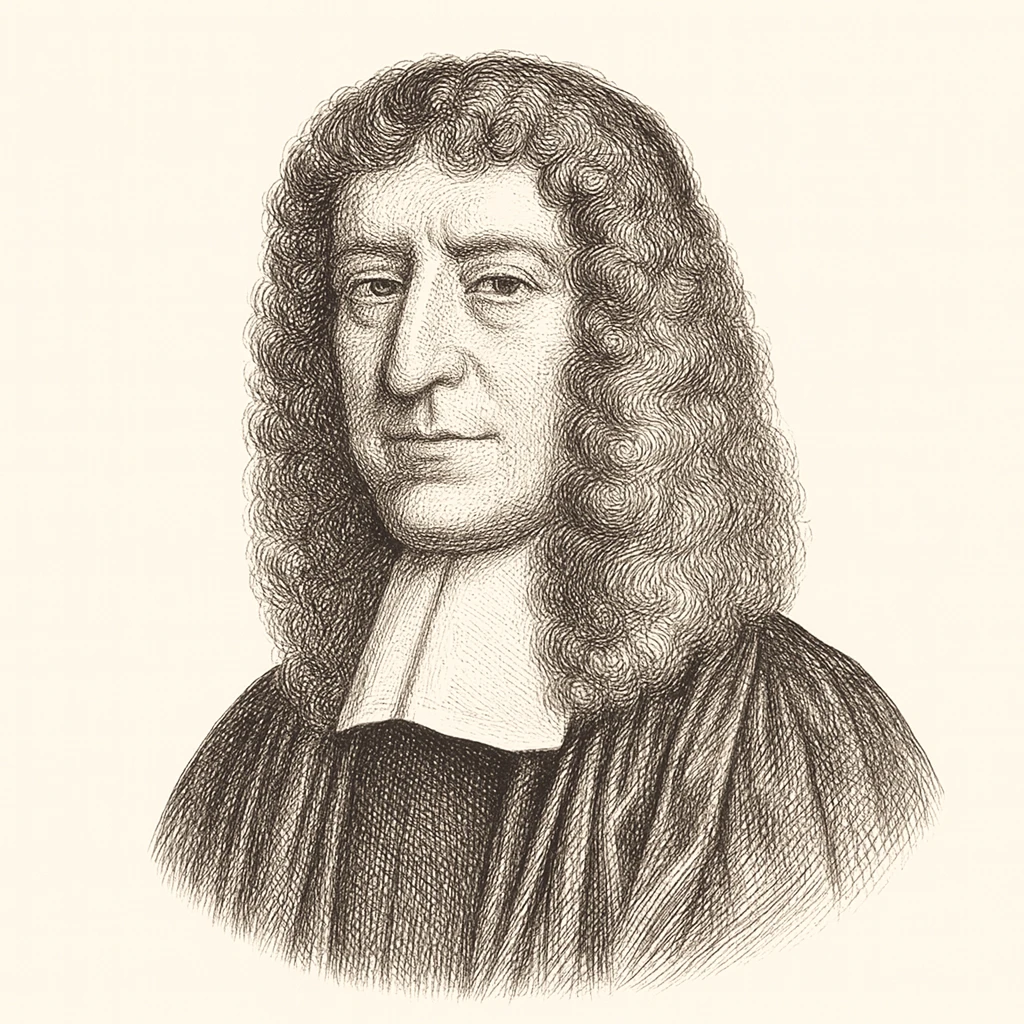
Ralph Cudworth was Regius Professor of Hebrew at Cambridge and the most systematic of the group later called the Cambridge Platonists, who tried to hold a line between Calvinist predestinarianism on one side and the new mechanical philosophy on the other, using Plato and Plotinus as their instrument.
The True Intellectual System of the Universe is an enormous, unfinished attack on atheism, and its method is peculiar: Cudworth states the atheist case at such length and with such fairness that he was accused of arguing it better than he refuted it. Its positive doctrine is plastic nature — an unconscious formative principle through which God works in the world, introduced to avoid the two conclusions Cudworth thought equally bad, that matter organizes itself without any direction, or that God must intervene directly in every physical event.
His lasting contribution is the Treatise Concerning Eternal and Immutable Morality, published forty years after his death. It is directed against Hobbes and, behind him, the voluntarist tradition running from Ockham: the doctrine that good and evil are constituted by a command, so that what makes an act wrong is that it has been forbidden. Cudworth argues that this destroys morality rather than grounding it. If things are good only because they are willed, then the will that makes them so could equally have willed the opposite, and there is nothing left to distinguish authority from power. Moral distinctions must be eternal and immutable, holding of the natures of things as necessarily as geometrical truths, and known by the mind rather than received by obedience. Omnipotence itself cannot make cruelty good.
The argument is the ancestor of every subsequent moral realism, and the Euthyphro question that drives it — whether the good is good because it is willed, or willed because it is good — entered modern philosophy substantially through him. His pupil Shaftesbury, and through Shaftesbury Hutcheson, took the claim that moral qualities are perceived rather than commanded and turned it into the moral sense school, which is how Cudworth reaches Hume and Smith. His daughter, Damaris Masham, was a philosopher in her own right and Locke's close friend, and Locke spent his last years in her household.
Wondering where you land? Take the 4-minute assessment