
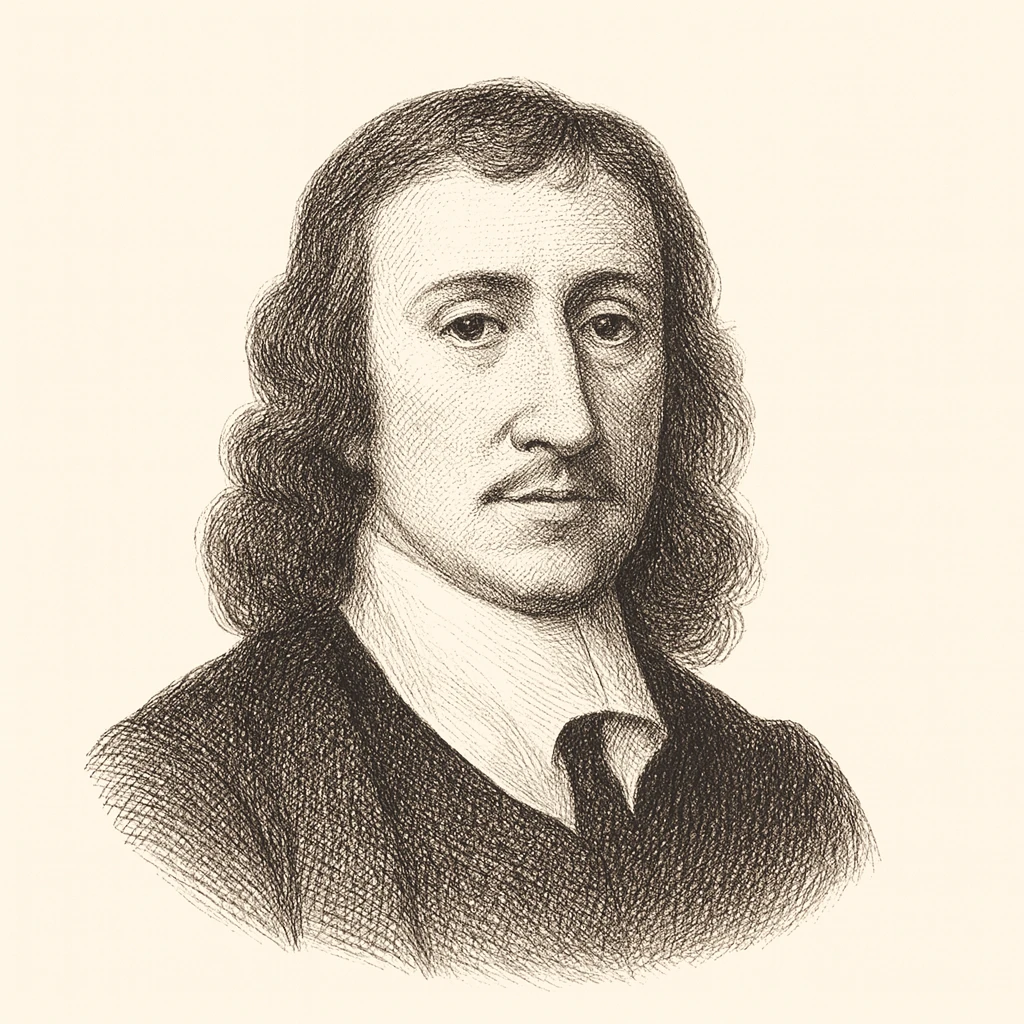
James Harrington attended Charles I in his last captivity and was, by his own account, fond of him while opposing everything he stood for. The Commonwealth of Oceana, published in 1656 under Cromwell's protectorate and dedicated to him, is a fictionalized constitution for England presented as the history of an imaginary state.
Its founding claim is materialist in a way nothing before it quite was. Empire follows the balance of dominion — political power rests where property, and especially land, is concentrated. If one man holds most of the land the government will be a monarchy; if a few, an aristocracy; if the many, a commonwealth. Constitutions that do not match the underlying distribution are unstable and will be overturned by it. Harrington read the English civil war this way: the sale of monastic and crown lands since Henry VIII had shifted the balance to the gentry, and the monarchy fell because its economic foundation had already gone. Government, he says, is not a matter of persuading men to be virtuous but of arranging institutions so that the balance is preserved.
From this he derives the machinery. An agrarian law capping the land any family may hold, so the balance cannot re-concentrate. A bicameral legislature in which a senate proposes and the people dispose — his image is two girls dividing a cake, one cutting and the other choosing, so that neither can cheat. Rotation of office by fixed terms, so that no one becomes entrenched. The secret ballot. Election rather than appointment throughout. An empire of laws and not of men, which is his phrase.
Almost every one of these devices reached America. Adams cited Oceana constantly and built the Massachusetts constitution on Harringtonian lines; the arguments in the Federalist about property, faction and the separation of powers are conducted in his terms; Jefferson's insistence that a republic requires widely distributed landholding is his doctrine. Through Toland's 1700 edition and the commonwealthmen, Harrington became one of the principal channels by which classical republicanism entered the eighteenth-century Atlantic world, and the twentieth-century recovery of that tradition by Pocock put him at its center.
Wondering where you land? Take the 4-minute assessment